
A clear, expert breakdown of the most important artificial intelligence regulation news in 2025, covering the EU AI Act, US policy, global rules, and business compliance.
Artificial Intelligence Regulation News 2025

Artificial intelligence moved from research labs into hospitals, banks, classrooms, and hiring systems faster than any technology in modern history. In 2025, governments stopped watching from the sidelines and started writing the rules. If you build, sell, or simply use AI tools, the regulatory shifts this year directly affect how you collect data, deploy models, and stay legally safe.
This guide cuts through the noise. Instead of vague predictions, it explains exactly what changed in 2025, who is enforcing it, and what you should do next. Whether you run a startup or manage compliance at an enterprise, you will leave with a practical understanding of the global AI rulebook.
Quick Answer: In 2025, AI regulation became enforceable rather than theoretical. The EU AI Act began applying its first binding rules, the United States shifted toward sector-led oversight, and countries like China, the UK, and Canada advanced their own frameworks, making risk-based compliance a global business requirement.
Why AI Regulation Became Urgent in 2025
The core reason regulation accelerated is simple: AI adoption outpaced safeguards. According to Stanford's AI Index, private AI investment surpassed 100 billion dollars in recent years, and generative tools reached hundreds of millions of users within months of launch. That scale created real risks around misinformation, bias, privacy, and automated decision-making.

Regulators responded to concrete harms, not hypotheticals. Cases involving biased hiring algorithms, deepfake fraud, and opaque credit scoring pushed lawmakers to act. The shift in 2025 was philosophical as much as legal: AI is now treated like aviation or pharmaceuticals, where safety must be proven before products reach the public, not patched afterward.
For businesses, this means AI is no longer a "move fast" category. Documentation, transparency, and accountability are now part of the product, and teams that ignore this face fines, lawsuits, and reputational damage.
The EU AI Act: The World's First Comprehensive AI Law
The European Union remained the global pacesetter in 2025. The EU AI Act, formally adopted in 2024, began phasing in its obligations this year, making it the first comprehensive horizontal AI law on the planet.

Definition: The EU AI Act is a risk-based legal framework that classifies AI systems by the level of harm they could cause and assigns obligations accordingly.
Key 2025 milestones included the activation of bans on "unacceptable risk" practices such as social scoring and certain biometric surveillance, along with early transparency duties for general-purpose AI models. The Act applies extraterritorially, meaning any company offering AI services to EU residents must comply, regardless of where it is headquartered.
Penalties are significant. Violations of prohibited-use rules can reach up to 35 million euros or 7 percent of global annual turnover, whichever is higher. That figure alone explains why compliance teams treated 2025 as a deadline year rather than a planning year.
The Risk-Based Approach Explained
The most important concept to understand in 2025 is the risk tier model, which now influences regulation far beyond Europe.

AI systems are sorted into categories, and your obligations scale with potential harm:
- Unacceptable risk - Banned outright (for example, manipulative social scoring).
- High risk - Allowed but heavily regulated (medical devices, hiring, credit, critical infrastructure).
- Limited risk - Transparency required (chatbots must disclose they are AI).
- Minimal risk - Largely unregulated (spam filters, AI in video games).
This tiered logic matters because it gives organizations a repeatable way to audit their tools. Before deploying any model, the practical question is no longer "does it work?" but "what tier does it fall into, and what proof do we need?"
United States AI Policy in 2025
The United States took a notably different path than Europe. Rather than one sweeping federal law, 2025 saw a patchwork of executive action, agency guidance, and aggressive state-level legislation.
Federal policy shifted toward promoting innovation while directing existing agencies, such as the FTC and sector regulators, to police AI under current consumer-protection and anti-discrimination laws. The message was clear: there may not be a single AI statute yet, but existing laws already apply to AI-driven decisions.
States filled the gap. Colorado's AI Act, focused on high-risk automated decision systems, and California's transparency and training-data disclosure rules signaled that US companies cannot wait for Washington. According to industry trackers, hundreds of AI-related bills were introduced across US states in 2025, creating a complex compliance map for any national business.
Global AI Governance: Beyond Europe and America
AI regulation in 2025 was a worldwide story, and the differences between regions reveal contrasting philosophies.

China advanced detailed rules on generative AI and algorithmic recommendations, emphasizing content control and security reviews. The United Kingdom continued its lighter "pro-innovation" approach, relying on existing regulators rather than a single AI law. Canada moved forward with its Artificial Intelligence and Data Act framework, while nations across Asia, the Middle East, and Latin America published national AI strategies.
International coordination also matured. Through bodies like the OECD, the G7's Hiroshima Process, and global AI safety summits, governments worked toward shared definitions and safety testing norms, even as enforcement remained national.
Regional Comparison Table
| Region | Approach | Binding Law in 2025 | Primary Focus |
|---|---|---|---|
| European Union | Comprehensive, risk-based | Yes | Safety and fundamental rights |
| United States | Sector and state-led | Partial | Innovation and consumer protection |
| China | Centralized, security-first | Yes | Content control and stability |
| United Kingdom | Principles-based | No | Pro-innovation flexibility |
| Canada | Framework-based | Pending | Accountability and transparency |
What AI Regulation Means for Your Business
The practical impact of 2025's regulatory wave is that AI governance is now a business function, not just a legal afterthought. Companies that build internal processes early will move faster and avoid penalties later.
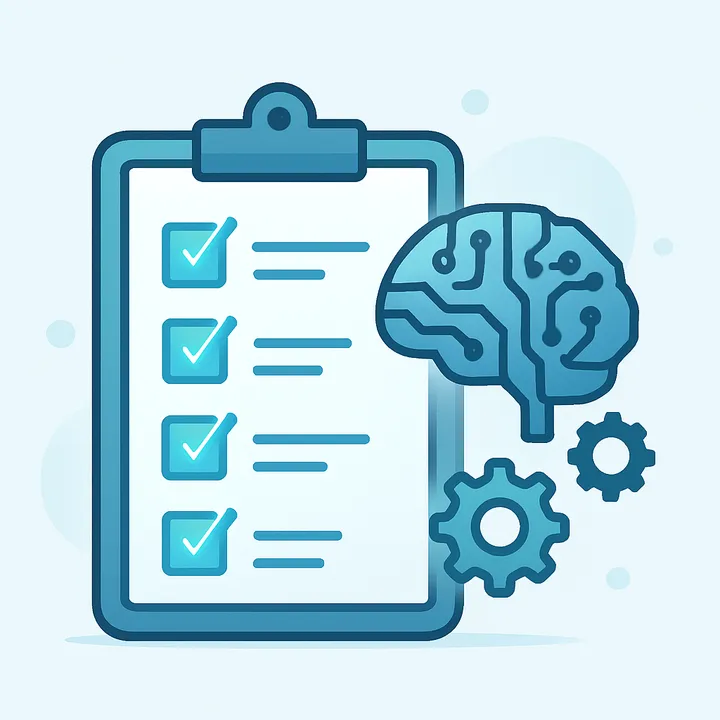
Here is a realistic compliance starting checklist drawn from how leading teams are responding:
- Inventory every AI system you use, including third-party tools and embedded features.
- Classify each system by risk tier using the EU model as a global baseline.
- Document data sources and check consent, copyright, and bias exposure.
- Add transparency notices wherever users interact with AI.
- Assign human oversight for any high-impact automated decision.
- Keep audit logs so you can prove how a model made a decision.
Organizations adopting AI responsibly often pair legal review with technical implementation support. If you are integrating compliant AI systems into products or workflows, specialized teams such as ZoneTechify's artificial intelligence services and WebPeak's AI services can help align technology choices with these evolving requirements. You can also explore broader digital solutions at ZoneTechify and WebPeak.
The Future: What to Watch Heading Into 2026
Regulation will not slow down. The trajectory set in 2025 points toward stricter enforcement, clearer standards for general-purpose models, and growing pressure for global interoperability between rulebooks.

Three trends deserve attention. First, transparency around training data and energy use will intensify as copyright and sustainability debates grow. Second, agentic AI, systems that take autonomous actions, will trigger fresh rules because they blur the line between tool and decision-maker. Third, smaller economies will increasingly adopt EU-style frameworks because aligning with the largest regulated market is simpler than inventing new standards.
The organizations that thrive will treat compliance as a competitive advantage. Trustworthy, well-documented AI will win enterprise contracts, public confidence, and regulatory goodwill.
Key Takeaways
- In 2025, AI regulation became enforceable, shifting from guidelines to binding obligations with real penalties.
- The EU AI Act leads globally, with fines reaching up to 35 million euros or 7 percent of global turnover.
- The United States relied on state laws and existing agencies rather than a single federal AI statute.
- A risk-based, four-tier model is now the de facto global standard for classifying AI systems.
- Businesses must inventory, classify, document, and add oversight to AI tools to stay compliant.
- Heading into 2026, expect stricter rules on training data, autonomous AI agents, and global alignment.
Frequently Asked Questions (FAQ)
What is the most important AI regulation in 2025?
The EU AI Act is the most important AI regulation in 2025. It is the world's first comprehensive AI law and uses a risk-based system to set rules. Because it applies to any company serving EU users, it effectively sets a global compliance benchmark that many organizations now follow.
Does the United States have a national AI law?
No, the United States does not have a single comprehensive federal AI law in 2025. Instead, it relies on executive orders, existing agencies like the FTC, and a fast-growing set of state laws such as Colorado's AI Act, creating a patchwork that businesses must navigate carefully.
How do AI regulations affect small businesses?
AI regulations affect small businesses by requiring transparency, data accountability, and human oversight for higher-risk tools. Even small companies using third-party AI must disclose AI use and document data sources. Starting with a simple AI inventory and risk classification is the most practical first compliance step.
What are the penalties for breaking AI rules?
Penalties vary by region but can be severe. Under the EU AI Act, violations of prohibited practices can reach up to 35 million euros or 7 percent of global annual turnover. In the US, companies face enforcement actions, fines, and lawsuits under existing consumer-protection and anti-discrimination laws.
How can my company prepare for AI regulation?
Your company can prepare by inventorying all AI systems, classifying them by risk level, documenting data sources, adding clear AI transparency notices, and assigning human oversight for important decisions. Keeping audit logs and consulting specialists ensures you can prove compliance if regulators or clients ask.