A practical, expert guide to artificial intelligence order processing software: how it works, what it costs, the real benefits, and how to choose the right platform for your business.
Artificial Intelligence Order Processing Software
Every business that sells something eventually hits the same wall: order volume grows faster than the team handling it. Manual data entry, copy-pasting between systems, chasing missing details, and fixing shipping errors quietly drain hours and margins. Artificial intelligence order processing software was built to remove that bottleneck. After helping e-commerce and B2B operations replace spreadsheet-driven workflows, I have seen firsthand how the right system turns a chaotic back office into a quiet, predictable engine.
This guide explains exactly what AI order processing software is, how it works, what it actually delivers, and how to choose a platform that fits your operation instead of forcing your operation to fit the software.
Quick Answer: Artificial intelligence order processing software automatically captures, validates, routes, and fulfills orders using machine learning. It reads orders from any channel, flags errors before they ship, predicts inventory needs, and routes fulfillment intelligently, cutting manual work and reducing costly order mistakes.
What Is Artificial Intelligence Order Processing Software?
Artificial intelligence order processing software is a platform that uses machine learning, natural language processing, and automation to handle the full order lifecycle, from the moment an order arrives to the moment it ships, with minimal human input. Unlike traditional order management systems that simply store data, AI-driven systems make decisions: they interpret messy email orders, detect duplicate or fraudulent purchases, and choose the best warehouse to fulfill from.
The key distinction is decision-making. A standard system records that an order exists. An AI system understands the order, evaluates it against business rules and historical patterns, and acts on it. That shift from recording to reasoning is what makes the technology valuable.
How AI Order Processing Software Actually Works
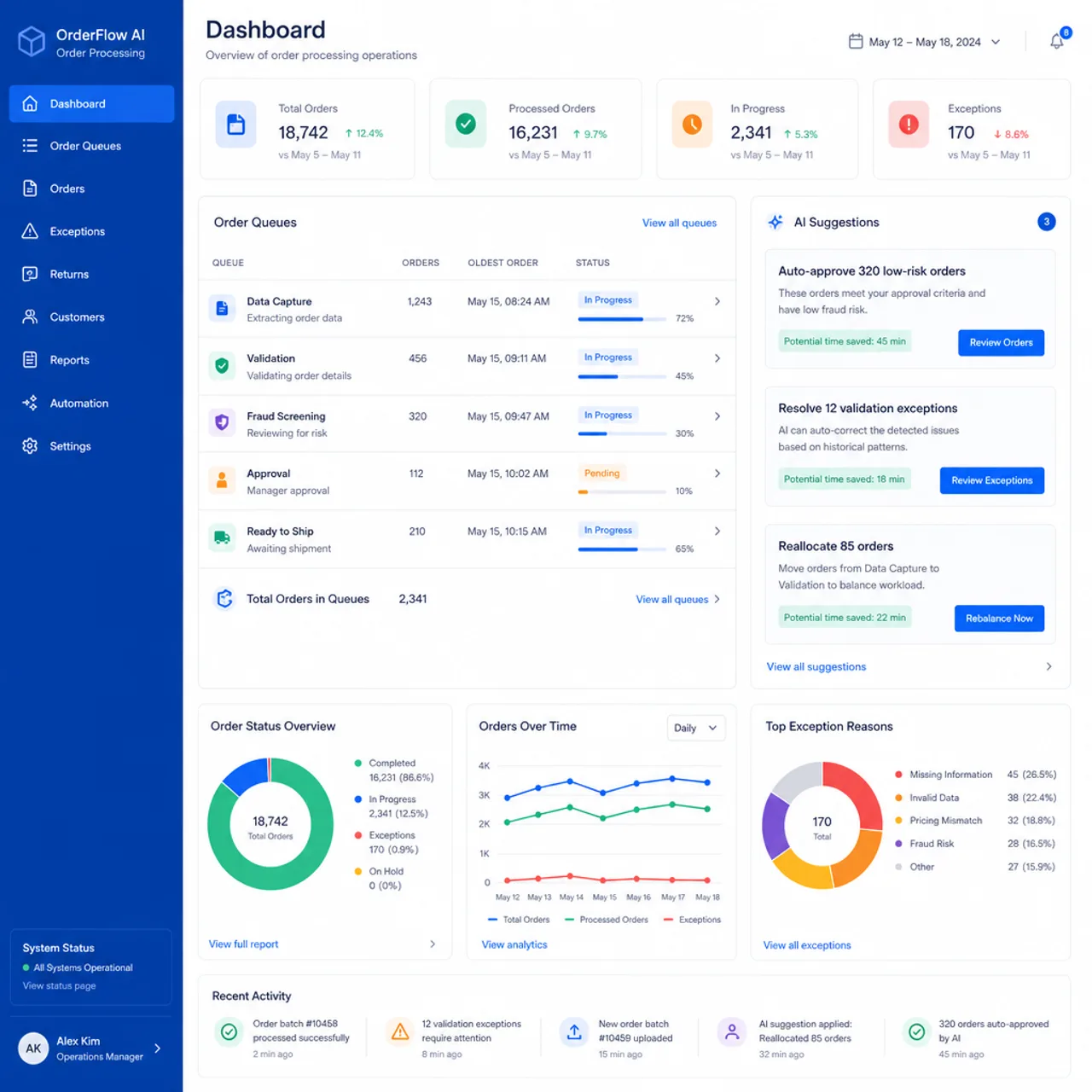
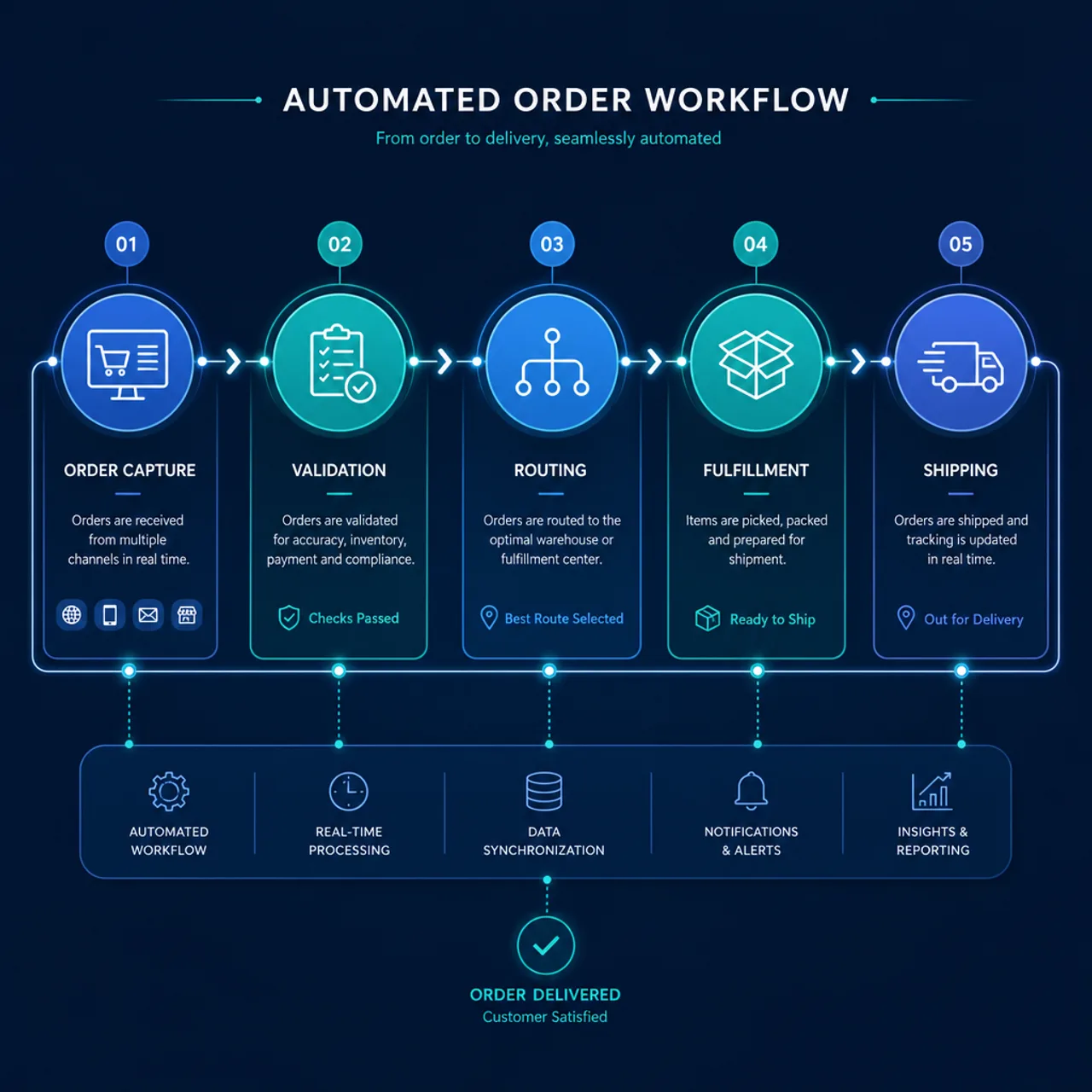
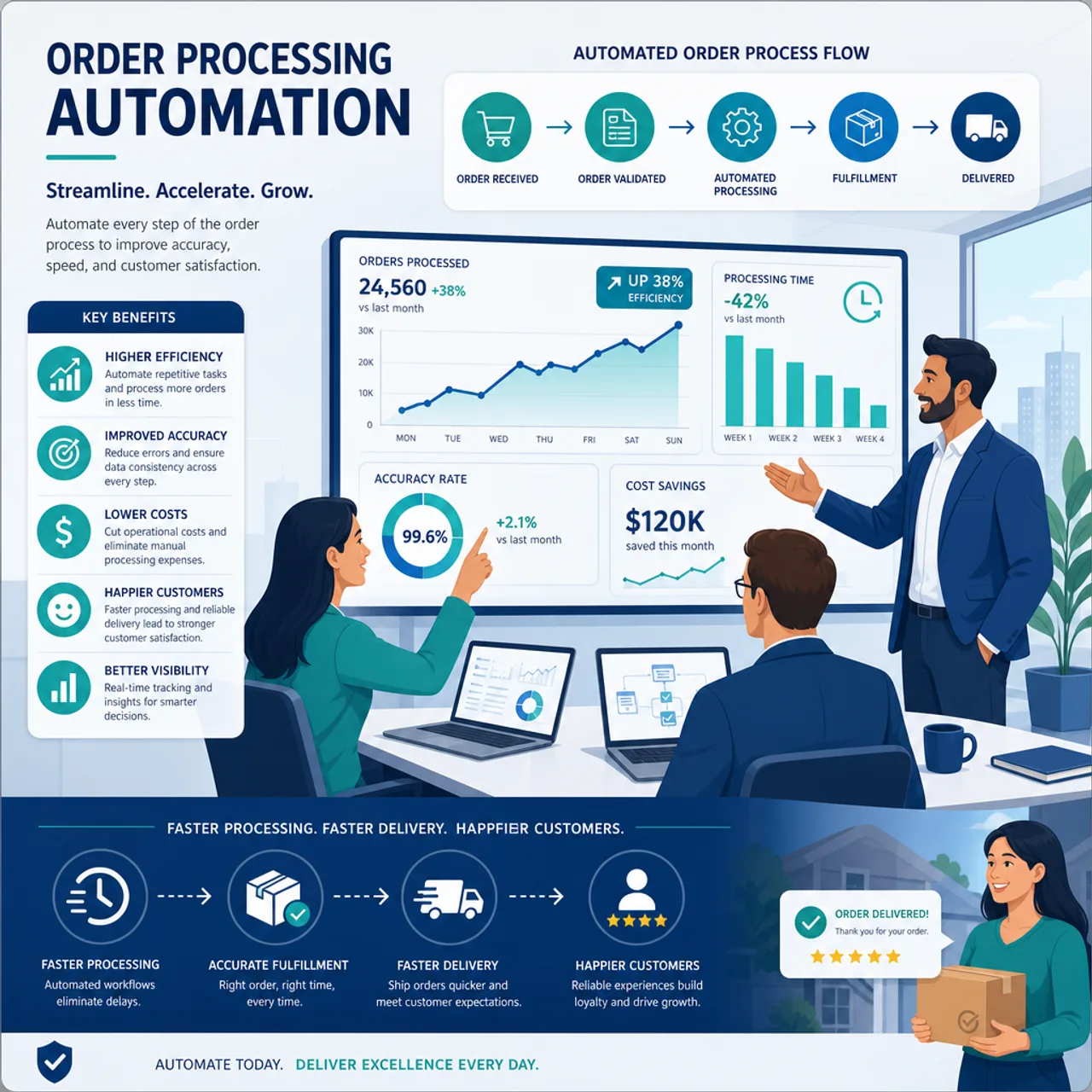
Most platforms follow a five-stage pipeline. Understanding each stage helps you evaluate where a tool is strong and where it is weak.
- Order capture: AI ingests orders from email, web forms, marketplaces, EDI, and PDFs. Natural language processing reads unstructured inputs, such as a customer email that says "send me 12 of the usual," and converts them into structured order data.
- Validation: The system checks pricing, stock, addresses, and payment details. Machine learning flags anomalies, like a quantity 10x larger than a customer's average, before they become problems.
- Routing: The software decides which warehouse, supplier, or fulfillment center should handle the order based on location, stock, and shipping cost.
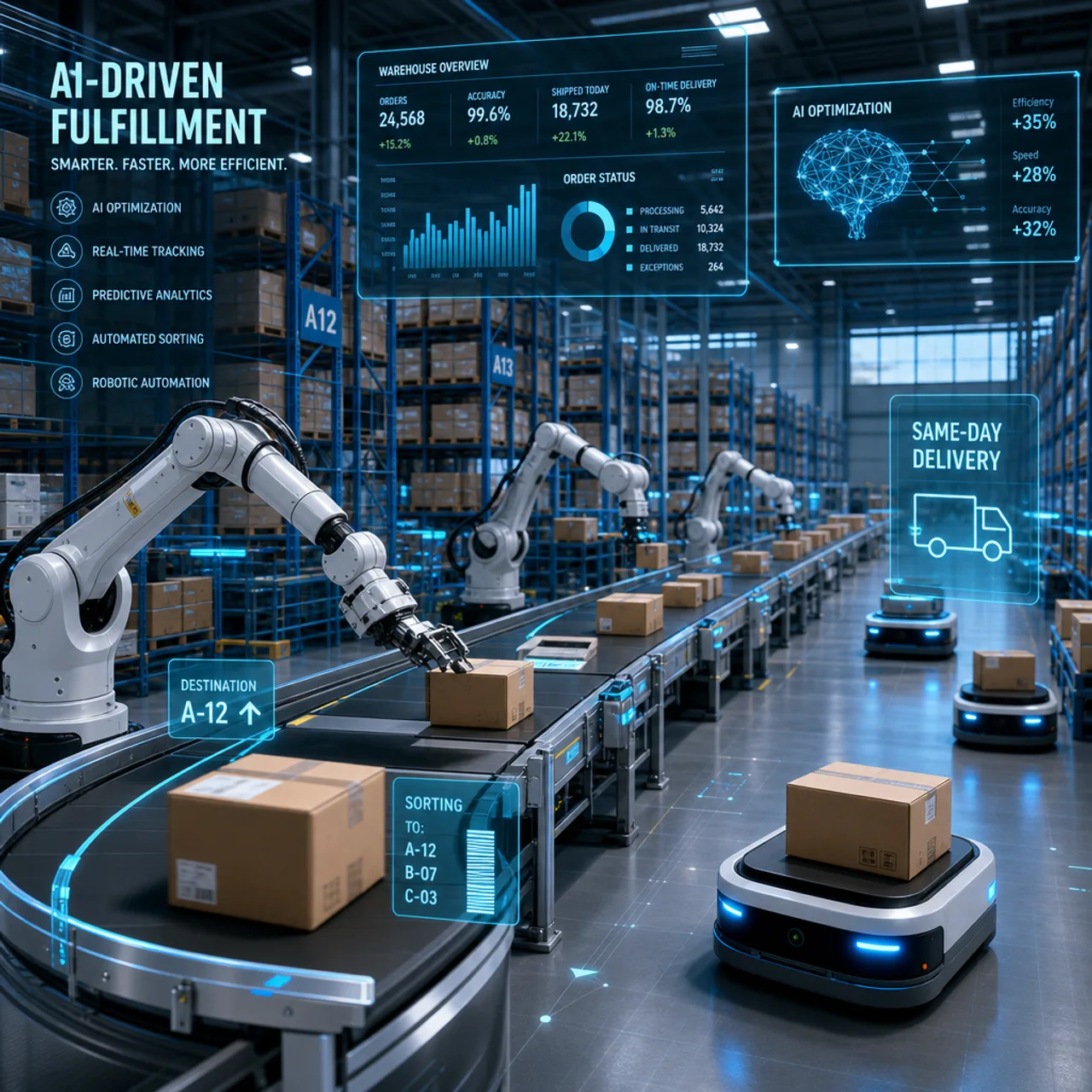
- Fulfillment: It generates pick lists, packing slips, and carrier labels automatically, syncing with warehouse and shipping systems.
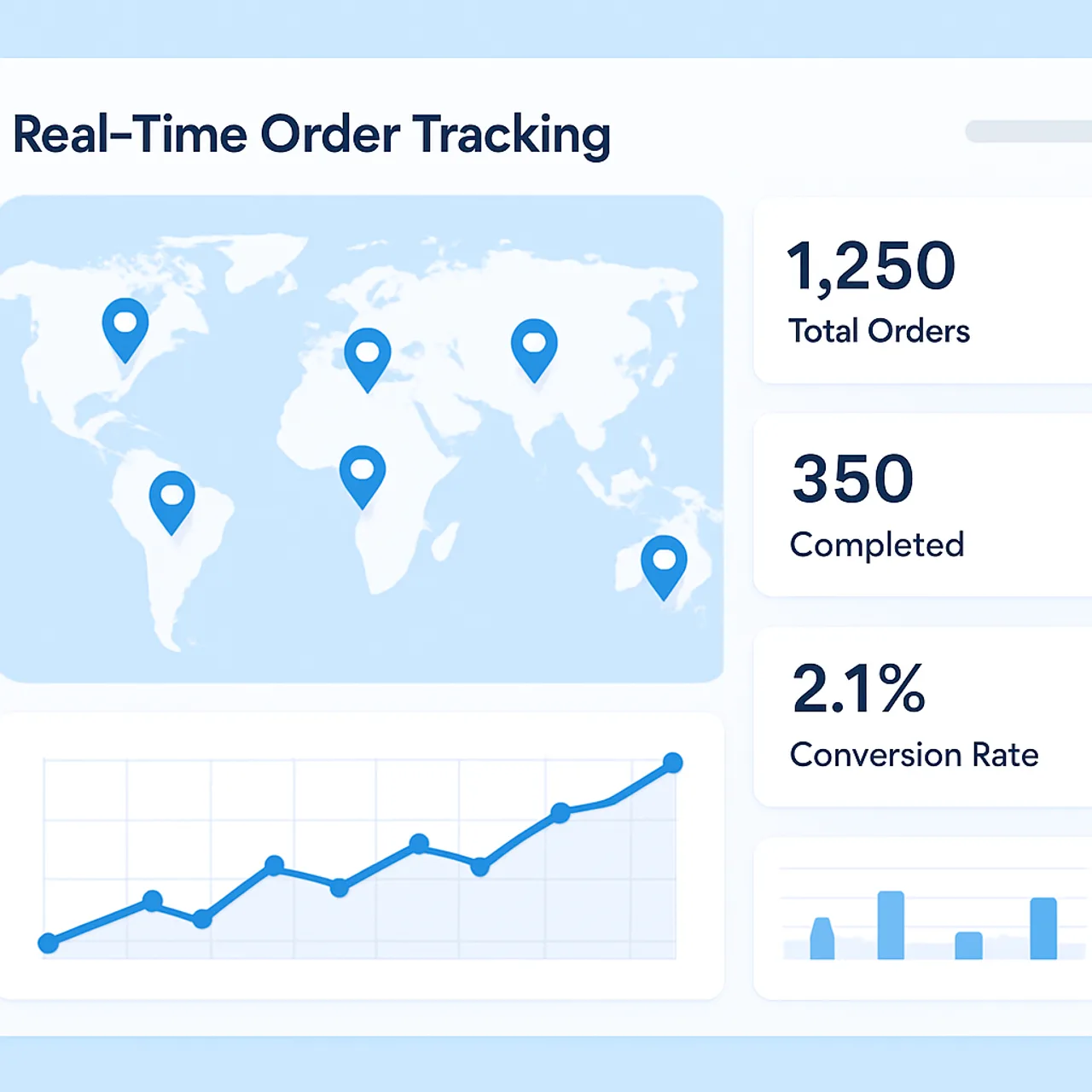
- Tracking and analytics: Real-time dashboards monitor status, predict delays, and surface insights for continuous improvement.
Why Natural Language Processing Matters Here
A large share of B2B orders still arrive as free-form email or PDF attachments. NLP is the component that reads those documents and extracts SKUs, quantities, and delivery instructions without a human retyping them. This single capability often eliminates the most error-prone task in the entire workflow.
The Real Benefits (Backed by Data)
The value of AI order processing is not abstract; it shows up in measurable operational metrics.
According to McKinsey, organizations that apply AI to supply chain and logistics operations have reduced forecasting errors by up to 50% and cut lost sales from stockouts by as much as 65%. Separately, Gartner has reported that automating order management can reduce order processing costs by around 30% while improving accuracy. Those numbers reflect what I consistently observe: the biggest gains come from error reduction and labor reallocation, not just raw speed.
Here are the benefits that matter most in practice:
- Fewer errors: Automated validation catches wrong SKUs, addresses, and quantities before shipment.
- Faster cycle times: Orders that took hours to process manually clear in seconds.
- Lower labor cost per order: Staff move from data entry to exception handling and customer relationships.
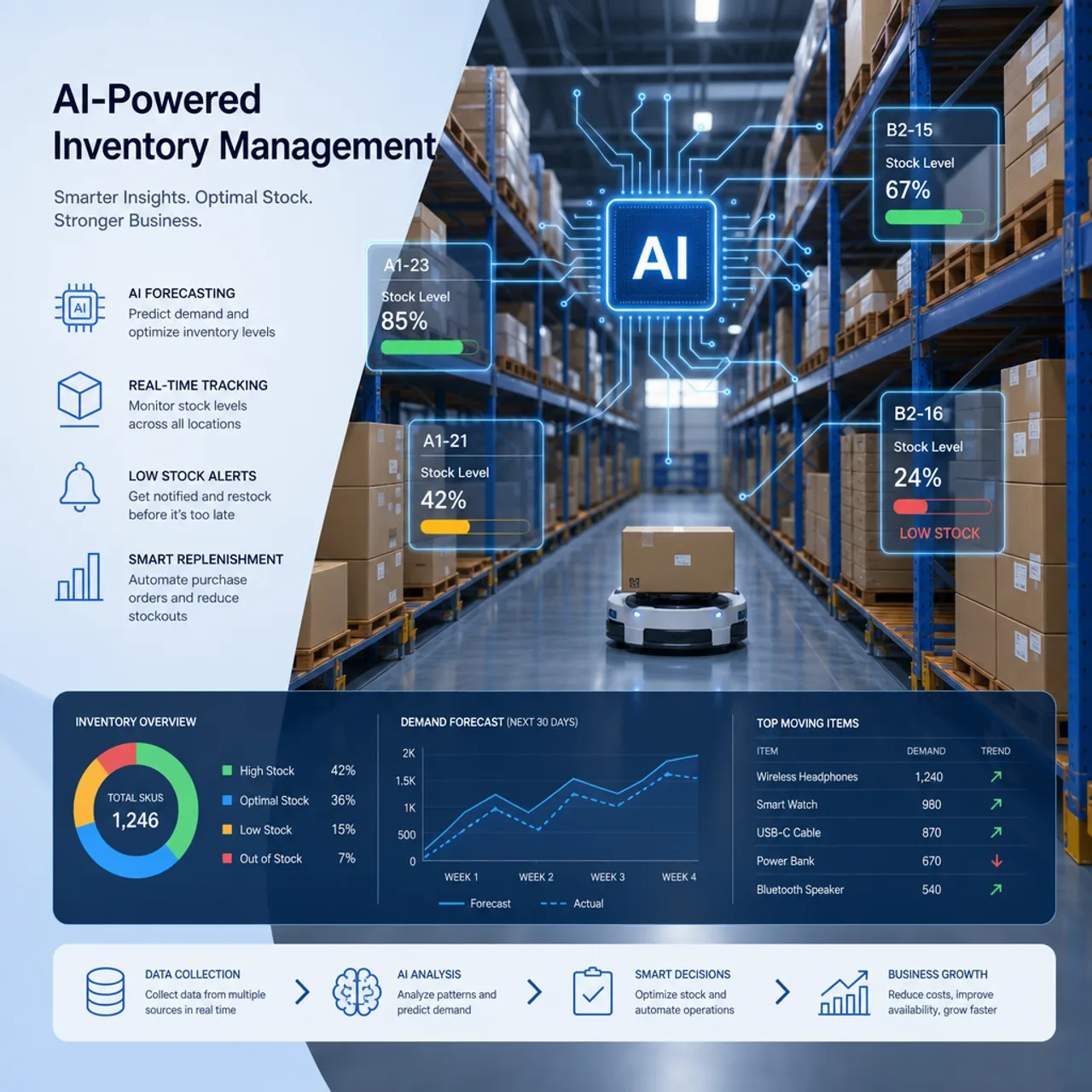
- Better inventory accuracy: Predictive models prevent both stockouts and overstock.
- Scalability: Volume spikes during peak season no longer require proportional headcount.
AI Order Processing vs Traditional Order Management
The difference becomes clear when you compare the two side by side.
| Capability | Traditional OMS | AI Order Processing |
|---|---|---|
| Reads unstructured emails/PDFs | No | Yes |
| Error detection before shipping | Manual | Automatic |
| Inventory forecasting | Basic rules | Predictive ML |
| Fulfillment routing | Fixed rules | Dynamic optimization |
| Fraud and duplicate detection | Limited | Built-in |
| Scales without added staff | No | Yes |
Traditional systems are not useless; they are simply reactive. AI systems are proactive, which is exactly what high-volume operations need as complexity grows.
Key Features to Look For
Not every platform marketed as "AI-powered" earns the label. When evaluating software, prioritize these capabilities:
- Multi-channel order capture including email, marketplaces, and EDI.
- Document AI that reads PDFs and images accurately.
- Predictive inventory management that forecasts demand, not just reports current stock.
- Configurable business rules you can adjust without a developer.
- Open API and integrations with your ERP, accounting, and shipping tools.
- Audit trails and role-based access for trust and compliance.
A Tip From Experience
When testing a platform, feed it your messiest real orders, not the clean demo data the vendor provides. The gap between how a system handles a polished sample and a smudged scanned PO tells you everything about its true accuracy. Building or integrating these systems often benefits from expert help; teams like ZoneTechify and WebPeak focus on tailoring AI automation to a company's specific order flow rather than offering a rigid one-size-fits-all product.
How Machine Learning Improves Order Routing
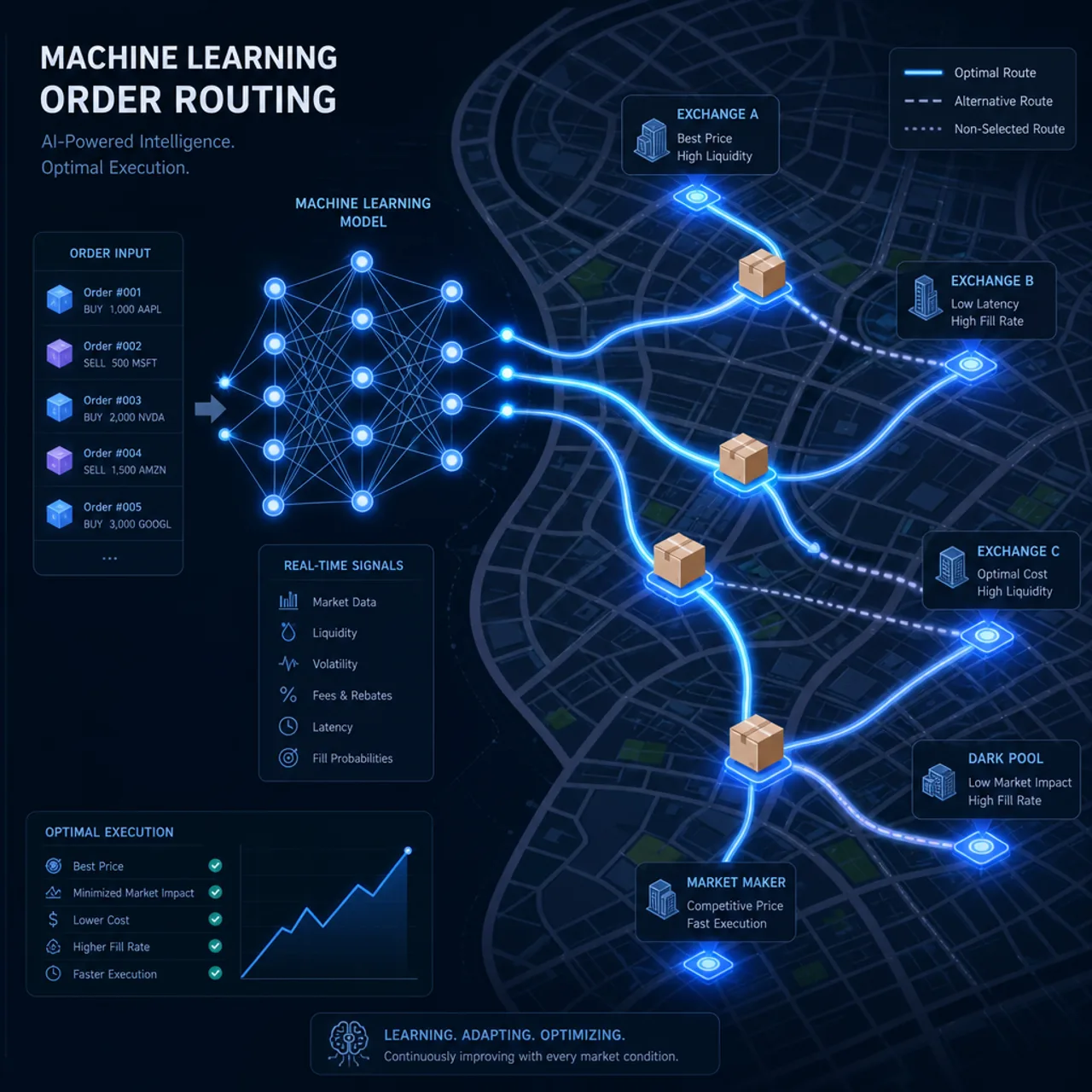
Machine learning order routing is the practice of using historical data to choose the optimal fulfillment path for each order. Instead of always shipping from the nearest warehouse, the model weighs stock levels, shipping cost, delivery promises, and carrier performance to minimize cost and delay simultaneously.
Over time, the model learns. If a particular carrier consistently delays shipments to a region, the system adapts and reroutes future orders. This compounding intelligence is something rule-based systems can never match, because rules are static while learning is continuous.
Implementation: How to Roll It Out Without Disruption
The most common mistake is trying to automate everything at once. A phased approach protects your operation and builds team confidence.
- Audit your current workflow and identify the highest-volume, most error-prone steps.
- Start with order capture and validation, the stages with the fastest, clearest return.
- Run the AI in parallel with manual processing for a few weeks to verify accuracy.
- Expand to routing and fulfillment once trust is established.
- Train staff to handle exceptions, since their role shifts from doing every order to supervising the system.
This approach typically delivers visible wins within the first month while keeping risk low. For businesses that want a custom build aligned to their exact stack, exploring dedicated artificial intelligence services is often more cost-effective than retrofitting a generic tool.
Common Pitfalls to Avoid
Even strong software fails when implemented poorly. Watch for these traps:
- Garbage data in, garbage decisions out. Clean your product catalog and customer records before going live.
- Over-automation too early. Keep humans in the loop for high-value or unusual orders until accuracy is proven.
- Ignoring integrations. A tool that cannot sync with your ERP and shipping carriers creates new silos instead of removing them.
- No measurement plan. Define baseline metrics so you can prove the ROI later.
Measuring Success: The Metrics That Matter
Track these KPIs before and after implementation to quantify impact: order accuracy rate, average processing time per order, labor cost per order, on-time shipment rate, and inventory turnover. A meaningful deployment should improve accuracy and processing time within weeks, not quarters.
Key Takeaways
- Artificial intelligence order processing software captures, validates, routes, and fulfills orders automatically using machine learning and NLP.
- According to McKinsey, AI in supply chains can cut forecasting errors by up to 50% and reduce stockout losses by up to 65%.
- Gartner reports order management automation can lower processing costs by roughly 30% while improving accuracy.
- The biggest gains come from error reduction and labor reallocation, not speed alone.
- A phased rollout, starting with order capture and validation, minimizes risk and delivers fast ROI.
- Always test platforms with your messiest real orders, not clean demo data.
Frequently Asked Questions (FAQ)
What does artificial intelligence order processing software do?
It automatically captures orders from any channel, validates them for errors, predicts inventory needs, routes fulfillment to the best location, and tracks shipments. It uses machine learning to make decisions humans would otherwise make manually, reducing errors, cutting costs, and freeing staff for higher-value work.
How much does AI order processing software cost?
Pricing varies widely, from around 100 dollars monthly for small-business SaaS plans to enterprise contracts in the thousands. Most vendors charge by order volume, users, or integrations. A custom-built solution costs more upfront but often pays off faster for businesses with complex or high-volume order flows.
Is AI order processing software hard to implement?
Not if you phase it. Start by automating order capture and validation, run the AI alongside your manual process to confirm accuracy, then expand to routing and fulfillment. Most teams see measurable results within the first month when they clean their data and integrate properly before launch.
Can it handle orders that arrive by email or PDF?
Yes. Modern platforms use natural language processing and document AI to read unstructured emails, PDFs, and scanned purchase orders. They extract SKUs, quantities, and delivery details automatically, eliminating the manual retyping that causes most order errors in B2B operations.
Will AI order processing replace my staff?
No. It replaces repetitive data entry, not people. Staff shift from typing orders to supervising the system, handling exceptions, and improving customer relationships. In practice, teams handle far higher order volume without adding headcount, which makes the business more scalable rather than smaller.
How does it improve inventory accuracy?
It uses predictive machine learning models to forecast demand based on historical sales, seasonality, and trends. Instead of reacting to stockouts, the system anticipates them and prompts replenishment in advance, reducing both lost sales from empty shelves and the carrying cost of excess overstock.