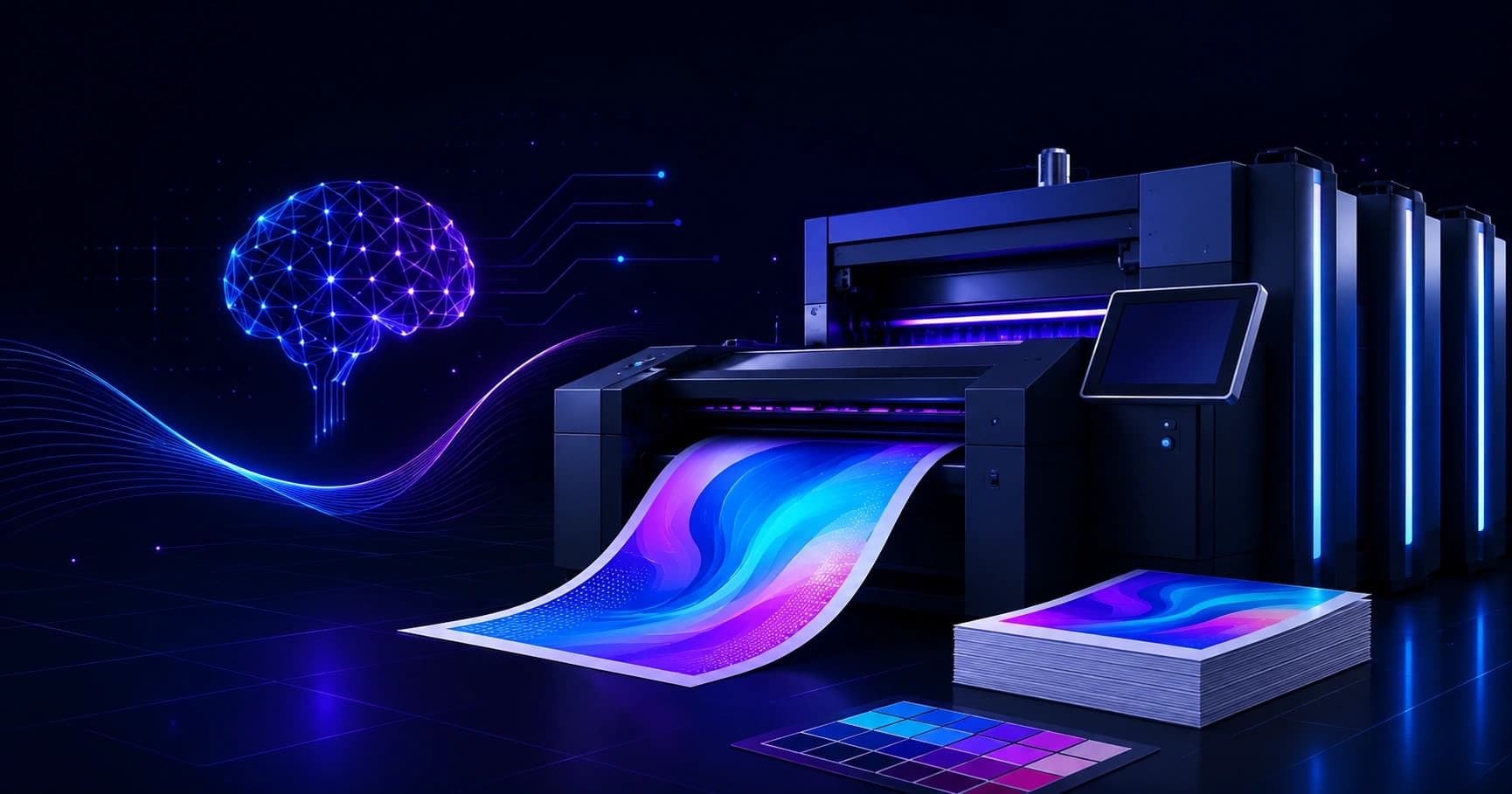
Discover how artificial intelligence is transforming the printing industry through automation, quality control, predictive maintenance, personalization, and sustainability.
Artificial Intelligence in Printing Industry
The printing industry has spent centuries reinventing itself, from Gutenberg's press to digital offset. Today, the most disruptive force on the pressroom floor is not a new ink or substrate, it is artificial intelligence. Having worked alongside commercial print shops modernizing their operations, I have watched AI move from a buzzword to a daily tool that measurably cuts waste, speeds up jobs, and protects margins. This guide explains exactly how artificial intelligence is reshaping printing, where it delivers real returns, and what print businesses should do next.
Quick Answer: Artificial intelligence in the printing industry uses machine learning and computer vision to automate prepress, inspect print quality in real time, predict equipment failures, personalize print runs, and reduce material waste. The result is faster turnaround, lower costs, higher consistency, and more sustainable, data-driven print production.
What Does Artificial Intelligence Mean in Printing?
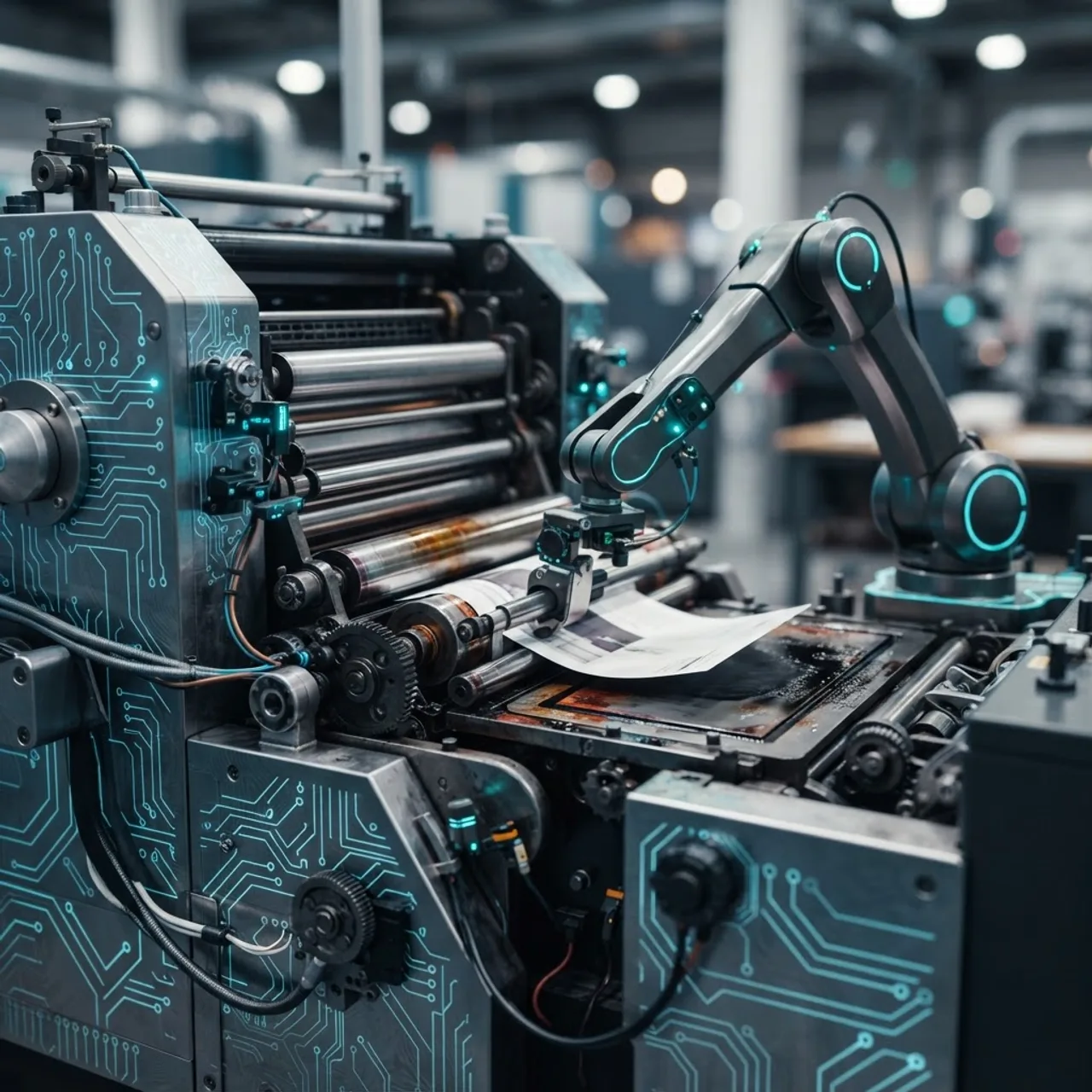
Artificial intelligence in printing refers to software systems that learn from production data to make or recommend decisions without constant human input. In practical terms, this means algorithms that read a design file and auto-correct color profiles, cameras that flag a smudged sheet before it reaches the customer, and models that schedule a press for maintenance before it breaks down.
Unlike traditional automation, which follows fixed rules, AI adapts. A rules-based system checks whether a file is 300 DPI; an AI system learns which files historically caused reprints and warns the operator proactively. That shift, from reactive to predictive, is why print leaders are investing. Agencies such as ZoneTechify and WebPeak increasingly build these intelligent workflows into the digital backbone of modern print businesses.
AI-Driven Prepress and Workflow Automation
Prepress is where AI delivers its fastest payback. Preparing a file for print, checking resolution, bleed, trapping, imposition, and color, traditionally consumes hours of skilled labor per complex job. AI-powered prepress tools now handle much of this automatically.

Here is how AI streamlines the workflow:
- Automated preflight: The system scans incoming files, detects missing fonts or low-resolution images, and either fixes them or routes them back with clear instructions.
- Intelligent imposition: Algorithms arrange pages on a sheet to minimize paper waste and cutting time.
- Dynamic job scheduling: AI sequences jobs across presses based on ink color, substrate, and deadline to reduce changeover downtime.
- Color management: Machine learning matches output to brand color targets across different devices and papers.
According to McKinsey, companies that adopt AI-driven process automation report productivity gains of up to 40% in document-heavy workflows, and prepress is one of the clearest beneficiaries. For print shops, automating these steps means operators spend time on high-value problem-solving instead of repetitive file checks. This is where a well-designed web application development approach pays off, connecting order intake, prepress, and press scheduling into one intelligent pipeline.
Real-Time Quality Control With Computer Vision
Computer vision is AI that interprets images, and it has become the pressroom's most reliable inspector. High-speed cameras mounted over the web or sheet capture every impression and compare it against the approved master file in milliseconds.
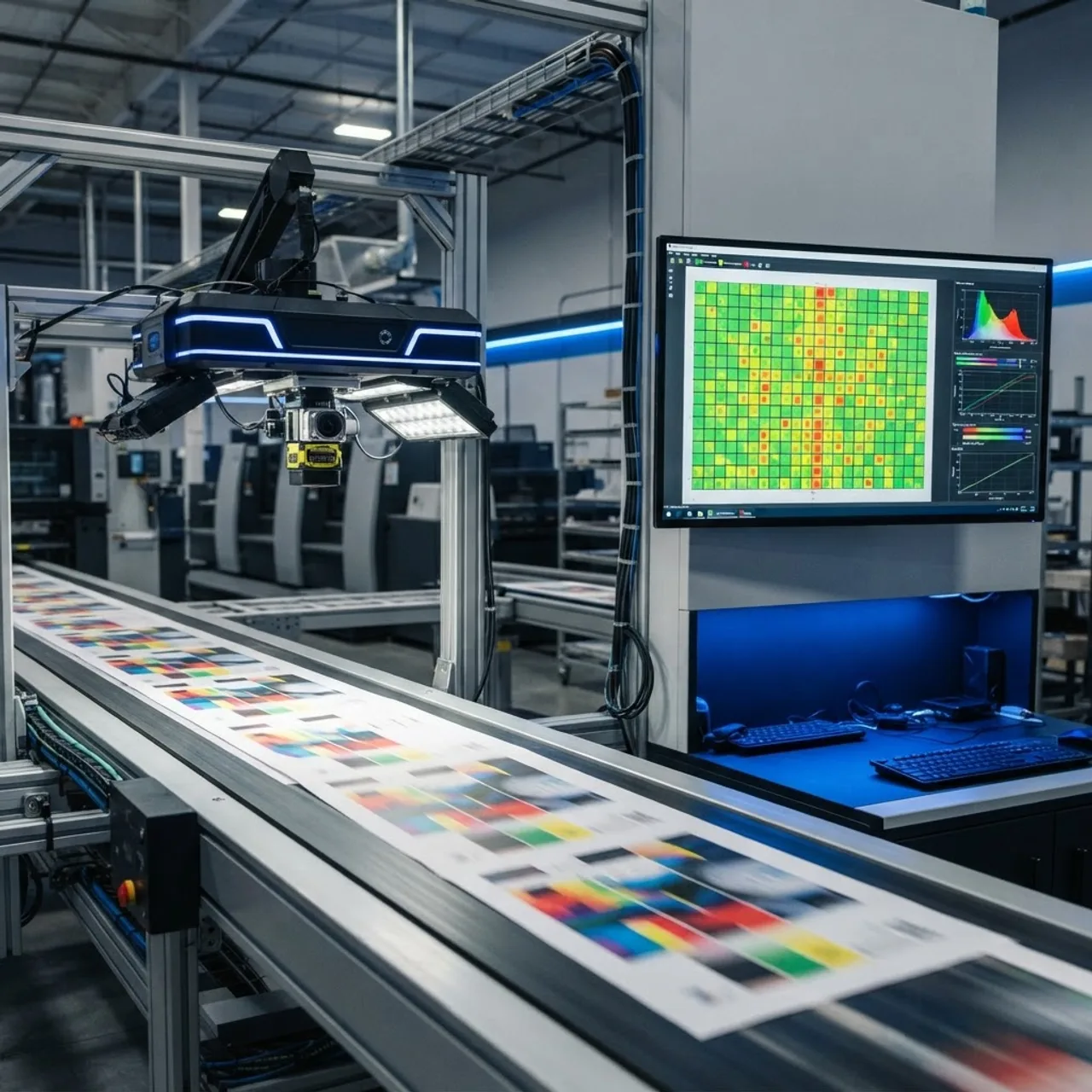
These systems catch defects the human eye misses at speed: hairline registration shifts, ink density drift, streaking, hickeys, and color variation. When a defect appears, the system can flag the sheet, alert the operator, or automatically divert the bad copies. On a run of 100,000 impressions, catching a color drift in the first 200 sheets instead of the last thousand saves substantial ink, substrate, and rework.
The business case is straightforward. Waste and rework are among the largest hidden costs in commercial printing. By inspecting 100% of output rather than spot-checking, AI vision systems reduce customer returns, protect brand color standards, and generate a documented quality trail, which matters enormously for regulated products like pharmaceutical packaging and labels.
Predictive Maintenance That Prevents Costly Downtime
Predictive maintenance uses sensor data and machine learning to forecast equipment failure before it happens. A modern press generates thousands of data points per minute, temperature, vibration, roller pressure, motor current, and humidity. AI models learn the normal signature of a healthy machine and detect subtle deviations that precede a breakdown.
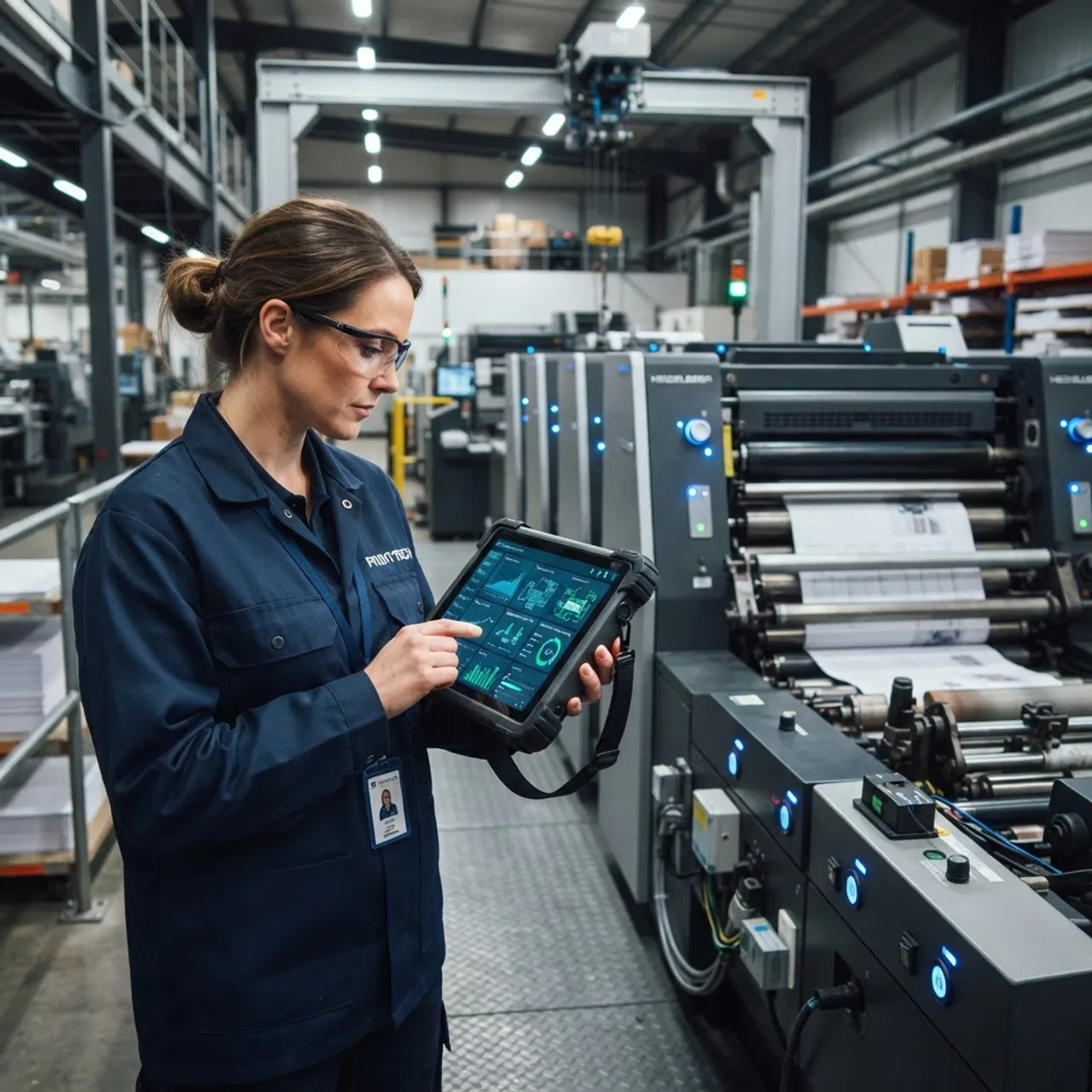
Instead of waiting for a bearing to seize mid-run, the system schedules a repair during planned downtime. Deloitte research indicates predictive maintenance can reduce unplanned downtime by up to 50% and cut maintenance costs by 10% to 40%. For a print operation where an hour of unplanned press downtime can cost thousands in idle labor and missed deadlines, that reliability is transformative.
The practical takeaway: predictive maintenance turns servicing from a calendar-based guess into a data-driven decision. Shops keep presses running longer, extend equipment lifespan, and negotiate parts inventory more intelligently because they know what will fail and roughly when.
Personalization and Variable Data Printing at Scale
AI makes mass personalization commercially viable. Variable data printing, where every printed piece can carry unique text, images, or offers, has existed for years, but AI supercharges it by deciding what content each recipient should receive.
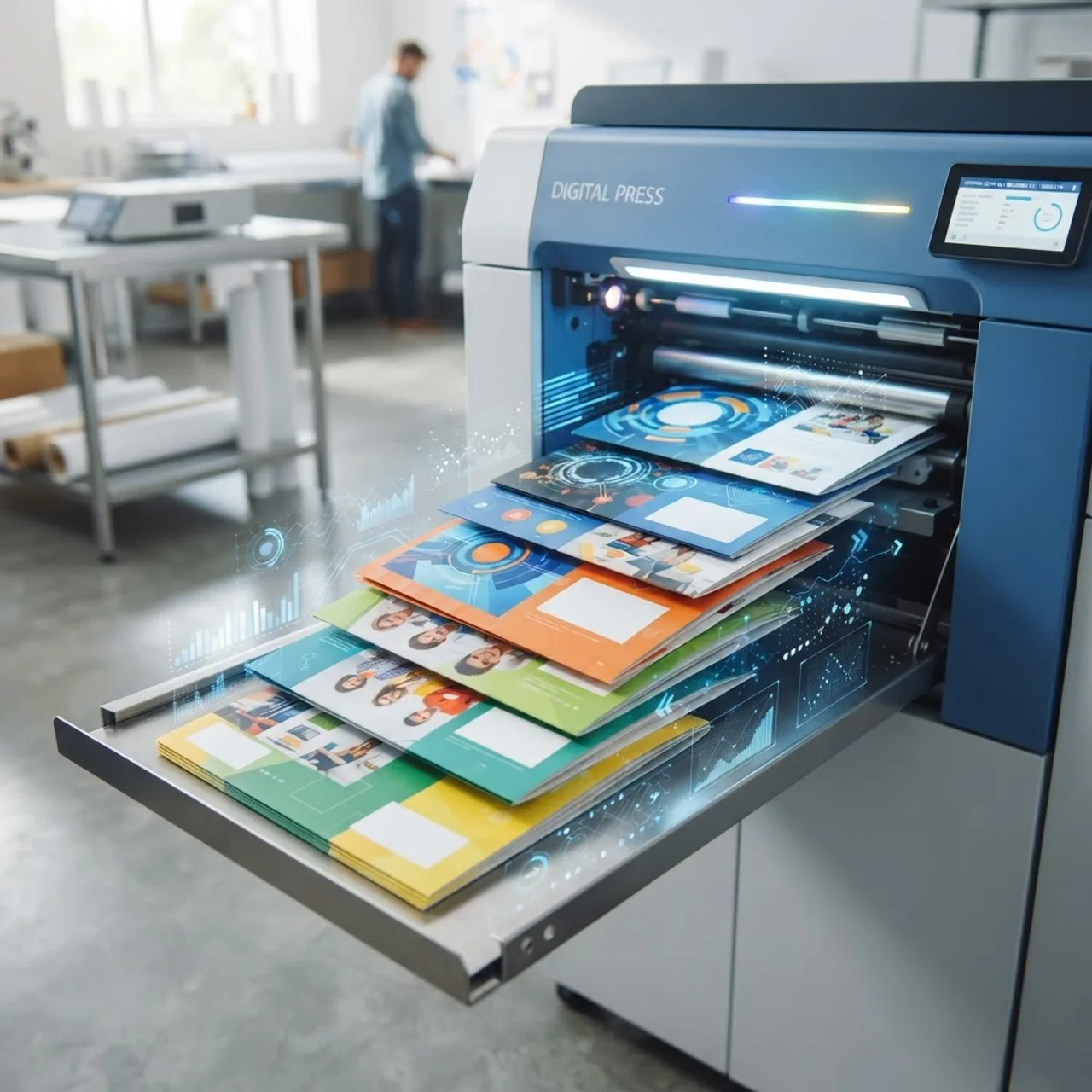
By analyzing customer data, purchase history, location, and behavior, AI selects the most relevant message, product image, or promotion for each individual, then feeds it into the print stream automatically. A retailer can send 50,000 direct mail pieces where every single one is tailored, and campaign response rates rise accordingly.
This capability blends print with digital marketing strategy. AI segments audiences, predicts which creative will convert, and even optimizes send timing when print is paired with follow-up channels. For businesses building these campaigns, combining print production with artificial intelligence services turns a static mailer into a measurable, data-driven marketing asset that competes with digital ads on relevance.
Sustainability Gains From Smarter Printing
AI directly reduces the environmental footprint of printing by minimizing waste at every stage. Paper and ink are both costs and carbon. Intelligent imposition packs more product onto fewer sheets. Color prediction reduces test proofs and makeready sheets. Real-time inspection stops bad runs early instead of discovering them at the end.
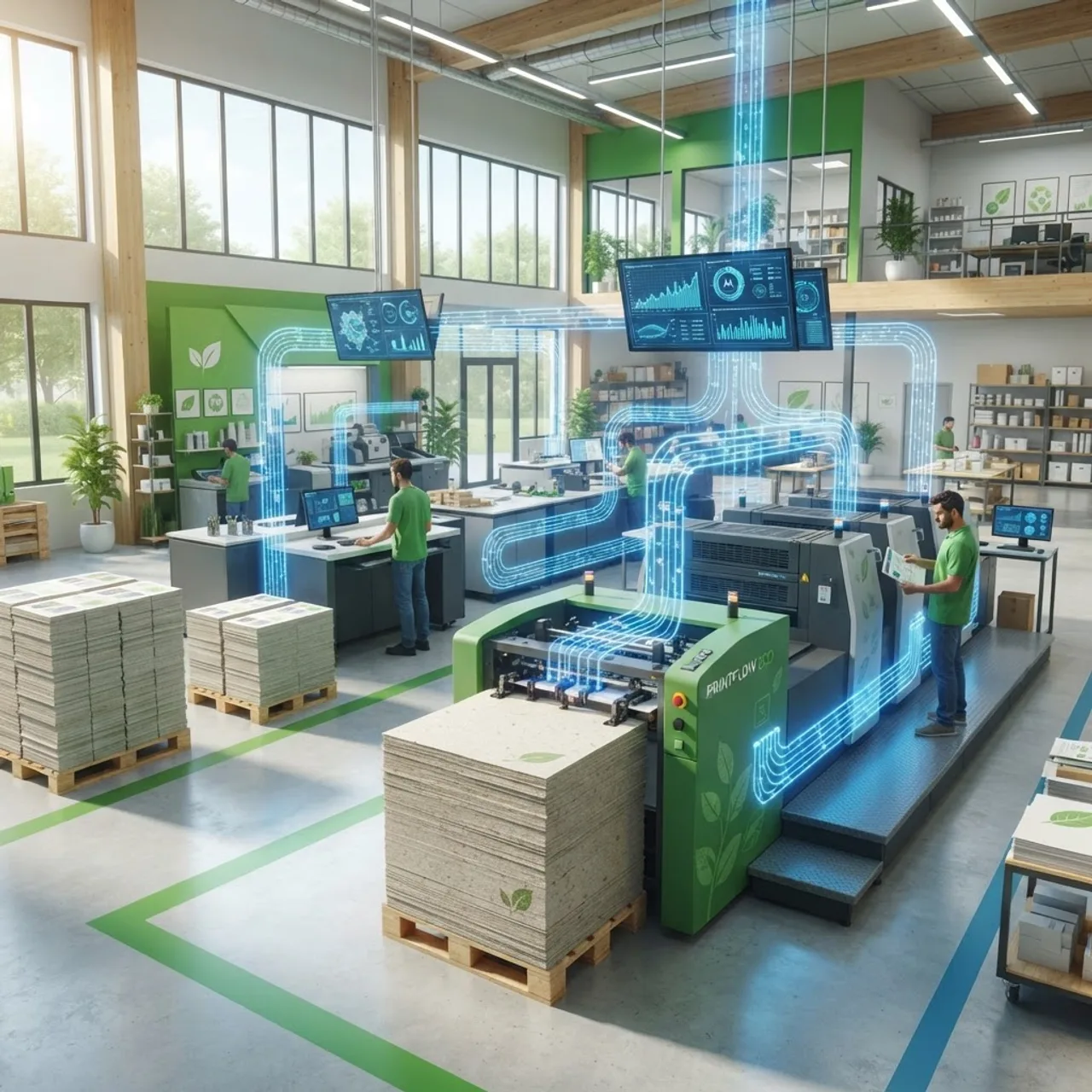
AI also optimizes ink usage through algorithms that maintain target color with the minimum viable ink coverage, and it improves demand forecasting so shops print closer to actual need rather than overproducing. Combined, these reductions cut raw material consumption, lower energy use per finished piece, and shrink the volume of spoiled stock sent to recycling or landfill. For clients with sustainability commitments, a print partner using AI can offer credible, quantifiable waste reduction, which is increasingly a requirement in procurement, not a nice-to-have.
AI in Printing: Traditional vs Intelligent Workflows
| Aspect | Traditional Printing | AI-Powered Printing |
|---|---|---|
| Prepress checks | Manual, hours per job | Automated preflight in seconds |
| Quality control | Random spot checks | 100% real-time inspection |
| Maintenance | Fixed schedule or after failure | Predictive, data-driven |
| Waste levels | Higher makeready and rework | Reduced through early detection |
| Personalization | Limited, template based | Scalable, individualized content |
| Turnaround speed | Slower, human bottlenecks | Faster, optimized scheduling |
How to Start Adopting AI in Your Print Business
You do not need to automate everything at once. Based on real implementations, the most successful shops follow a staged path:
- Start with data: Ensure presses and MIS systems capture clean production data, AI is only as good as its inputs.
- Pick one high-pain area: Usually prepress automation or quality inspection delivers the fastest, most visible return.
- Choose interoperable tools: Favor systems with open APIs that connect to your existing workflow rather than closed silos.
- Train your team: Operators become supervisors of intelligent systems; invest in the skills to interpret and act on AI output.
- Measure relentlessly: Track waste, downtime, and turnaround before and after so you can prove ROI and justify the next phase.
The Future of AI in the Printing Industry
The next decade points toward increasingly autonomous print production. Presses will self-adjust color and registration without operator intervention, generative AI will assist with layout and design ideation, and connected factories will coordinate scheduling across multiple sites in real time.
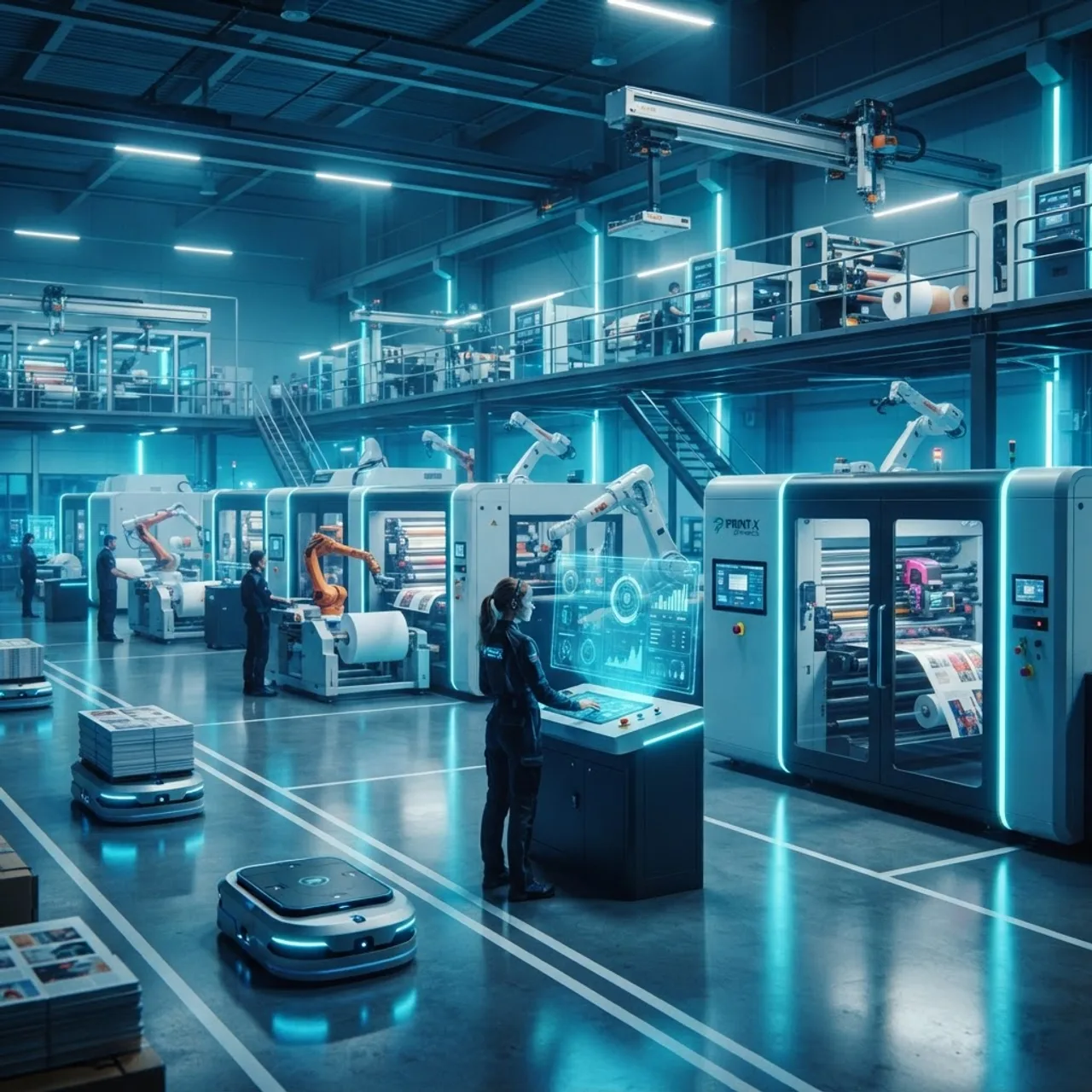
We will also see AI deepen the link between print and e-commerce, where a customer's online order automatically triggers optimized, personalized production. The printers that thrive will not be those with the most machines, but those that treat data and intelligence as core infrastructure. Print is not disappearing; it is becoming smarter, faster, and far more efficient.
Key Takeaways
- AI in printing spans prepress automation, computer vision quality control, predictive maintenance, personalization, and sustainability.
- McKinsey reports up to 40% productivity gains from AI-driven process automation in document-heavy workflows.
- Deloitte finds predictive maintenance can cut unplanned downtime by up to 50% and maintenance costs by 10% to 40%.
- Computer vision enables 100% inspection, reducing waste, rework, and customer returns.
- Successful adoption starts with clean data and one high-impact use case, then scales with measured ROI.
Frequently Asked Questions (FAQ)
How is artificial intelligence used in the printing industry?
AI is used across printing to automate prepress file checks, inspect print quality with computer vision, predict equipment failures, personalize variable data print runs, and reduce paper and ink waste. It shifts operations from reactive to predictive, improving speed, consistency, and profitability across commercial and packaging print.
Will AI replace jobs in the printing industry?
AI is more likely to reshape print jobs than eliminate them. Repetitive tasks like manual file checking get automated, while operators evolve into supervisors of intelligent systems, focusing on problem-solving, color expertise, and client service. Shops that reskill their teams typically gain productivity rather than simply cutting staff.
Is AI in printing affordable for small print shops?
Yes, increasingly so. Many AI tools are now offered as cloud-based subscriptions with open APIs, avoiding large upfront costs. Small shops often start with one affordable module, such as automated preflight or color management, then expand as they measure savings in waste reduction and faster turnaround times.
What is predictive maintenance in printing?
Predictive maintenance uses sensors and machine learning to monitor press health and forecast failures before they occur. By detecting abnormal vibration, temperature, or pressure patterns, it schedules repairs during planned downtime, preventing costly mid-run breakdowns and extending equipment lifespan compared to fixed-schedule or reactive maintenance approaches.
How does AI improve print quality?
AI improves print quality using computer vision cameras that inspect every impression in real time, comparing it to the approved master. It instantly detects color drift, registration errors, streaking, and defects, then alerts operators or diverts bad sheets, ensuring consistent output and dramatically reducing rework and customer returns.
Can AI make printing more sustainable?
Yes. AI reduces waste through intelligent imposition, minimized makeready sheets, optimized ink coverage, and accurate demand forecasting. By catching defects early and printing closer to actual need, AI lowers paper and ink consumption, cuts energy use per piece, and helps print businesses meet measurable sustainability targets.