
Discover how artificial intelligence transforms direct materials quality management with real-time inspection, defect detection, predictive analytics, and smarter supplier control.
Artificial Intelligence Direct Materials Quality Management

Direct materials are the raw inputs that physically become part of a finished product: the steel in a chassis, the resin in a molded part, the fabric in a garment. When these materials arrive defective, every downstream process inherits that flaw, and the cost of fixing it multiplies at each stage. Artificial intelligence has become the most practical way manufacturers now catch those defects early, standardize inspection, and hold suppliers accountable with data instead of guesswork.
After a decade working alongside quality teams in automotive, electronics, and consumer-goods plants, I have watched inspection shift from clipboards and calipers to camera arrays and machine-learning models that flag a defect in milliseconds. This article explains exactly how AI reshapes direct materials quality management, where it delivers measurable value, and how to implement it without disrupting the floor.
Quick Answer: Artificial intelligence in direct materials quality management uses machine vision, machine learning, and predictive analytics to inspect incoming raw materials, detect defects instantly, score suppliers, and forecast quality risks. It reduces scrap, speeds inspection, and improves consistency far beyond manual checks.
What Is AI in Direct Materials Quality Management?
AI in direct materials quality management is the use of machine learning and computer vision to automatically inspect, grade, and monitor the raw inputs that go directly into a product. Instead of relying on periodic human sampling, AI systems analyze every unit against learned quality standards and surface anomalies in real time.
Three core technologies do the heavy lifting. Computer vision interprets images of materials to spot surface defects, dimensional errors, and contamination. Machine learning learns what "good" and "bad" look like from historical data, improving as it sees more examples. Predictive analytics connects incoming quality data with process and supplier history to forecast where the next failure is likely to occur.
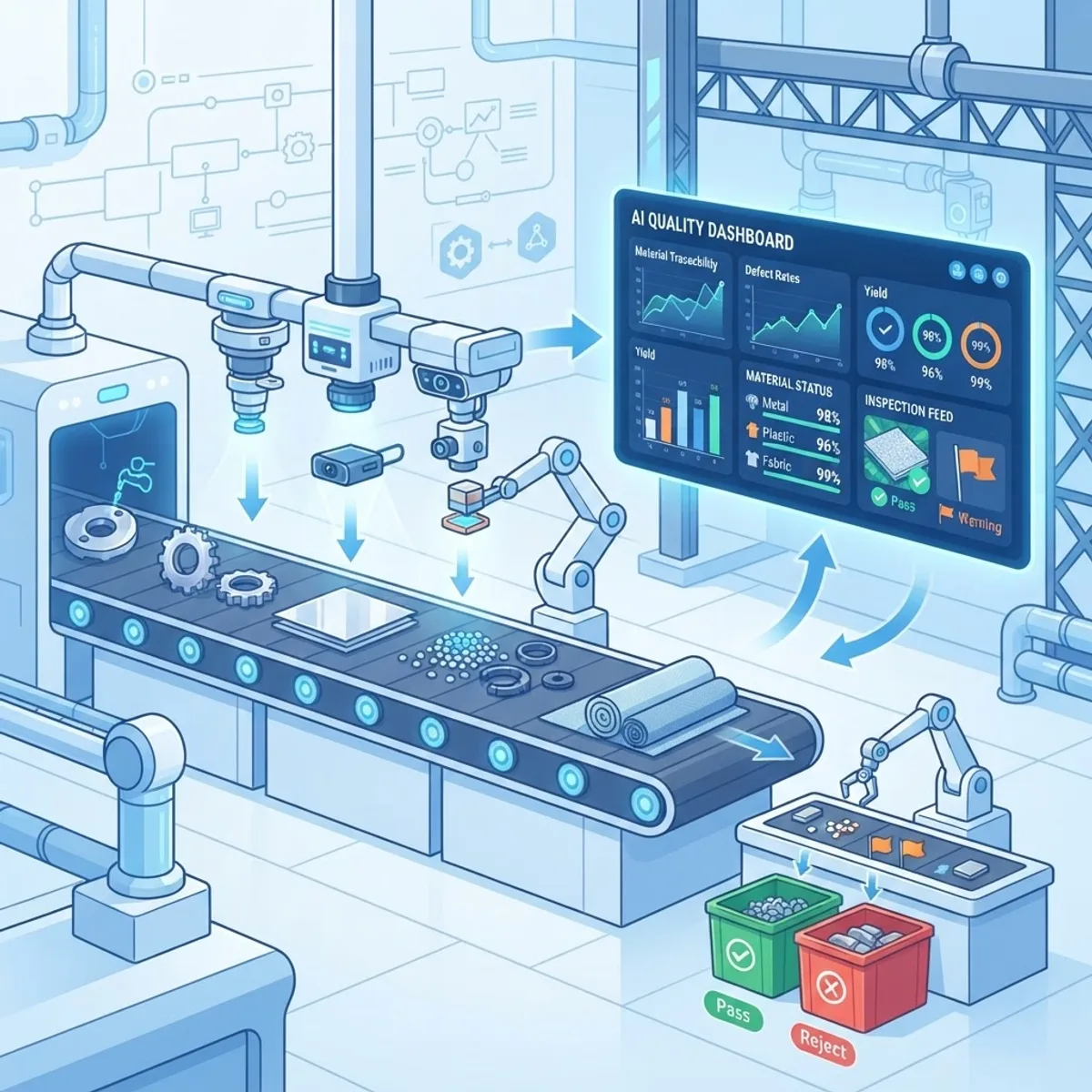
Unlike generic factory automation, this application is laser-focused on materials that end up inside the product. A false approval here does not just waste a part; it can trigger a recall, warranty claims, or a safety incident. That raised stakes explain why quality leaders adopt AI here before almost anywhere else on the floor.
Why Direct Materials Quality Matters More Than Ever
Material defects are the most expensive kind to miss because they compound. The widely cited 1-10-100 rule in quality management holds that a defect costing one dollar to catch at inspection costs ten dollars to fix in production and one hundred dollars once it reaches the customer. Direct materials sit at the very front of that chain, so catching them early yields the greatest return.
Market momentum reflects this. According to Grand View Research, the global AI in manufacturing market was valued at roughly 3.2 billion dollars in 2023 and is projected to grow at a compound annual rate above 33 percent through 2030, with quality inspection cited as a leading use case. Manufacturers are not experimenting for novelty; they are chasing hard savings from reduced scrap and rework.
There is also a talent dimension. Experienced inspectors are retiring faster than they can be replaced, and manual visual inspection accuracy typically plateaus around 80 percent because human attention fatigues. AI does not get tired on the third shift, and it applies the same standard to the first unit and the ten-thousandth.
How AI Transforms Direct Materials Quality Management
AI-Powered Visual Inspection
Machine vision systems inspect incoming materials at speeds and consistency no human line can match. High-resolution cameras capture each unit, and a trained model compares it against thousands of labeled examples to classify pass, fail, or review. On a metal-stamping line I supported, a vision model reduced escaped surface defects by more than 60 percent within the first quarter because it caught hairline scratches invisible to a tired eye.

The practical advantage is 100 percent inspection. Traditional sampling checks a small fraction of a lot and infers the rest; AI vision can examine every unit at line speed, turning statistical guesswork into full coverage.
Machine Learning Defect Detection
Machine learning models detect subtle, evolving defect patterns that fixed rule-based systems miss. Rather than programming every possible flaw, engineers train the model on examples, and it generalizes to new variations. This matters because material defects rarely look identical twice.
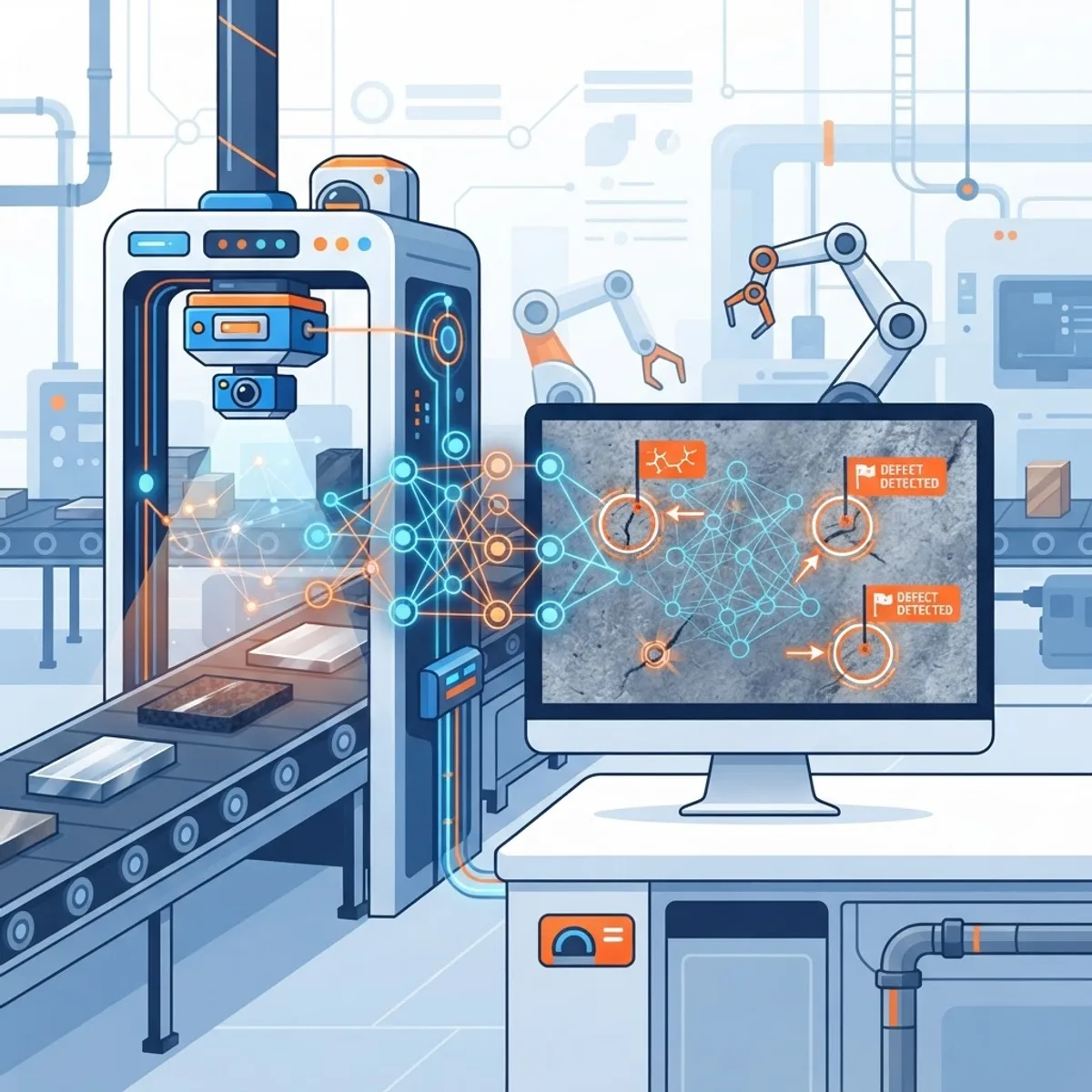
Modern models also explain their decisions with heat maps that highlight exactly where a defect sits, so operators trust the call and can trace the root cause. Over time, the same data reveals recurring patterns, such as a specific resin batch that consistently produces voids, letting teams fix the source instead of endlessly filtering symptoms.
AI-Driven Supplier Quality Intelligence
AI turns scattered inspection results into living supplier scorecards. Every accepted and rejected lot feeds a model that ranks suppliers by defect rate, consistency, and trend direction. Instead of an annual audit, buyers see quality drift the moment it starts.

This shifts negotiations from opinion to evidence. When a supplier's defect rate climbs, the data supports a corrective-action request backed by exact lot numbers and dates. Teams building this capability often pair it with expert help such as ZoneTechify's artificial intelligence services to connect inspection systems with procurement data cleanly.
Predictive Quality Analytics
Predictive analytics forecasts material quality problems before they reach the line. By correlating incoming inspection data with weather, transit time, batch age, and supplier history, models estimate the probability that a given lot will fail. Quality teams can then prioritize inspection or hold suspect lots proactively.

This is the difference between reacting and anticipating. A predictive flag on a humidity-sensitive adhesive shipment, for example, lets a plant recondition the material before it causes bonding failures downstream.
Traditional vs AI-Driven Quality Management
The table below compares conventional material inspection with an AI-driven approach across the factors that matter most to quality and finance leaders.
| Factor | Traditional Approach | AI-Driven Approach |
|---|---|---|
| Inspection coverage | Sample-based, partial | 100 percent of units |
| Speed | Slow, manual | Real time at line speed |
| Consistency | Varies by inspector | Uniform every unit |
| Defect detection rate | Around 80 percent | Frequently above 95 percent |
| Supplier feedback | Periodic audits | Continuous scorecards |
| Root-cause analysis | Manual, delayed | Data-driven, immediate |
| Cost over time | Rises with labor | Falls as models improve |
Step-by-Step: Implementing AI Materials Quality Management
Rolling out AI quality management works best in deliberate phases rather than a single big-bang deployment.
- Define the highest-cost defect. Start with the one material failure that causes the most scrap, rework, or customer complaints.
- Collect and label data. Gather images and inspection records, including plenty of true defect examples, which are usually the scarcest and most valuable.
- Choose the right hardware. Match camera resolution, lighting, and lens choice to the defect size you must catch.
- Train and validate the model. Test it against a holdout set and compare its calls to your best inspectors.
- Run in shadow mode. Let the AI inspect alongside humans without acting, so you can measure accuracy safely.
- Deploy and monitor. Move to live decisions once accuracy is proven, and keep retraining as new defect types appear.
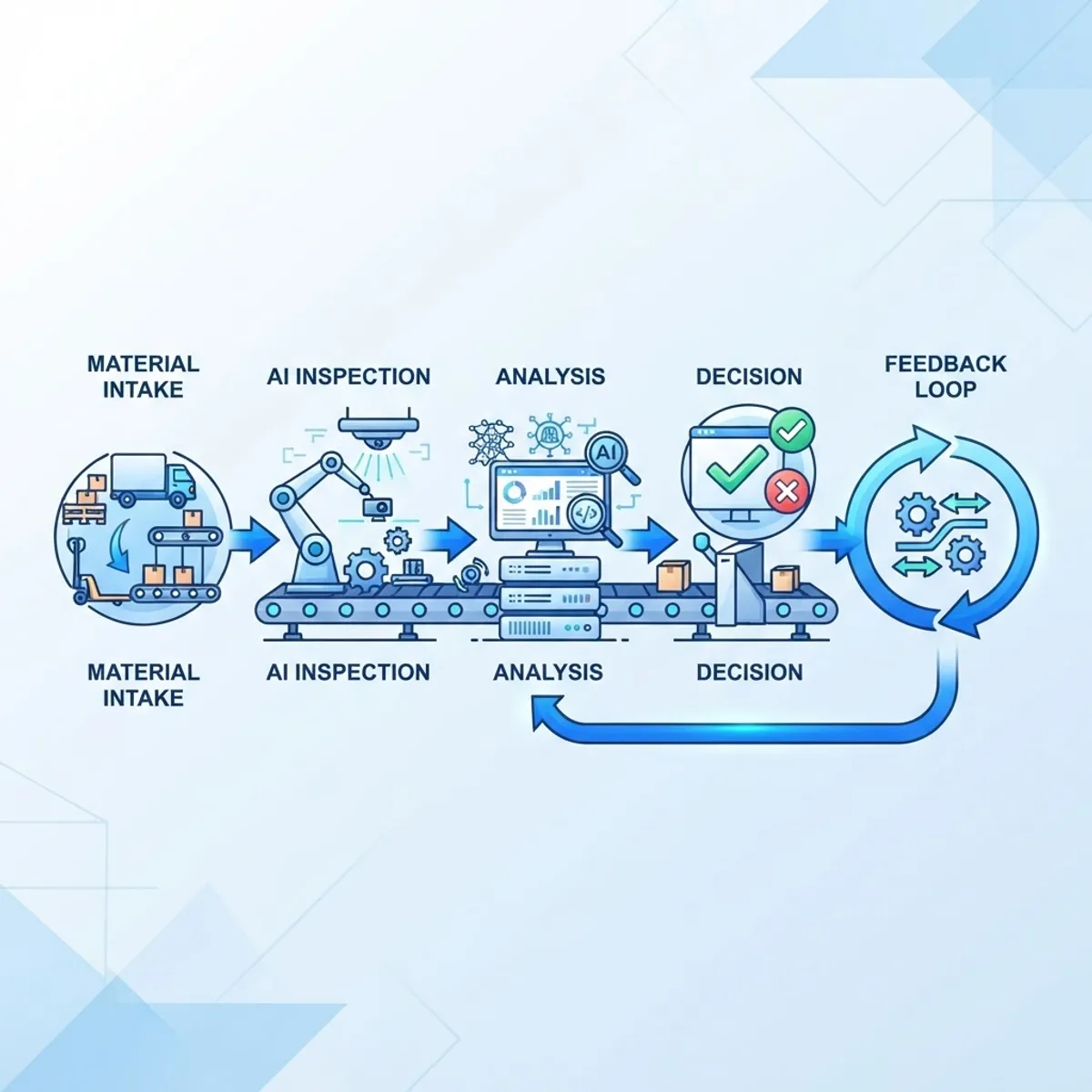
The most common failure I see is skipping the shadow-mode step. Teams that rush to automation without proving accuracy erode operator trust, and once the floor stops believing the system, adoption collapses.
Challenges to Consider
AI is powerful but not plug-and-play. Data quality is the top constraint: a model is only as good as the labeled examples it learns from, and defect images are often rare. Integration is the second hurdle, since inspection systems must talk to ERP, MES, and procurement platforms to deliver full value. Finally, models drift as materials, suppliers, and processes change, so ongoing monitoring and retraining are non-negotiable.
Organizations that lack in-house data-science depth often partner with specialists. Providers like WebPeak's artificial intelligence services help bridge the gap between shop-floor reality and reliable machine-learning deployment, which shortens time to value and reduces false starts.
The Future of AI in Materials Quality
The next wave pairs AI inspection with digital twins and closed-loop control. Instead of only flagging a defect, systems will trace it to a process parameter and adjust automatically. Generative AI is also beginning to synthesize rare defect images, solving the data-scarcity problem that slows model training today.
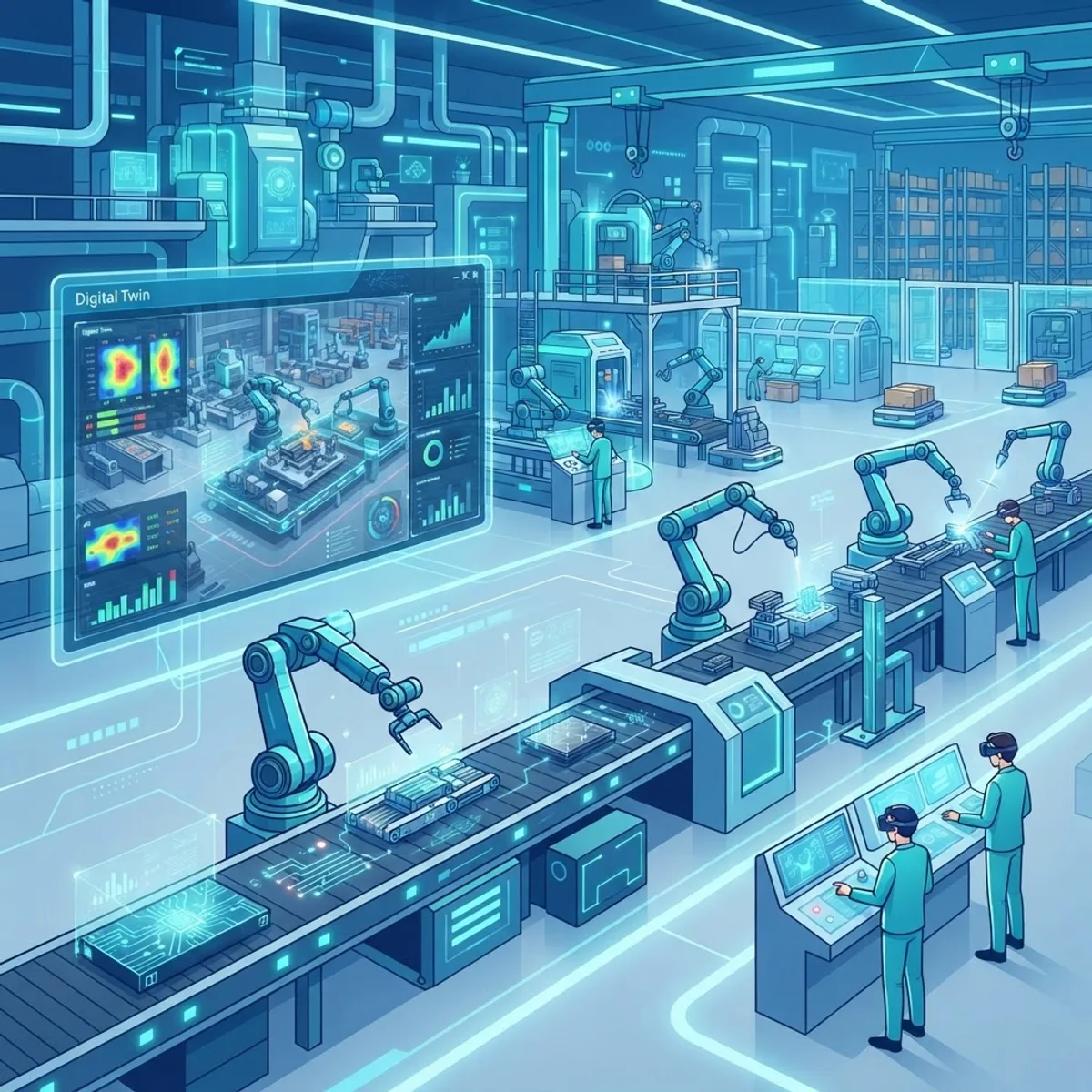
Expect quality management to become increasingly autonomous, where materials are graded, routed, and reconditioned with minimal human intervention while people focus on strategy and supplier relationships. Explore more practical technology guidance at ZoneTechify and WebPeak.
Key Takeaways
- Direct materials defects are the most costly to miss because their impact compounds through every production stage, per the 1-10-100 rule.
- AI enables 100 percent inspection versus traditional sampling, with detection accuracy frequently above 95 percent compared to roughly 80 percent for manual checks.
- The AI in manufacturing market is growing at over 33 percent annually through 2030, with quality inspection a leading use case, according to Grand View Research.
- Predictive analytics forecasts risky lots before they reach the line, shifting teams from reactive to proactive quality control.
- Successful rollouts follow phased steps, especially shadow-mode validation, and require ongoing retraining to counter model drift.
Frequently Asked Questions (FAQ)
What is artificial intelligence in direct materials quality management?
It is the use of machine vision and machine learning to automatically inspect and grade raw materials that go directly into products. AI checks every unit against learned standards, detects defects instantly, scores suppliers, and predicts quality risks far faster and more consistently than manual inspection.
How does AI detect material defects better than humans?
AI cameras inspect every single unit at line speed without fatigue, applying the same standard consistently. Trained models spot subtle, evolving defect patterns and generate heat maps showing exactly where flaws sit. This pushes detection accuracy above 95 percent, well beyond the roughly 80 percent typical of manual visual inspection.
Is AI quality management expensive to implement?
Upfront costs cover cameras, lighting, and model training, but the investment usually pays back through reduced scrap, rework, and recalls. Costs fall over time as models improve, unlike manual inspection where labor costs rise. Starting with your highest-cost defect keeps the initial project focused and affordable.
Can AI replace human quality inspectors entirely?
Not entirely today. AI handles repetitive, high-volume inspection with superior consistency, but humans remain essential for judgment calls, root-cause investigation, supplier relationships, and handling novel defects. The best results come from pairing AI detection with skilled inspectors who validate edge cases and manage continuous improvement.
How long does it take to deploy AI materials inspection?
A focused pilot on one defect type typically takes a few months, including data collection, model training, and shadow-mode validation before live use. Timelines depend heavily on data availability, since rare defect images are the biggest bottleneck. Phased rollouts reduce risk and build operator trust steadily.
What industries benefit most from AI direct materials inspection?
Automotive, electronics, aerospace, pharmaceuticals, food processing, and textiles gain the most because material defects there carry high safety, cost, or regulatory stakes. Any manufacturer where a bad raw input can trigger recalls, warranty claims, or line stoppages sees strong returns from AI-driven materials quality management.