
An expert review of explainable AI (XAI) in healthcare, covering why transparency matters, leading techniques, real clinical use cases, benefits, limitations, and what comes next.
A Review of Explainable Artificial Intelligence in Healthcare

Artificial intelligence now reads scans, flags sepsis hours early, and predicts which patients will be readmitted. Yet a diagnosis a clinician cannot explain is a diagnosis most clinicians will not act on. That single tension is why explainable artificial intelligence (XAI) has moved from an academic curiosity to a clinical requirement. In this review, we examine what explainable AI in healthcare actually means, which methods work, where they fall short, and how care teams can adopt them responsibly.
At ZoneTechify and WebPeak, we have watched trust, not accuracy alone, decide whether a medical AI tool survives past its pilot. This article shares that practitioner view rather than a textbook summary.
Quick Answer: Explainable AI in healthcare refers to machine learning systems that reveal how they reach a clinical conclusion. It matters because clinicians, regulators, and patients need transparent, auditable reasoning to trust, validate, and safely act on AI-driven diagnoses, risk scores, and treatment recommendations.
What Is Explainable AI in Healthcare?
Explainable AI (XAI) is a set of techniques that make the reasoning of a machine learning model understandable to humans. In medicine, that means showing not just that a model predicts a 78% risk of heart failure, but which factors, such as ejection fraction, age, and prior admissions, drove that number.
This contrasts with a black box model, whose internal logic is opaque even to its creators. Deep neural networks are powerful precisely because they learn millions of nonlinear relationships, but that complexity is what hides their reasoning. XAI adds an interpretable layer so clinicians can verify that a prediction rests on medically sound signals rather than data artifacts.

The distinction matters because healthcare is high-stakes and heavily regulated. A retail recommendation engine can be wrong without harm. A model that misclassifies a tumor cannot.
Why Transparency Matters More in Medicine Than Anywhere Else
Healthcare AI carries a uniquely heavy burden of accountability. When a model influences a treatment decision, the clinician remains legally and ethically responsible for the outcome. They cannot delegate that responsibility to an algorithm they do not understand.
There are four concrete reasons transparency is non-negotiable in clinical settings:
- Clinical trust: Physicians adopt tools they can interrogate. A study published in npj Digital Medicine found that clinician trust rises sharply when models provide feature-level explanations rather than a bare score.
- Patient safety: Explanations expose spurious correlations, such as a model detecting pneumonia from the hospital scanner ID embedded in an X-ray rather than lung tissue.
- Regulatory compliance: The EU AI Act classifies most medical AI as high-risk, requiring transparency, human oversight, and documentation before deployment.
- Equity auditing: Explanations help teams detect whether a model relies on race, ZIP code, or other proxies that could entrench bias.
According to the U.S. Government Accountability Office, bias and limited transparency remain two of the largest barriers to trustworthy clinical AI adoption. Explainability directly addresses both.

Black Box vs. Glass Box Models: A Practical Comparison
Teams generally choose between inherently interpretable models and complex models paired with post-hoc explanations. Neither is universally correct; the right choice depends on the clinical task, data type, and risk tolerance.
| Factor | Glass Box (Interpretable) | Black Box + Post-Hoc XAI |
|---|---|---|
| Examples | Logistic regression, decision trees, GAMs | Deep neural networks, gradient boosting |
| Transparency | Built-in, fully auditable | Approximated after the fact |
| Accuracy on complex data | Moderate | Often higher |
| Best for imaging | No | Yes |
| Regulatory ease | Higher | Requires extra validation |
| Risk of misleading explanation | Low | Moderate |
A useful rule from our practice: use glass box models for structured tabular risk scoring where every input is clinically meaningful, and reserve black box models with rigorous explanation layers for imaging, genomics, and signal data where raw performance saves lives.
Leading Explainable AI Techniques Used in Clinical Practice
Several XAI methods have matured enough for real clinical use. Understanding their strengths helps teams match technique to task.
1. SHAP (SHapley Additive exPlanations)
SHAP assigns each input feature a contribution value for a specific prediction, grounded in cooperative game theory. In practice, it tells a clinician that a patient's elevated creatinine added 12 points to a kidney-injury risk score while normal blood pressure subtracted 4. Its consistency makes it the most widely trusted method for tabular clinical data.
2. LIME (Local Interpretable Model-Agnostic Explanations)
LIME explains a single prediction by building a simple local model around it. It is fast and model-agnostic, making it useful for quick audits, though its explanations can vary between runs and should be treated as directional rather than definitive.
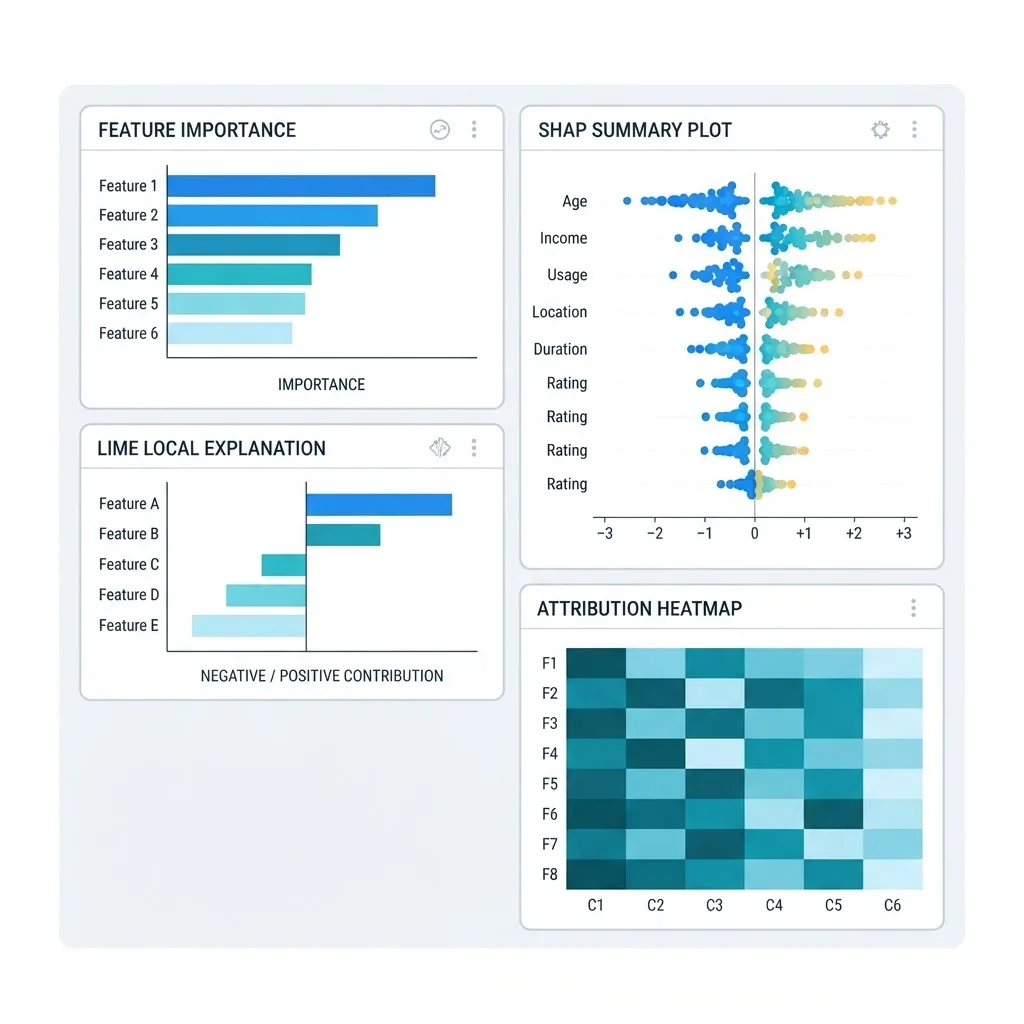
3. Saliency Maps and Grad-CAM
For medical imaging, these methods produce heatmaps highlighting the pixels that most influenced a prediction. A radiologist can instantly see whether a pneumonia model focused on lung fields or on irrelevant image borders, catching errors before they reach a patient.
4. Attention Visualization
In models processing clinical notes or time-series vitals, attention weights reveal which words or moments the model prioritized, helping clinicians confirm the reasoning aligns with medical logic.
Real-World Applications and What They Reveal
Explainable AI is already embedded in tools clinicians use daily, and each application demonstrates transparency delivering measurable value.
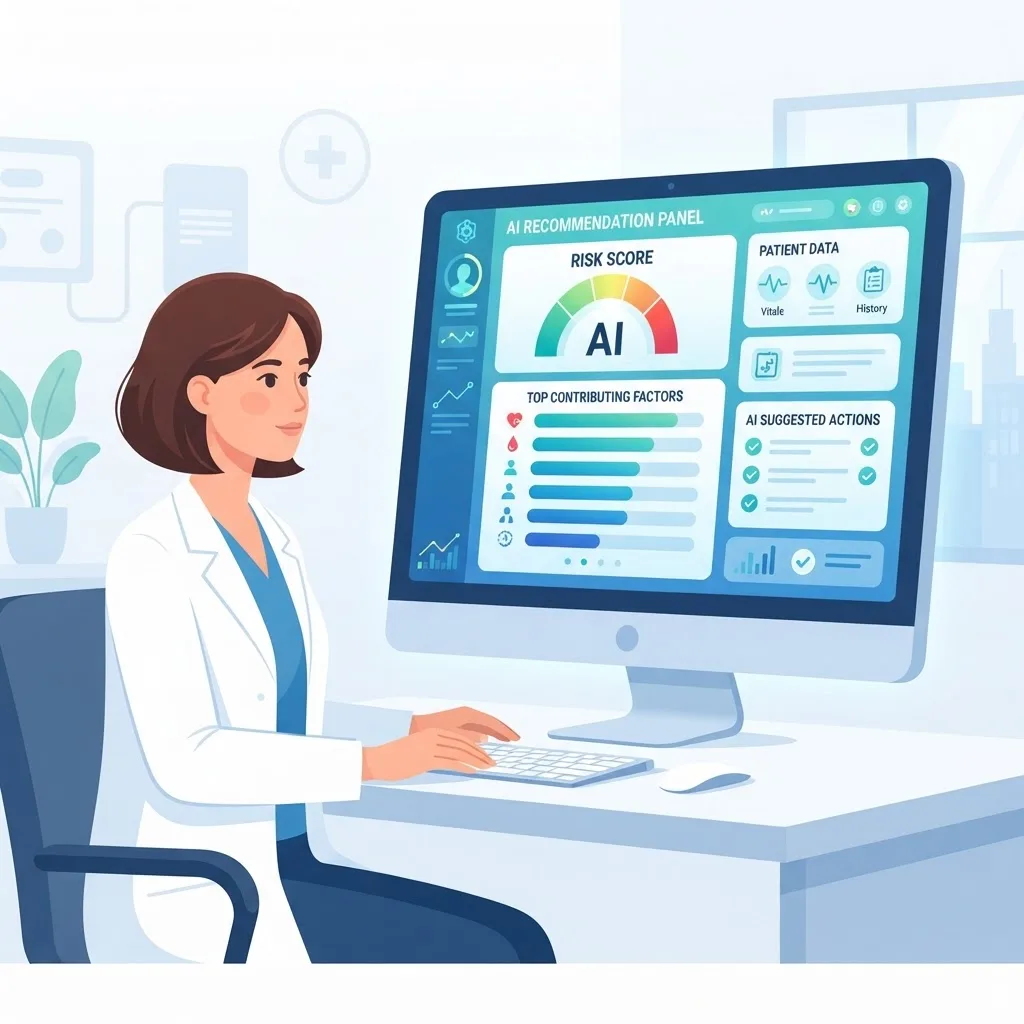
Sepsis prediction systems now surface the contributing vitals and labs behind each alert, reducing alarm fatigue by letting nurses see why a warning fired. Diabetic retinopathy screening, one of the first FDA-authorized autonomous AI tools, pairs its grading with image explanations so referring clinicians can verify findings.
In oncology, explainable models help interpret tumor genomics, showing which mutations drove a treatment recommendation. And in radiology, Grad-CAM overlays let specialists confirm that a fracture-detection model localized the actual break.

The common thread is verification. In every case, the explanation converts an AI output from a suggestion the clinician must accept on faith into evidence they can independently check. Organizations building these systems increasingly rely on specialized artificial intelligence services to integrate explainability from the start rather than bolting it on later, an approach we also apply through WebPeak's AI services.
The Limitations Every Team Must Acknowledge
Explainable AI is powerful but not a cure-all, and honest reviews must state its boundaries clearly.
- Explanations can be plausible yet wrong. A convincing heatmap does not guarantee the underlying logic is medically valid; it only shows what the model attended to.
- Post-hoc methods approximate. SHAP and LIME reconstruct reasoning after the fact, so they can diverge from the model's true internal process.
- Interpretability can trade off accuracy. Forcing a simpler model may reduce performance on complex data, an unacceptable cost in some diagnostic tasks.
- Explanations need their own validation. An explanation method should be tested for stability and faithfulness, not assumed reliable.
Recognizing these limits is itself a mark of trustworthy practice. The goal is calibrated confidence, not blind faith in either the model or its explanation.

How to Adopt Explainable AI Responsibly
Successful adoption follows a disciplined path rather than a single tool purchase. Based on real deployments, these steps consistently separate durable systems from failed pilots:
- Define the clinical question first, then choose the simplest model that meets the accuracy bar.
- Involve clinicians during design, not just at launch, so explanations match how they actually reason.
- Validate explanations against domain knowledge using real cases before go-live.
- Monitor continuously for data drift that can silently degrade both accuracy and explanation quality.
- Document everything to satisfy regulators and to build institutional trust over time.
This governance mindset is what turns a promising algorithm into a tool clinicians rely on for years.
The Future of Explainable AI in Healthcare
The next wave centers on explanations designed for humans, not engineers. Research is shifting toward natural-language rationales that read like a colleague's note, causal models that explain why rather than merely which, and standardized reporting so explanations are comparable across vendors. As regulation tightens globally, explainability will become a baseline market requirement rather than a differentiator.
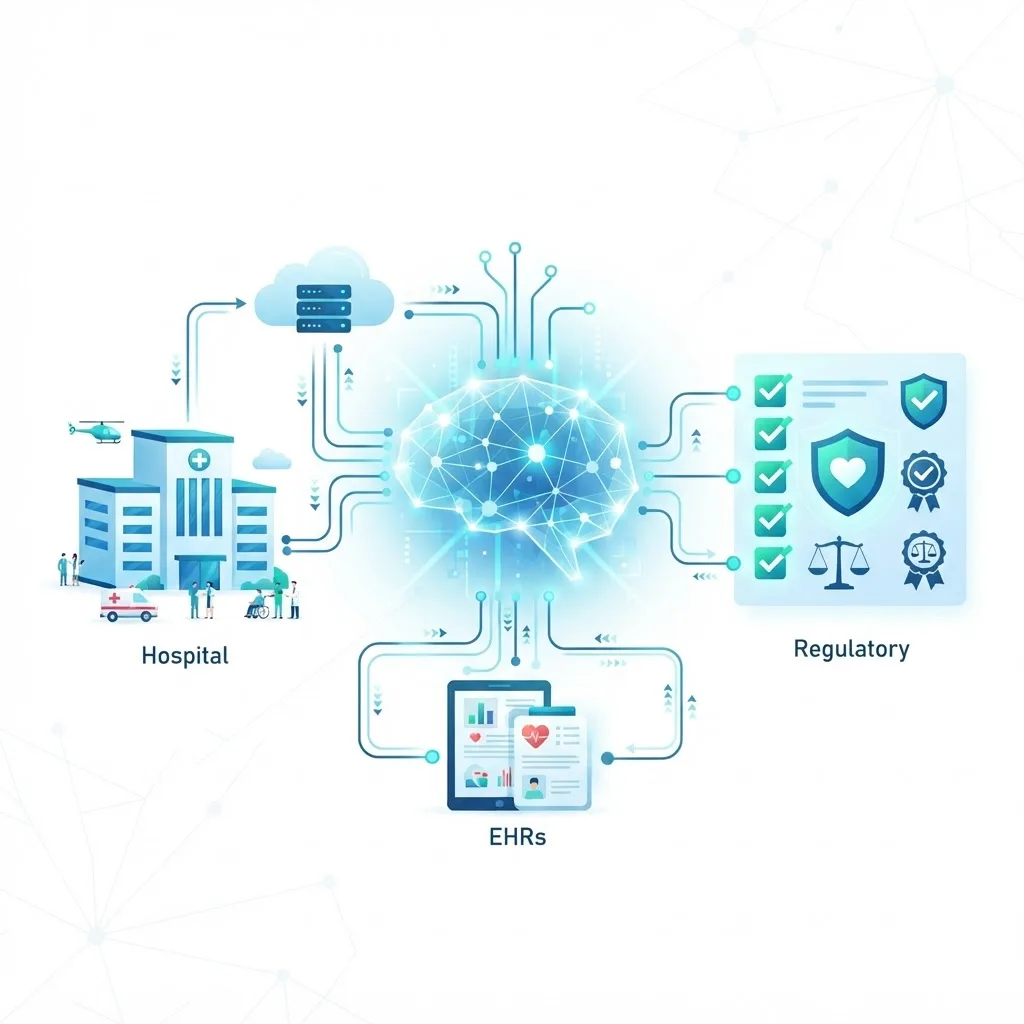
Our prediction: within a few years, no serious clinical AI product will ship without an integrated, validated explanation layer, much as no drug ships without a label describing its mechanism and risks.
Key Takeaways
- Explainable AI reveals the reasoning behind clinical predictions, making them auditable and trustworthy.
- Transparency is mandatory in medicine for clinical trust, patient safety, regulatory compliance, and equity.
- The EU AI Act classifies most medical AI as high-risk, requiring transparency and human oversight.
- SHAP, LIME, Grad-CAM, and attention maps are the leading techniques, each suited to different data types.
- Explanations can be plausible yet wrong, so they must themselves be validated for faithfulness and stability.
- Responsible adoption depends on clinician involvement, continuous monitoring, and thorough documentation.
Frequently Asked Questions (FAQ)
What does explainable AI mean in healthcare?
Explainable AI in healthcare means machine learning systems that show how they reach a clinical conclusion. Instead of only producing a risk score or diagnosis, they reveal which patient factors influenced the result, allowing clinicians to verify, trust, and safely act on the recommendation.
Why is explainability important for medical AI?
Explainability matters because clinicians remain legally and ethically responsible for outcomes. They need to understand and validate AI reasoning before acting on it. Transparency also exposes hidden bias, catches spurious correlations, protects patient safety, and satisfies regulators who classify most medical AI as high-risk.
What are the most common explainable AI techniques?
The most common techniques are SHAP and LIME for tabular clinical data, Grad-CAM and saliency maps for medical imaging, and attention visualization for clinical notes and vitals. Each highlights the inputs or image regions that most influenced a specific prediction for human review.
Is explainable AI always accurate?
No. Explanations can look convincing yet be misleading, and post-hoc methods only approximate a model's true reasoning. Sometimes simpler interpretable models sacrifice accuracy. Because of this, explanation methods themselves must be validated for faithfulness and stability before clinical teams rely on them.
How can hospitals adopt explainable AI safely?
Hospitals should define the clinical question first, choose the simplest model meeting the accuracy bar, involve clinicians during design, validate explanations against real cases, monitor for data drift after launch, and document everything. This governance discipline builds trust and keeps deployments compliant and durable.