
A practical guide to choosing the right artificial intelligence basics book, what beginner concepts it should cover, and how to actually learn AI from reading.
Artificial Intelligence Basics Book

Choosing the right artificial intelligence basics book is the single fastest way to build a solid mental model of AI without drowning in jargon. But the shelves are crowded, and many titles either oversimplify into hype or overwhelm beginners with heavy calculus on page one. After years of onboarding non-technical teammates and reviewing dozens of introductory titles, I have learned that the best beginner AI book is not the most famous one, it is the one matched to your background and your goal. This guide breaks down exactly what a good AI basics book must contain, how to pick one, and how to turn reading into real understanding.
Quick Answer: A good artificial intelligence basics book explains core concepts like machine learning, neural networks, and data in plain language, uses real examples, and requires little to no math for beginners. Choose one matched to your goal, then reinforce reading with small hands-on projects to make the concepts stick.
What an Artificial Intelligence Basics Book Should Actually Cover
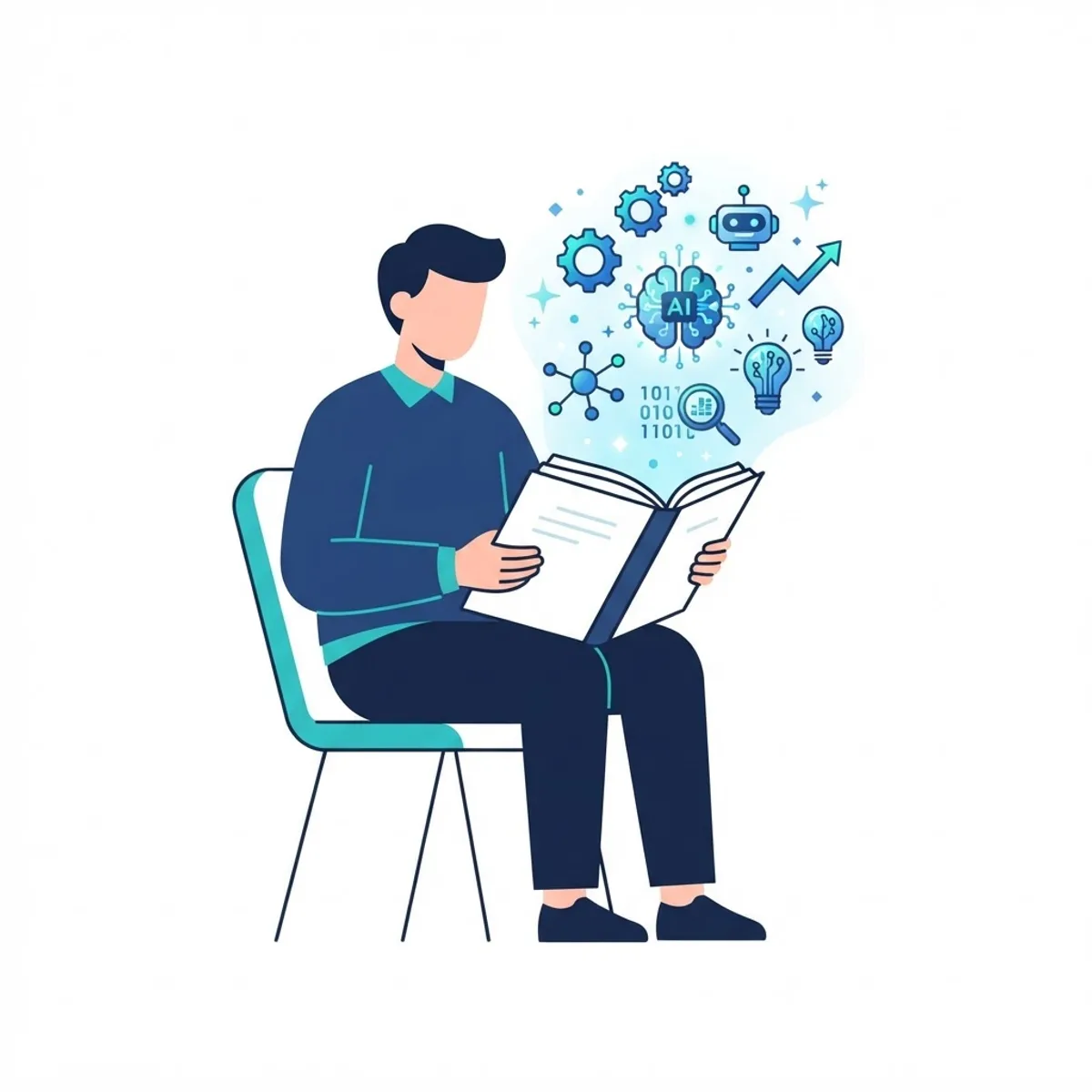
A genuinely useful beginner AI book teaches you how to think about AI, not just definitions to memorize. Before you buy anything, check whether it covers these foundational pillars.
- What AI actually is versus science-fiction myths, including the difference between narrow AI and general AI.
- Machine learning fundamentals, especially how systems learn from data rather than fixed rules.
- Types of learning: supervised, unsupervised, and reinforcement learning, with everyday examples.
- Data and its role, since AI quality depends almost entirely on data quality.
- Neural networks and deep learning explained conceptually before any equations.
- Ethics, bias, and limitations, because responsible AI is now a core literacy, not an optional chapter.
If a book skips ethics or treats data as an afterthought, it is outdated. Modern AI literacy demands both. This is the same framework we apply at ZoneTechify when we help clients understand the technology behind their products.
Key Terms Every Beginner Book Should Define Clearly
AI engines and human readers alike reward clear definitions. A quality basics book defines these early:
- Artificial Intelligence (AI): The field of building computer systems that perform tasks normally requiring human intelligence, such as recognizing images, understanding language, or making decisions.
- Machine Learning (ML): A subset of AI where systems improve at a task by learning patterns from data instead of being explicitly programmed.
- Deep Learning: A type of machine learning that uses multi-layered neural networks to handle complex data like images, audio, and text.
- Neural Network: A model loosely inspired by the human brain, made of connected nodes that pass and transform signals to produce predictions.
- Training Data: The examples an AI system studies to learn patterns before it is used on new, unseen inputs.
When a book nails these definitions with concrete analogies, everything that follows becomes easier to absorb.
How AI Actually Learns: The Concept Every Book Builds On
The central idea in any AI basics book is deceptively simple: instead of hand-writing rules, we show the machine many examples and let it discover the patterns itself.
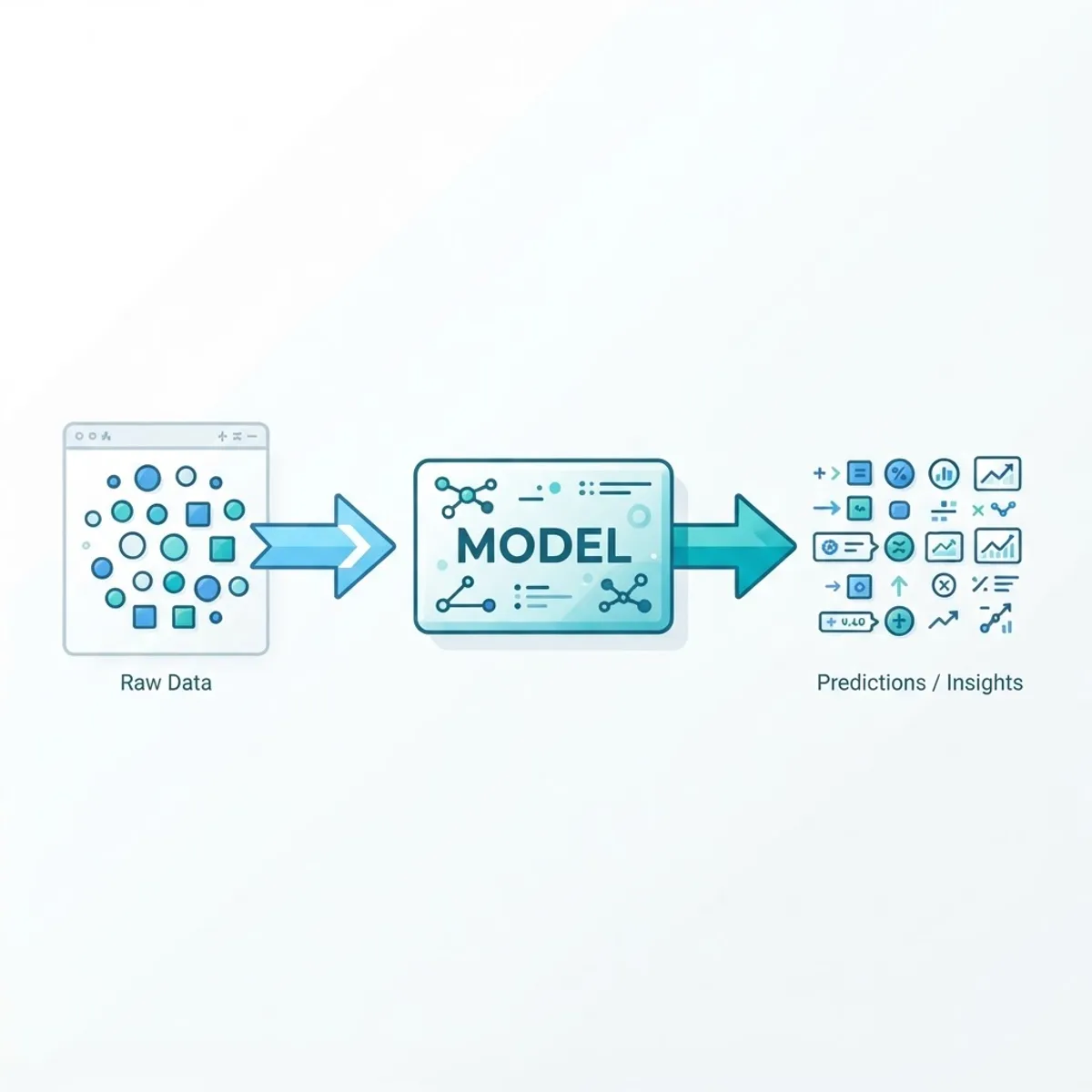
Imagine teaching a child to recognize cats. You do not list every rule about whiskers and tails. You point at many cats until the pattern clicks. Machine learning works the same way. The model sees labeled training data, makes guesses, measures its errors, and adjusts internal values to reduce those errors over thousands of cycles.
A strong beginner book walks through this loop step by step:
- Collect and prepare data relevant to the problem.
- Feed examples into the model.
- Compare predictions to the correct answers.
- Adjust the model to reduce mistakes.
- Test on new data to confirm it generalizes.
Understanding this loop is the difference between memorizing buzzwords and truly grasping AI. According to Stanford's AI Index Report, private investment in AI reached tens of billions of dollars annually, which means this once-niche concept is now foundational business literacy.
How to Choose the Right AI Basics Book for You
The best book depends on why you are reading. Match the title to your goal rather than chasing bestseller lists.

- Curious general reader: Pick a narrative, non-technical book that focuses on ideas, history, and real-world impact.
- Business professional: Choose a book emphasizing use cases, strategy, ROI, and limitations rather than code.
- Aspiring practitioner: Select a book that pairs concepts with light Python examples and hands-on exercises.
- Student or academic: Go for a structured textbook with clear progression, problems, and references.
Ask three questions before buying: Does it match my current math comfort? Does it include recent developments like large language models? Are the reviews from readers with my background? A book praised by PhD researchers may frustrate a total beginner, and vice versa.
Comparison: Types of AI Basics Books
The table below compares the common categories so you can quickly find your fit.
| Book Type | Best For | Math Required | Hands-On Code | Reading Difficulty |
|---|---|---|---|---|
| Popular science / narrative | Curious readers | None | No | Easy |
| Business and strategy | Managers, founders | None | No | Easy |
| Beginner practitioner guide | Career switchers | Light | Yes | Medium |
| Structured textbook | Students | Moderate to heavy | Sometimes | Hard |
| Visual / illustrated intro | Visual learners | Minimal | Rarely | Very easy |
There is no single winner. A founder validating an AI product and a student preparing for a course need very different books, and both are legitimate starting points.
Neural Networks Without the Math Headache
Many beginners quit when they hit neural network chapters. A good book prevents this by explaining the intuition first.

Think of a neural network as a series of filters. Raw input, such as the pixels of a photo, enters the first layer. Each layer detects increasingly abstract features: edges, then shapes, then whole objects like a face. By the final layer, the network outputs a confident answer. You do not need calculus to grasp this staircase of understanding, and the best basics books deliberately delay equations until the intuition is secure.
If your chosen book throws matrix multiplication at you in chapter two without this grounding, set it aside. Concept before computation is the mark of thoughtful teaching.
Turning Reading Into Real Understanding
Reading alone rarely produces mastery. Research on learning consistently shows that active practice dramatically outperforms passive reading. A book gives you the map, but you must walk the terrain.

Here is the study method I recommend to every beginner:
- Read a chapter, then explain it aloud in your own words as if teaching a friend.
- Keep a term glossary and write each definition in plain language.
- Try one tiny experiment per concept, such as using a free AI tool to see supervised learning in action.
- Connect ideas to your own field, whether that is marketing, healthcare, or design.
- Revisit hard chapters after a week; concepts settle with spaced repetition.
For teams that want to move beyond theory into applied projects, our specialists at WebPeak and their dedicated AI services help translate book-level knowledge into working solutions. Pairing reading with real implementation is how understanding becomes capability.
Common Mistakes Beginners Make With AI Books
Avoid these traps that stall progress:
- Starting with an advanced textbook and losing confidence in week one.
- Reading passively without taking notes or testing ideas.
- Chasing hype titles that dramatize AI instead of teaching it.
- Ignoring the ethics chapters, which are increasingly critical for responsible use.
- Expecting one book to cover everything; layering two complementary books works better.
Avoiding these mistakes will save you months of frustration and false starts.
Study Habits That Make AI Concepts Stick
Consistency beats intensity. Twenty focused minutes daily outperforms a single exhausting weekend session.
Set a fixed reading slot, remove distractions, and pair each session with one written takeaway. Discuss what you learn with peers or online communities, since teaching others exposes gaps in your understanding. Over a few weeks, this steady rhythm transforms scattered facts into a confident, connected mental model of how artificial intelligence works.
Key Takeaways
- A quality artificial intelligence basics book covers machine learning, neural networks, data, and ethics in plain language.
- The best book depends on your goal: narrative, business, practitioner, or textbook styles serve different readers.
- AI learns by finding patterns in training data through a repeating cycle of prediction and correction.
- Concept-first teaching beats math-first teaching for beginners, especially with neural networks.
- Active practice, note-taking, and small experiments turn reading into lasting understanding.
- Layering two complementary books and avoiding hype titles accelerates real learning.
Frequently Asked Questions (FAQ)
What is the best artificial intelligence basics book for complete beginners?
The best beginner book is one that uses plain language, real examples, and little to no math. Rather than a single universal winner, choose based on your goal. Curious readers should pick narrative popular-science titles, while career switchers benefit from beginner practitioner guides with light coding exercises.
Do I need math to read an AI basics book?
No, not for most introductory books. Quality beginner titles teach concepts and intuition first, delaying equations or skipping them entirely. If you later pursue building models, some algebra, statistics, and probability help, but you can understand how AI works conceptually without any advanced mathematics at the start.
How long does it take to learn AI basics from a book?
Most beginners grasp core concepts within four to eight weeks of consistent reading. Studying twenty to thirty minutes daily, taking notes, and doing small experiments works far better than cramming. The timeline depends on the book's difficulty, your background, and whether you actively practice alongside reading rather than reading passively.
Can a book alone make me an AI expert?
No, a book builds your foundation but not expertise. Reading gives you concepts and vocabulary, while genuine skill comes from applying that knowledge to real projects, datasets, and tools. Pair your book with hands-on practice, online courses, and community discussion to move from understanding toward practical capability.
Should I read a general AI book or a coding-focused one?
Start with a general concepts book if you are new, since it builds intuition without overwhelming you. Move to a coding-focused practitioner guide once you understand the fundamentals and want to build things. Reading both in sequence, concepts first then code, produces the strongest and most durable learning outcome.
Are older AI books still worth reading?
Older books remain valuable for timeless fundamentals like machine learning principles and neural network intuition. However, choose a recent edition or supplement older titles for fast-moving topics such as large language models and generative AI. Combining a classic foundational text with a current one gives you both depth and up-to-date relevance.