
A practical, expert look at how artificial intelligence is reshaping surgical decision making across planning, risk prediction, imaging, and the operating room.
Artificial Intelligence and Surgical Decision Making
Surgery has always been a discipline of judgment under pressure. A surgeon weighs anatomy, imaging, lab values, comorbidities, and hard-won intuition, often in seconds. Today, artificial intelligence is quietly becoming a second set of eyes in that process, analyzing data at a scale no human can match and surfacing insights that sharpen every decision. This article explains, from a practitioner-informed perspective, exactly how AI supports surgical decision making, where it genuinely helps, and where human judgment must still lead.

Quick Answer: Artificial intelligence supports surgical decision making by analyzing imaging, patient history, and real-time data to predict risk, recommend approaches, and flag complications early. It does not replace surgeons; it augments their judgment with data-driven insight, improving accuracy, planning, and patient safety across the surgical workflow.
What Does AI in Surgical Decision Making Actually Mean?
AI in surgical decision making refers to the use of machine learning models, computer vision, and predictive analytics to inform choices before, during, and after an operation. Rather than making decisions autonomously, these systems process massive datasets, electronic health records, imaging scans, and live sensor feeds, and translate them into actionable guidance a surgeon can trust and interpret.
The key distinction is augmentation versus automation. A well-designed clinical AI tool does not tell a surgeon what to do; it presents probabilities, patterns, and risk scores that would take a human team hours to compile. The surgeon remains the decision maker, but now works with a far richer evidence base.
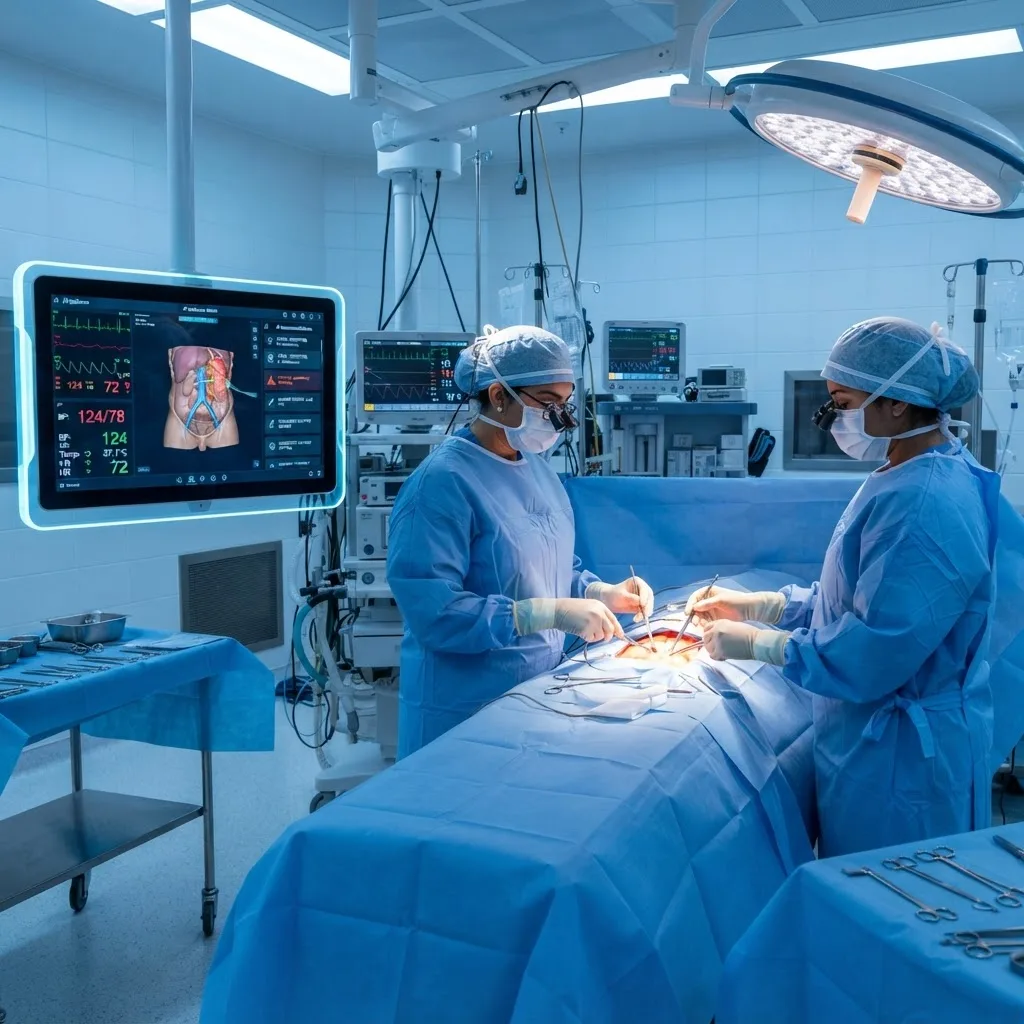
Why This Shift Matters Now
Two forces have converged. First, hospitals now generate enormous volumes of structured and unstructured data. Second, modern deep learning can finally interpret that data reliably. According to a widely cited analysis published in Nature Medicine, some diagnostic AI models can match or exceed specialist performance on specific image-classification tasks, a milestone that was unthinkable a decade ago. When that capability is applied to surgical questions, the potential to reduce error and standardize quality becomes significant.
The Four Stages Where AI Influences Surgical Decisions
AI does not act at a single moment. It contributes across the full surgical journey. Understanding these stages clarifies where the technology adds real value.
1. Preoperative Risk Prediction
Before a scalpel is lifted, AI models can estimate a patient's likelihood of complications such as infection, bleeding, or prolonged recovery. By combining age, lab results, medication history, and prior outcomes from thousands of comparable cases, these tools produce a personalized risk profile.

This matters because risk stratification directly shapes decisions: whether to operate at all, which approach to choose, and how aggressively to prepare intensive care resources. A surgeon who knows a patient sits in the top risk decile can adjust technique, timing, and consent conversations accordingly.
2. Surgical Planning and Simulation
Machine learning excels at converting complex imaging into clear surgical maps. Models can segment tumors, highlight critical vessels, and reconstruct three-dimensional anatomy from CT or MRI data with remarkable precision.

This allows surgeons to rehearse difficult procedures, anticipate anatomical variation, and select the safest route to a target. In neurosurgery and complex oncology, this planning stage can be the difference between a clean resection and an avoidable complication.
3. Intraoperative Guidance
During the operation itself, AI-enhanced imaging and computer vision can identify tissue boundaries, distinguish healthy structures from diseased ones, and alert the team to anomalies in real time.
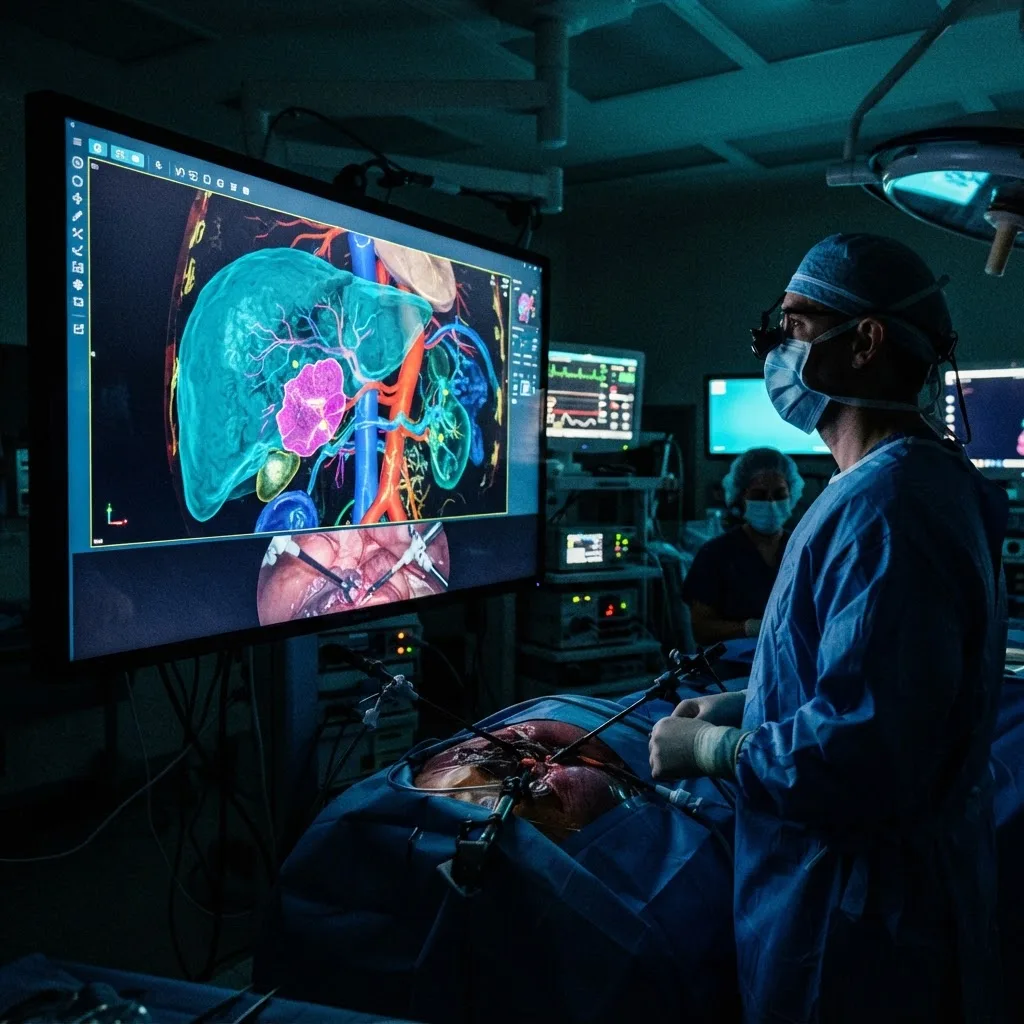
Augmented visualization overlays guidance directly onto the surgical field, helping surgeons preserve nerves and vessels. When paired with robotic platforms, AI can also enhance precision and filter tremor, though the surgeon retains full control of every movement.
4. Postoperative Monitoring
After surgery, predictive models continuously analyze vital signs to detect deterioration before it becomes visible to clinicians. Early-warning systems that flag sepsis or hemorrhage hours ahead of a human observer can meaningfully lower mortality and reduce readmissions.
How AI Improves Accuracy: A Practical Comparison
The following table summarizes how AI-assisted decision making compares with traditional, unassisted approaches across common surgical tasks.
| Decision Task | Traditional Approach | AI-Assisted Approach |
|---|---|---|
| Risk assessment | Manual scoring, clinician memory | Personalized model from thousands of cases |
| Image interpretation | Radiologist review, time-limited | Automated segmentation, consistent output |
| Complication detection | Periodic checks, reactive | Continuous monitoring, predictive alerts |
| Surgical planning | 2D scans, mental reconstruction | 3D models, rehearsal simulation |
| Documentation | Manual notes after surgery | Automated capture and analysis |
The pattern is consistent: AI reduces variability, accelerates analysis, and shifts care from reactive to predictive. That is the core value proposition for both patients and health systems.
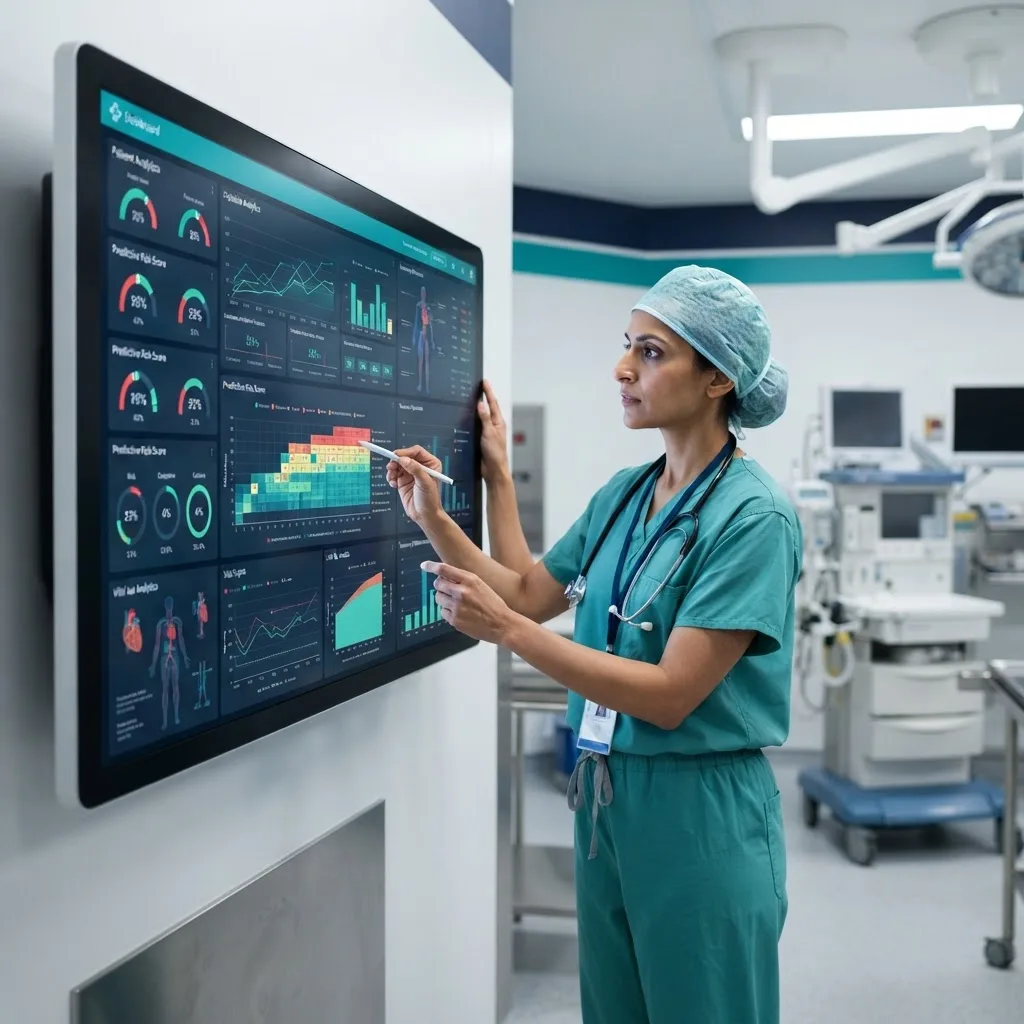
The Data Behind the Trend
Evidence for AI's impact continues to grow. A frequently referenced JAMA Network study found that machine learning models predicting postoperative complications often outperformed conventional risk calculators, giving surgical teams earlier and more precise warnings. Meanwhile, market analysts at Grand View Research have valued the AI-in-healthcare market in the tens of billions of dollars, with surgery and diagnostics among the fastest-growing segments.
These figures matter because they signal durability, not hype. When both clinical validation and sustained investment point in the same direction, hospitals can plan around the technology rather than treating it as an experiment. For organizations building these tools, thoughtful artificial intelligence services are essential to ensure models are accurate, explainable, and safe to deploy.
Robotics, AI, and the Human Surgeon
Robotic surgery is often confused with AI, but they are distinct. Robotic platforms provide mechanical precision; AI provides interpretation and guidance. When combined, they create a powerful partnership.
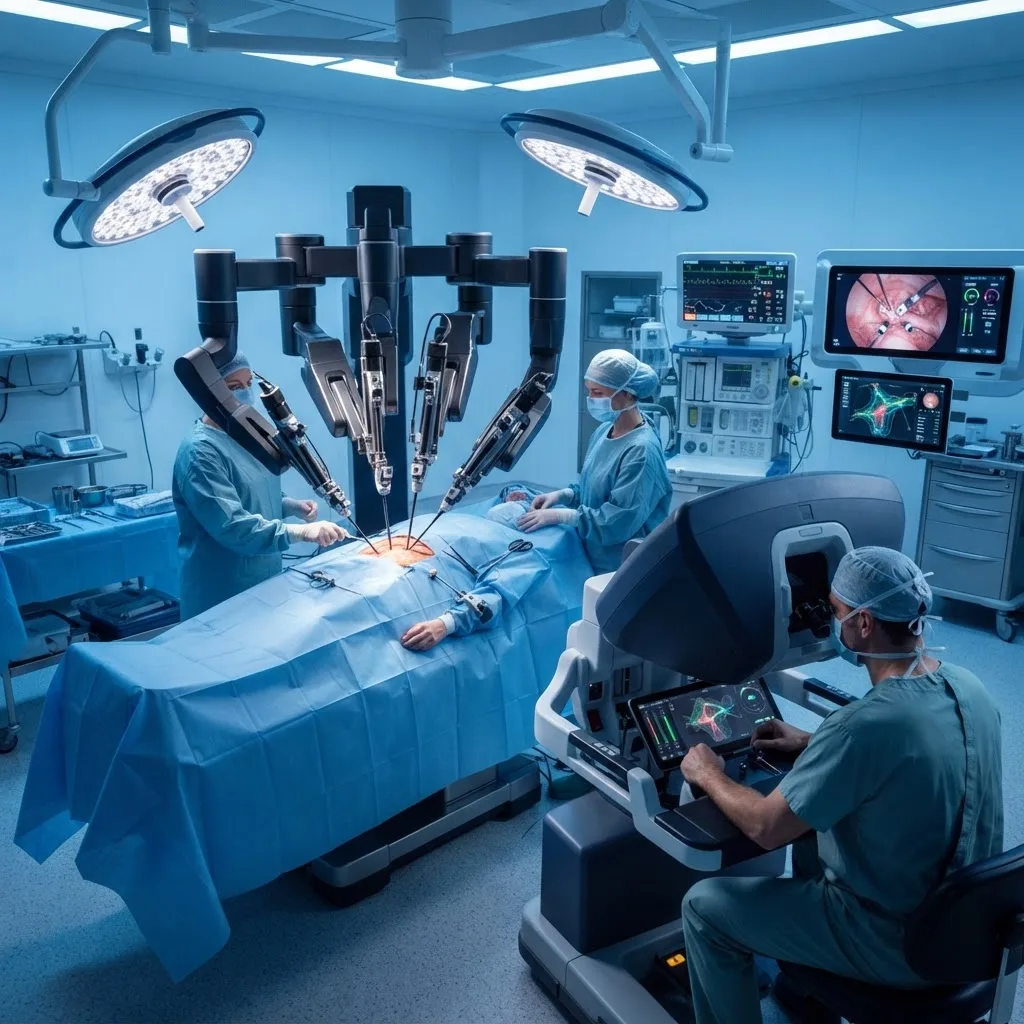
In this pairing, AI can suggest optimal instrument angles, monitor tissue tension, and maintain a live map of the operative field, while the robot executes the surgeon's precise commands. Crucially, the surgeon is never removed from the loop. Every incision reflects human intent, informed by machine insight. This is the model most experts consider both safest and most ethically sound.
The Limits and Risks You Must Respect
Responsible adoption means acknowledging where AI falls short. No credible expert claims these systems are infallible, and trustworthy content must say so plainly.
- Data bias: A model trained on a narrow population may perform poorly on patients it has never seen, widening inequities rather than closing them.
- Explainability: If a system cannot justify its recommendation, surgeons cannot responsibly act on it. Black-box outputs undermine trust.
- Over-reliance: Automation bias, trusting the machine over one's own judgment, is a genuine clinical hazard.
- Regulatory and liability gaps: Accountability for an AI-influenced decision remains a developing legal question.
The safest posture treats AI as a decision-support tool, never a decision-maker. Surgeons must retain the authority and the responsibility to override any recommendation.
How Health Systems Can Adopt AI Responsibly
Based on patterns seen across successful deployments, effective adoption follows a clear sequence:
- Start with validation. Test any model against your own patient population before trusting it.
- Prioritize explainable tools. Choose systems that show their reasoning, not just their conclusions.
- Train the team. Surgeons and nurses need to understand both the strengths and the blind spots of each tool.
- Monitor continuously. Track real-world performance and retrain models as practice evolves.
- Keep humans accountable. Define clearly who owns each decision.
Organizations that follow this disciplined approach see stronger outcomes than those that chase novelty. For teams exploring digital transformation in healthcare and beyond, resources at ZoneTechify and WebPeak offer practical guidance on building reliable, human-centered technology.

Key Takeaways
- Artificial intelligence augments, rather than replaces, surgical decision making by analyzing data at scale.
- AI contributes across four stages: preoperative risk prediction, surgical planning, intraoperative guidance, and postoperative monitoring.
- Studies in JAMA Network and Nature Medicine show AI can match or exceed conventional methods on specific predictive and diagnostic tasks.
- The AI-in-healthcare market is valued in the tens of billions, with surgery among the fastest-growing segments.
- Real risks, data bias, lack of explainability, and over-reliance, require that surgeons remain the final decision-makers.
Frequently Asked Questions (FAQ)
Can AI replace surgeons in the operating room?
No. AI does not replace surgeons; it supports them. These systems analyze data, predict risks, and enhance imaging, but the surgeon interprets every recommendation and controls every action. Human judgment, ethics, and accountability remain essential to safe surgery, and no current technology can substitute for them.
How accurate is AI in predicting surgical complications?
AI models often outperform traditional risk calculators for specific complications, as several JAMA Network studies have shown. Accuracy depends heavily on the quality and diversity of training data. When validated on the local patient population, these tools can give surgical teams earlier, more precise warnings than conventional methods.
Is AI in surgery safe for patients?
When used as a decision-support tool with proper validation, AI can improve patient safety by catching risks early and reducing variability. However, safety depends on explainable models, ongoing monitoring, and surgeons retaining final control. Poorly validated or black-box systems introduce real risk and should be avoided.
What is the difference between AI and robotic surgery?
Robotic surgery provides mechanical precision and steadiness, while AI provides data interpretation, prediction, and guidance. They are separate technologies that work well together. The robot executes the surgeon's commands, and AI can inform those commands, but the human surgeon directs the entire procedure at all times.
How can hospitals start using AI in surgical decisions?
Hospitals should begin by validating any AI tool against their own patient data, then prioritize explainable systems, train clinical staff thoroughly, and monitor real-world performance continuously. Most importantly, they must define clear human accountability for every decision so AI remains a support tool, not an autonomous authority.