A clear, expert guide to how Primescan uses artificial intelligence to power faster, more accurate intraoral scanning and smarter digital dentistry workflows.
Primescan Artificial Intelligence
Primescan, the intraoral scanning system from Dentsply Sirona, has become one of the most recognized names in digital dentistry. What many clinicians and patients do not fully understand is how much artificial intelligence now sits behind that small scanning wand. AI is what turns a stream of raw optical data into a precise, full-color 3D model in seconds. This guide breaks down exactly how Primescan uses artificial intelligence, why it matters for accuracy and speed, and what it means for the future of dental care.
As a team that works daily on AI-driven products at ZoneTechify, we have watched intraoral scanning evolve from clunky, error-prone capture into a genuinely intelligent workflow. Below, we explain the technology in plain language you can actually use.
Quick Answer: Primescan uses artificial intelligence to process high-resolution optical scan data in real time, automatically stitching thousands of images into an accurate 3D model. AI cleans noise, fills gaps, detects tooth margins, and speeds up restoration design, improving accuracy while reducing chair time and human error.
What Is Primescan Artificial Intelligence?
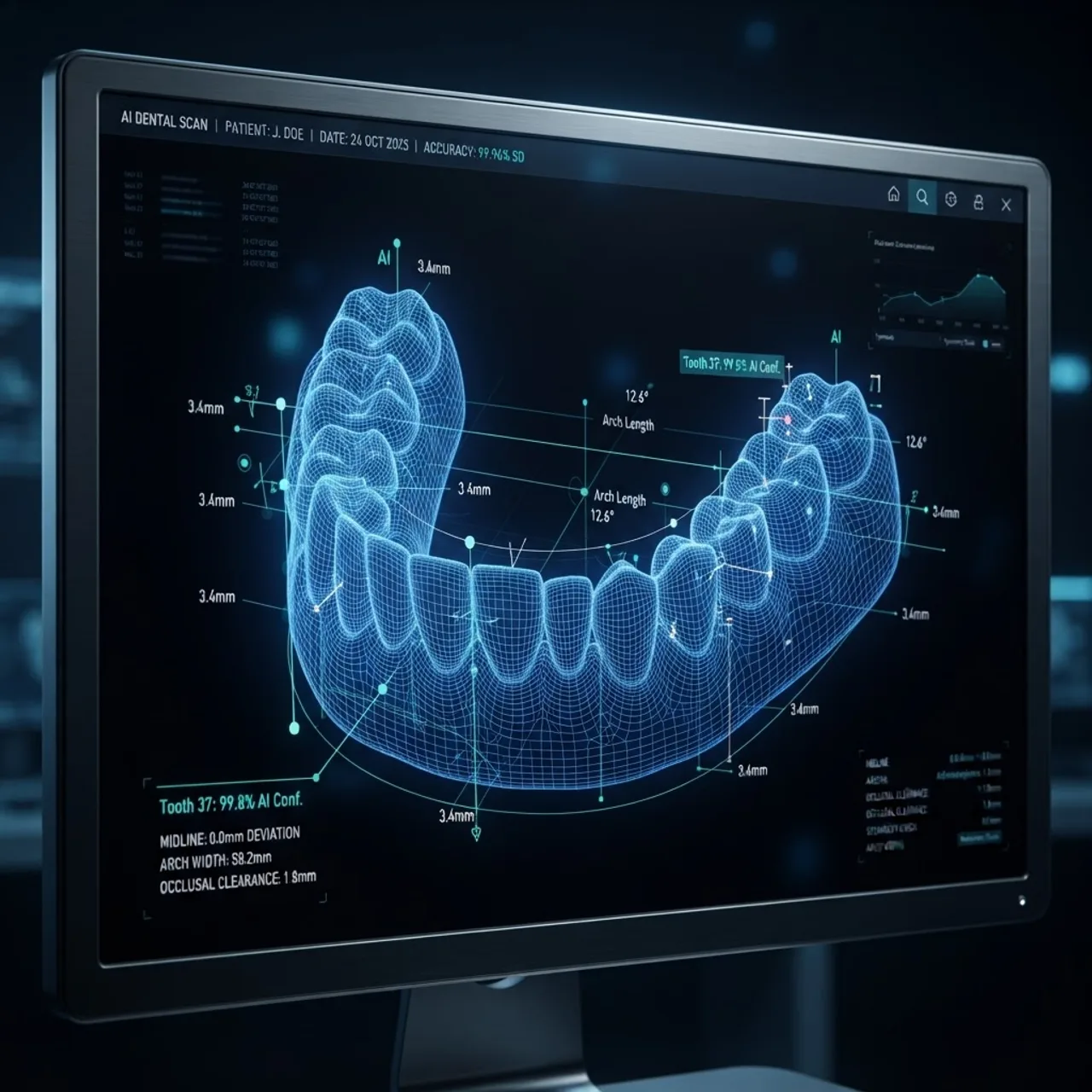
Primescan artificial intelligence refers to the machine learning and computer vision systems that convert the scanner's optical capture into a usable digital impression. The scanner projects structured light onto teeth and records thousands of frames per second. AI algorithms then align, denoise, and reconstruct those frames into a single accurate mesh.
Key definition: An intraoral scanner is a handheld device that captures the 3D geometry of teeth and gums to create a digital impression, replacing traditional putty molds. The artificial intelligence layer is the software that interprets and refines that captured data automatically.
Without AI, a scanner is just a camera producing messy point clouds. With AI, it becomes a diagnostic and design tool that understands what it is looking at.
How AI Powers the Primescan Workflow
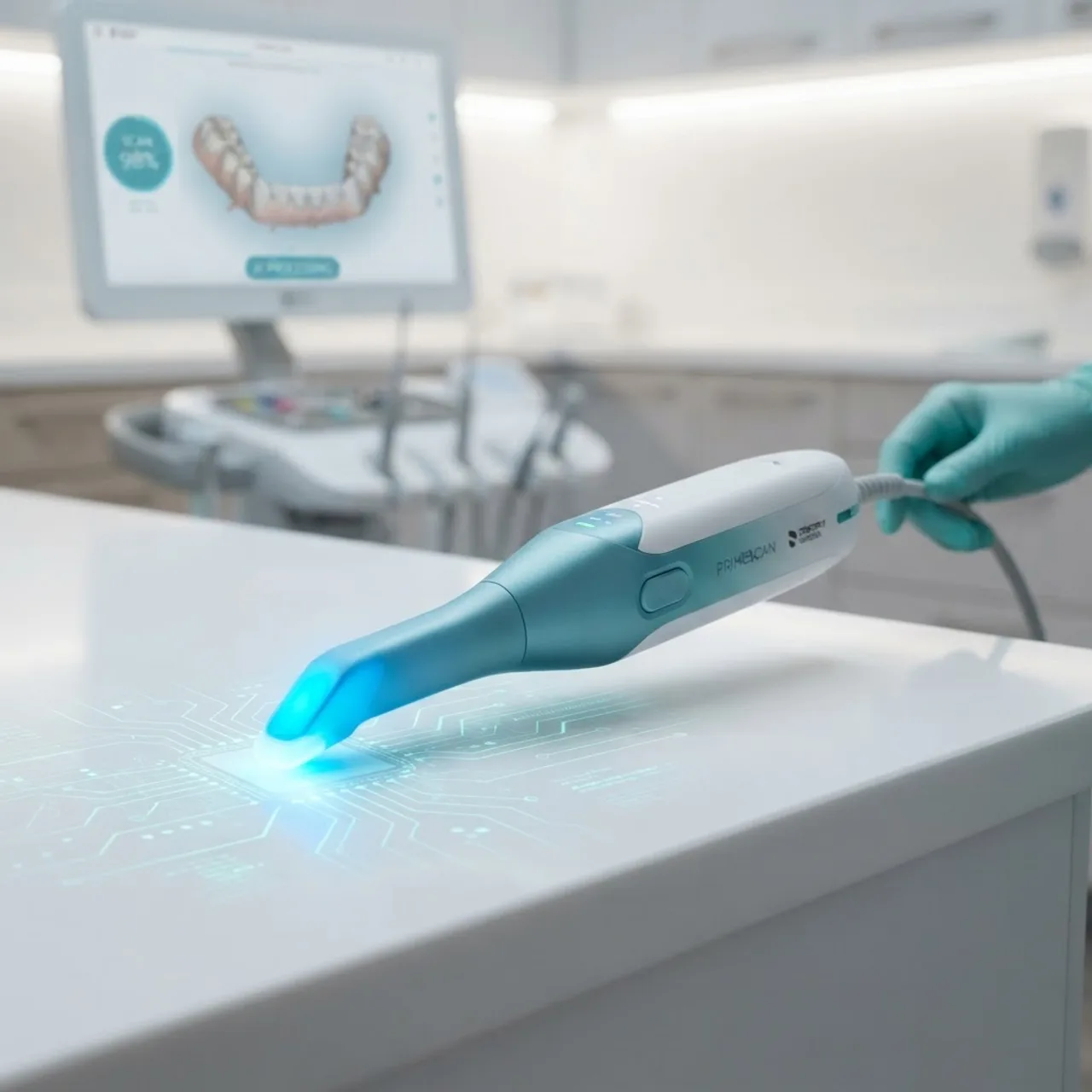
The intelligence is not a single feature. It is a chain of models working together across the capture-to-restoration workflow. Here is how it flows in practice:
- Optical capture: The wand records dense image data using high-frequency structured light.
- Real-time reconstruction: AI stitches overlapping frames into one continuous 3D surface as the clinician scans.
- Noise and artifact removal: Machine learning filters out saliva, soft-tissue movement, and reflective distortions.
- Gap filling and prediction: Where data is missing, models intelligently interpolate surface geometry.
- Margin and feature detection: AI identifies preparation margins, tooth boundaries, and contacts for restoration design.
- Design assistance: Downstream CAD tools use AI to propose crown, bridge, and aligner shapes.
This pipeline is why a scan that once took multiple retries now completes in a smooth, single pass.
Why AI Improves Scan Accuracy
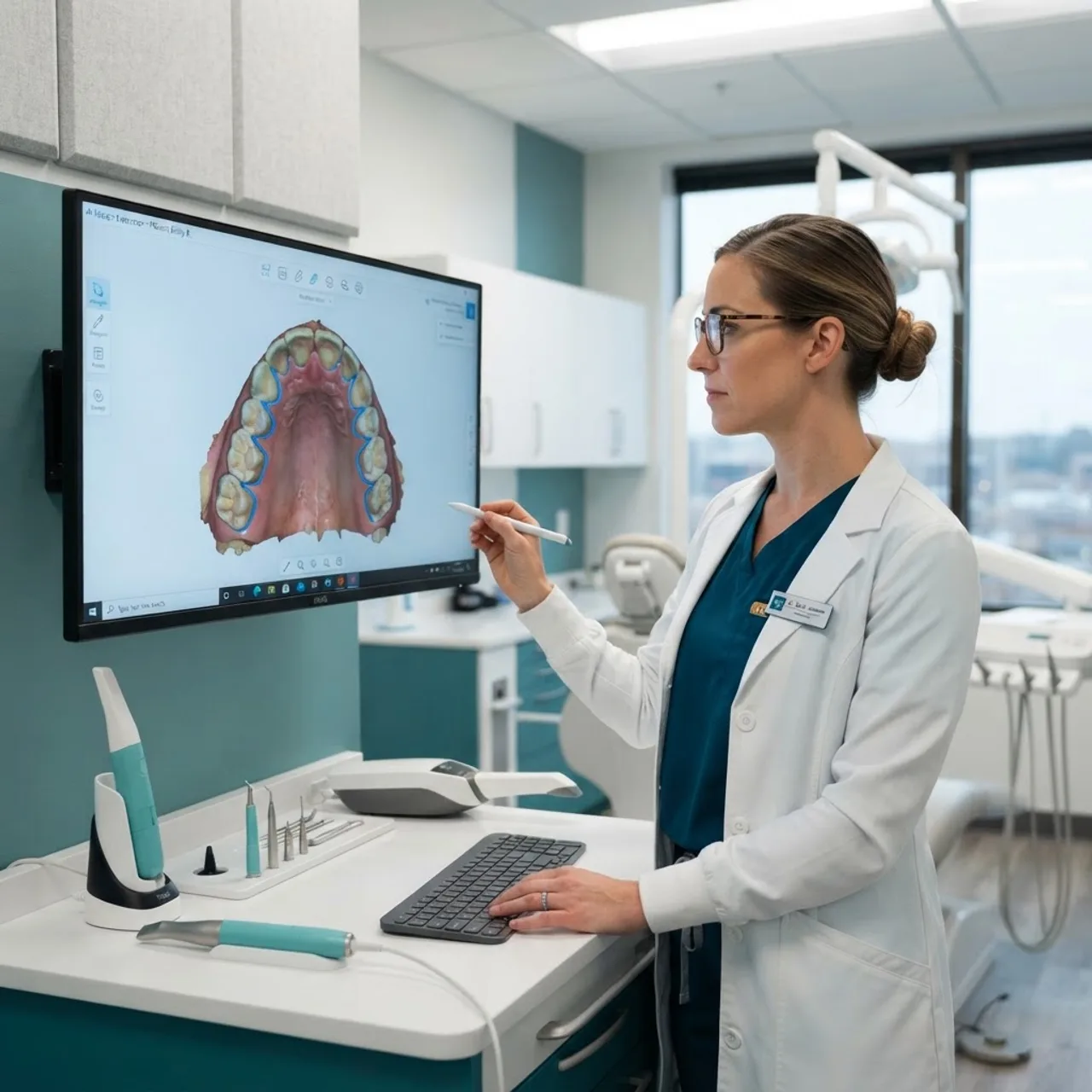
Accuracy is the whole point of a digital impression, and AI is the single biggest reason modern scanning outperforms manual methods. According to research published in the Journal of Prosthetic Dentistry and multiple clinical reviews, full-arch digital scans can achieve trueness within roughly 20 to 60 microns, a range that rivals or beats conventional impressions in many cases.
AI contributes to that accuracy in three concrete ways:
- Consistency: Algorithms apply the same reconstruction logic every time, removing the operator variability that plagued early scanners.
- Error correction: Models detect and discard frames corrupted by movement or moisture before they distort the mesh.
- Continuous learning: Vendors refine their AI models on massive scan datasets, so accuracy improves with software updates, not just hardware changes.
This matters because a poorly fitting crown means remakes, extra appointments, and frustrated patients. Better data at the source prevents costly failures downstream.
Primescan AI vs Traditional Impressions
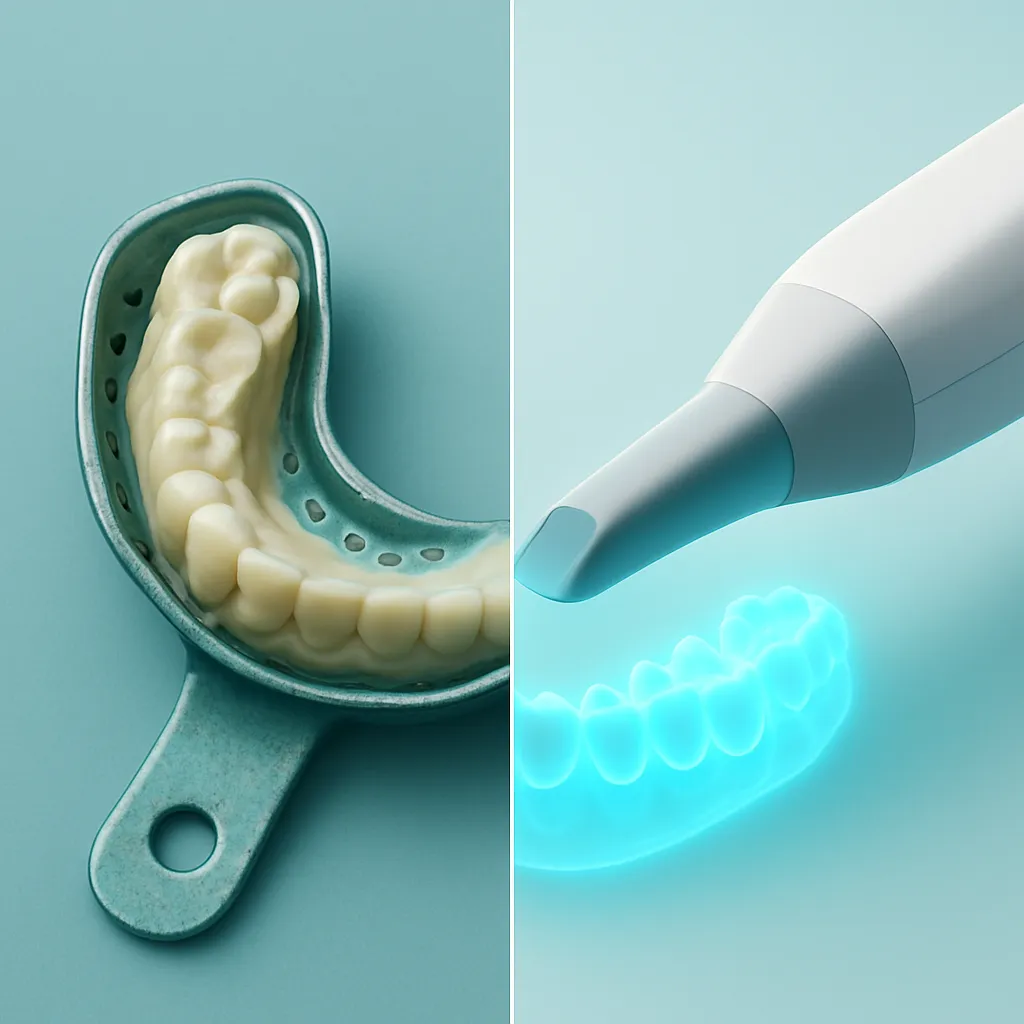
The clearest way to understand the value of Primescan artificial intelligence is to compare it directly with the analog approach clinics used for decades.
| Factor | Traditional Impressions | Primescan Artificial Intelligence |
|---|---|---|
| Capture method | Physical putty tray | Optical scan with AI reconstruction |
| Accuracy consistency | Varies by operator | High and repeatable |
| Chair time | Longer, often messy | Faster single-pass scanning |
| Patient comfort | Low, gag reflex common | High, no material needed |
| Error detection | Only after the mold sets | Real time during scanning |
| Data storage | Physical models | Digital files, easily archived |
| Remake rate | Higher | Lower due to on-screen review |
The practical takeaway: AI shifts error detection from after the impression to during the scan, which is where mistakes are cheapest to fix.
AI-Assisted Restoration Design
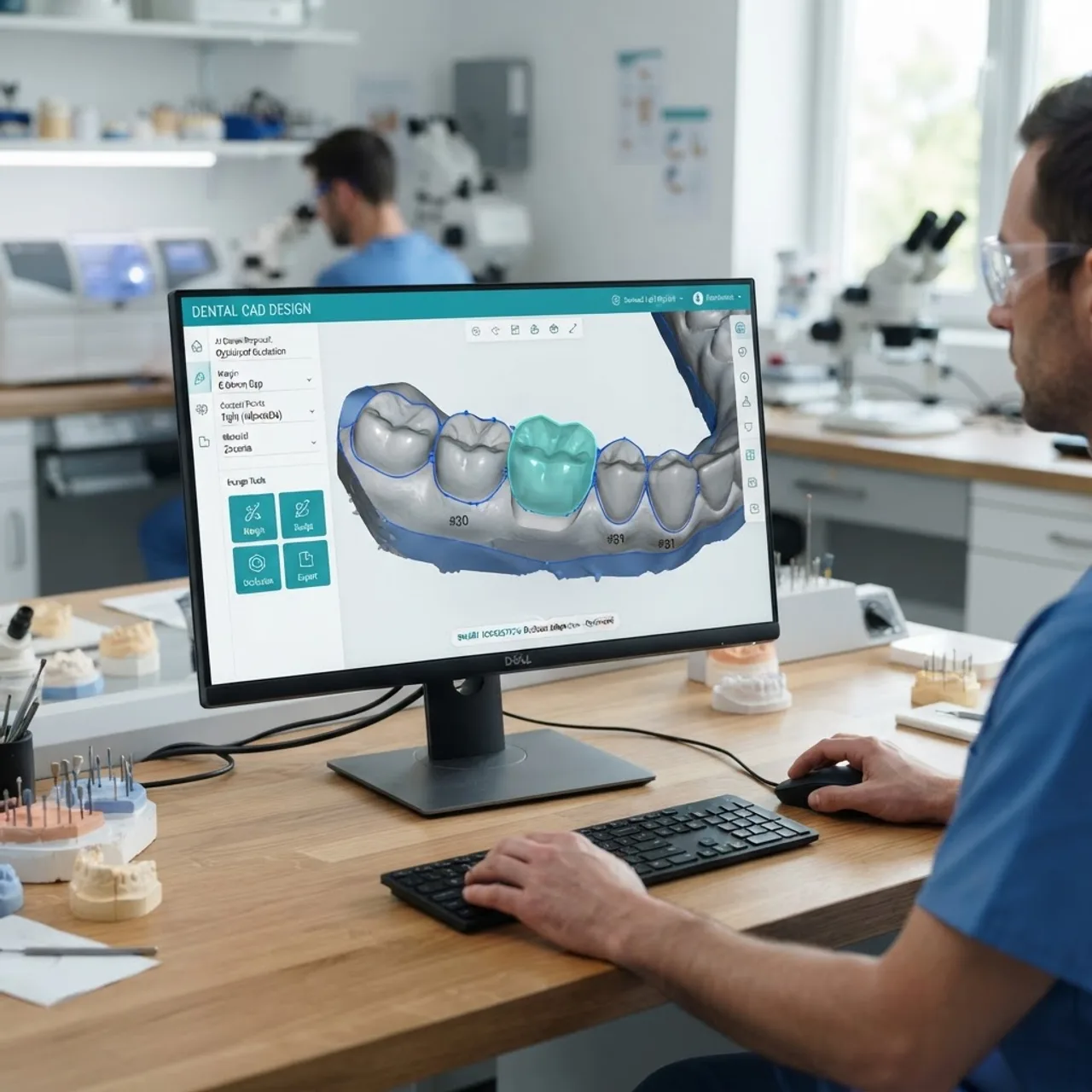
Once a clean scan exists, artificial intelligence keeps working. Modern CAD software analyzes the digital model to propose restorations that fit the patient's unique anatomy. Instead of a technician manually drawing every margin and contour, AI suggests a starting crown, inlay, or bridge based on adjacent teeth and the opposing bite.
This does not remove the clinician's judgment. It removes the repetitive groundwork, letting experts focus on refinement rather than construction. The result is faster same-day dentistry, where a patient can receive a milled restoration in a single visit.
Businesses building this kind of intelligent tooling often partner with specialists in artificial intelligence services to design the models and data pipelines that make automated design reliable at scale.
Real Clinical Benefits for Dentists and Patients
The technology only matters if it improves outcomes. In real practices, Primescan artificial intelligence delivers measurable advantages:
- Fewer remakes: On-screen review catches incomplete margins before the lab ever sees the file.
- Shorter appointments: A smooth AI-guided scan replaces multiple impression retries.
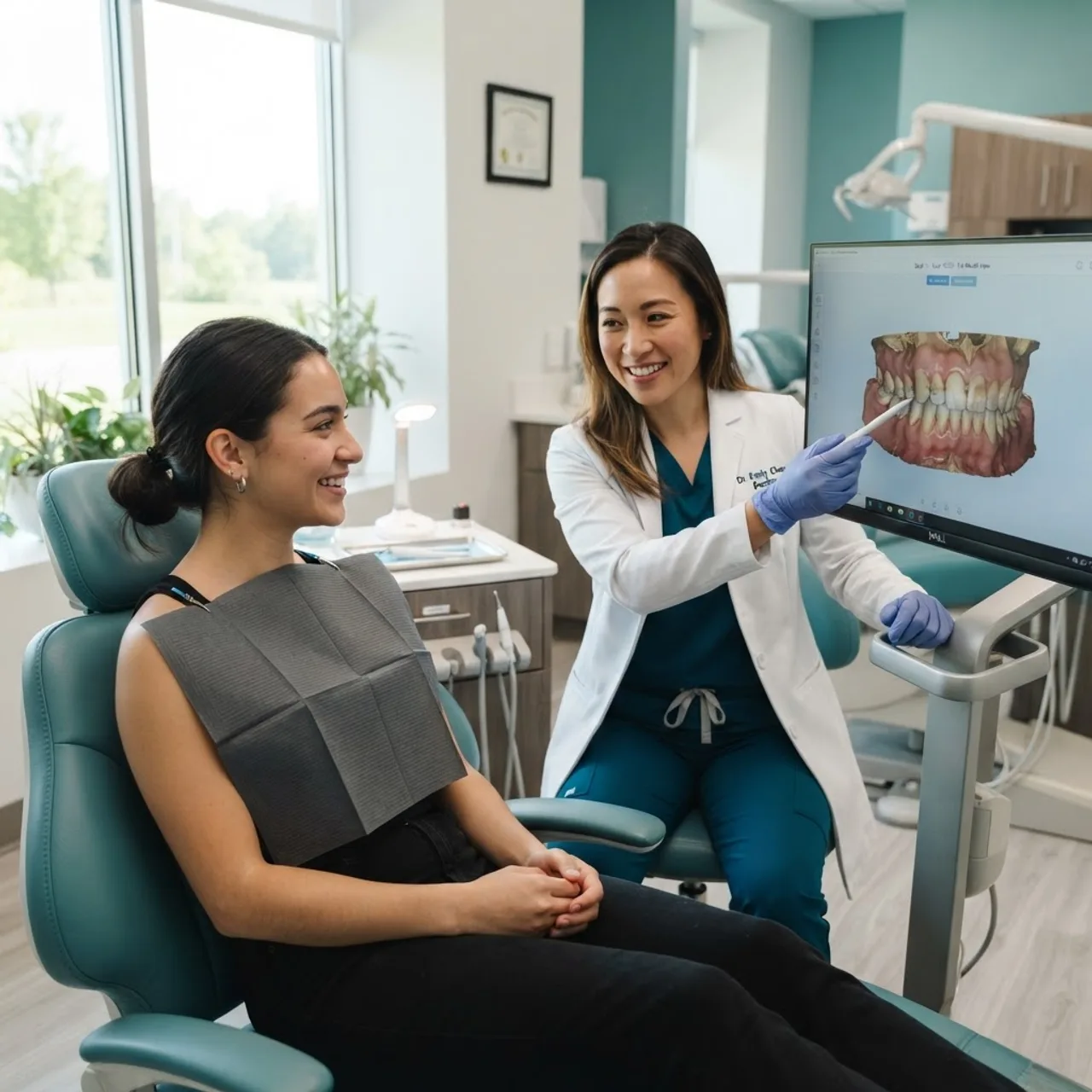
- Better patient communication: Clinicians show patients their own 3D scan, improving trust and case acceptance.
- Reduced material waste: No disposable impression putty or shipping of physical molds.
- Stronger record-keeping: Digital files support monitoring changes over time, from wear to gum recession.
Google reports that around 53 percent of mobile users abandon experiences that feel slow, and while that statistic comes from web performance, the same human truth applies in the dental chair: speed and clarity build trust. AI-driven scanning gives patients a faster, more transparent experience they remember positively.
Limitations and Honest Considerations
Good expertise means naming the trade-offs. AI-driven scanning is powerful but not magic. Deep subgingival margins, heavy bleeding, or excessive saliva can still challenge reconstruction, because the AI can only interpret the optical data it actually receives. Full-arch scans remain more demanding than single-unit scans, and clinician technique still influences results.
Cost is another factor. Advanced scanners and their software subscriptions represent a real investment, so smaller practices should weigh case volume against return. The intelligence reduces error, but it does not replace clinical skill, proper isolation, and sound preparation. Treat AI as a highly capable assistant, not an autopilot.
The Future of AI in Dentistry
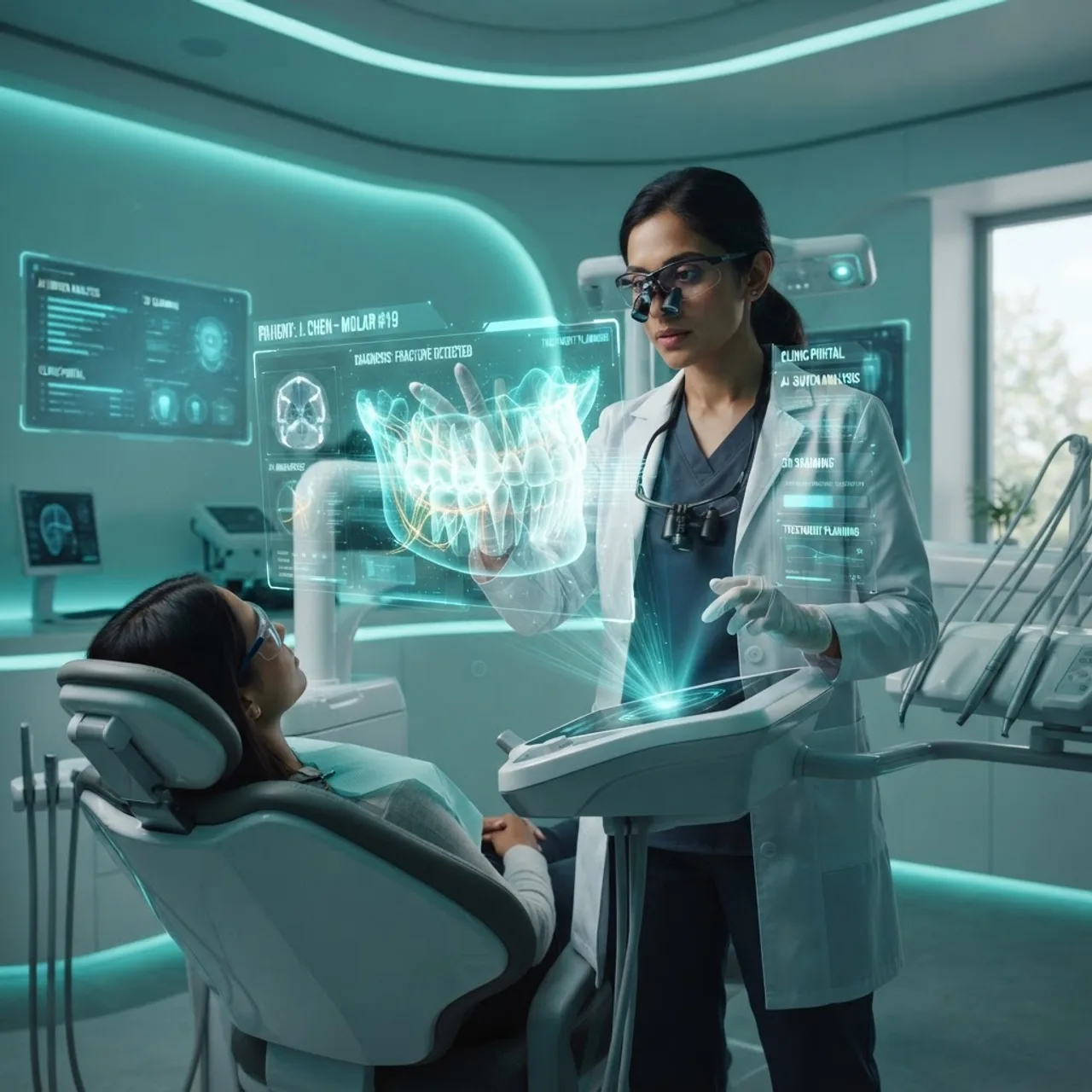
Primescan is one visible example of a much larger shift. The dental AI market is expanding quickly, with industry analysts projecting strong double-digit annual growth through the end of the decade as diagnostics, imaging, and workflow tools mature. Expect scanners to move beyond geometry into diagnosis, flagging early caries, cracks, and wear patterns automatically.
We also expect tighter integration between scanning, practice management, and patient communication platforms. The teams thinking about this future, including specialists at WebPeak, are focused on connecting intelligent capture tools to the broader digital experience patients expect. The scanner of tomorrow will not just measure teeth; it will help interpret them.
Key Takeaways
- Primescan artificial intelligence turns raw optical data into an accurate 3D model in real time using computer vision and machine learning.
- AI improves accuracy through consistency, live error correction, and continuously updated models, achieving trueness within roughly 20 to 60 microns in many clinical studies.
- Compared to traditional impressions, AI scanning shifts error detection to during the scan, reducing remakes and improving patient comfort.
- AI-assisted CAD design speeds same-day restorations without removing clinician judgment.
- Limitations remain around moisture, subgingival margins, and cost, so AI supports rather than replaces clinical expertise.
Frequently Asked Questions (FAQ)
What does artificial intelligence do in Primescan?
Artificial intelligence in Primescan processes thousands of optical frames in real time, stitching them into one accurate 3D model. It removes noise from saliva and movement, fills small data gaps, detects tooth margins, and helps power faster restoration design, improving both accuracy and scanning speed.
Is Primescan more accurate than traditional impressions?
In most single-unit and many full-arch cases, AI-driven scanning matches or exceeds traditional impressions. Studies show digital trueness within roughly 20 to 60 microns. The key advantage is consistency and real-time error detection, which reduces remakes compared to putty molds that can only be checked after they set.
Does Primescan AI replace the dentist?
No. Primescan artificial intelligence is an assistant, not a replacement. It automates data reconstruction and suggests restoration designs, but clinicians still control preparation, isolation, and final decisions. Skilled technique remains essential because the AI can only interpret the optical data the clinician successfully captures during scanning.
How fast is an AI-powered intraoral scan?
A single-unit scan often completes in under a minute, while full-arch scans typically take a few minutes. Because AI reconstructs the model live and flags gaps instantly, clinicians avoid repeated retries, making the overall appointment noticeably faster than traditional impression workflows in most cases.
What are the limitations of AI dental scanning?
The main limits are optical. Heavy bleeding, saliva, and deep subgingival margins can reduce data quality because AI only interprets what the scanner sees. Full-arch cases are more demanding, and the hardware and software carry real cost, so practices should weigh case volume before investing.
Will AI in dentistry keep improving?
Yes. Dental AI is growing quickly, with analysts projecting strong double-digit annual growth this decade. Future systems will likely detect early caries, cracks, and wear automatically, and integrate scanning with diagnostics and patient communication, making intelligent intraoral tools increasingly central to everyday dental practice.