
A practical guide to hiring offshore artificial intelligence developers, covering benefits, skills, costs, collaboration, and how to build a winning AI team.
Offshore Artificial Intelligence Developers
Artificial intelligence has moved from a futuristic buzzword to a core business requirement. From recommendation engines and chatbots to predictive analytics and computer vision, companies of every size now depend on intelligent systems to stay competitive. Yet the demand for skilled AI talent far outpaces local supply in most regions, and salaries for experienced machine learning engineers continue to climb. This is exactly why offshore artificial intelligence developers have become one of the smartest staffing strategies available today.
Hiring offshore means partnering with skilled AI professionals based in other countries, often at a fraction of the cost of an in-house team, without sacrificing quality. When done right, it gives you access to a global talent pool, faster delivery, and the flexibility to scale projects up or down. In this guide, we will break down everything you need to know about working with offshore AI developers, from the benefits and required skills to costs, collaboration models, and how to avoid common pitfalls.
What Are Offshore Artificial Intelligence Developers?
Offshore AI developers are software engineers and data scientists who specialize in artificial intelligence and machine learning and who work remotely from a different country than your business. They may operate as independent contractors, as part of a dedicated development team, or through an established agency that manages the entire engagement on your behalf.
These professionals handle the same responsibilities as a local AI team. They design and train machine learning models, build data pipelines, deploy models into production, fine-tune large language models, and integrate AI features into web and mobile products. The key difference is geography, not capability. Talent hubs in regions such as South Asia, Eastern Europe, Latin America, and parts of Africa now produce world-class AI engineers who contribute to global research and enterprise projects every day.
At ZoneTechify, offshore AI teams are structured to plug directly into your existing workflow, so the experience feels less like outsourcing and more like extending your own engineering department across borders.
Why Businesses Hire Offshore AI Talent
The decision to go offshore is rarely about cost alone. While savings are significant, most companies cite a combination of factors that make offshore AI development genuinely strategic.

Access to a Larger Talent Pool
The most experienced AI engineers are not all located in a handful of expensive cities. By looking offshore, you remove geographic limits and gain access to specialists who have shipped real machine learning products. This is especially valuable for niche areas like natural language processing, deep learning, and MLOps, where local candidates can be nearly impossible to find on short notice.
Significant Cost Efficiency
Salaries for senior AI engineers in North America and Western Europe can be extremely high. Offshore teams in lower-cost regions often deliver the same caliber of work for considerably less, freeing up budget that can be reinvested into data infrastructure, additional features, or marketing.
Faster Time to Market
With distributed teams spread across time zones, work can effectively continue around the clock. A feature handed off at the end of one team's day can be progressed by another, compressing delivery timelines for fast-moving AI projects.
Flexible Scaling
AI workloads are rarely constant. You might need five engineers during an intensive model-training phase and just one for ongoing maintenance. Offshore arrangements make it easy to scale your team to match project demand without the overhead of permanent hiring.
Core Skills to Look For
Not every developer who lists AI on a resume can deliver production-grade systems. When evaluating offshore artificial intelligence developers, focus on a blend of technical depth and practical experience.
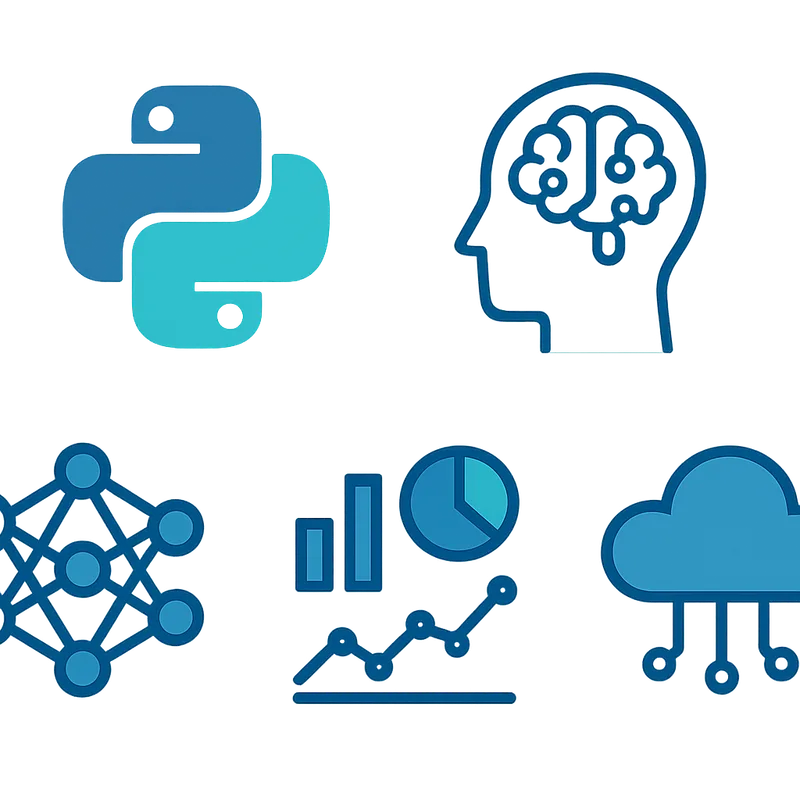
Strong candidates typically demonstrate fluency in Python and its core AI libraries, including TensorFlow, PyTorch, and scikit-learn. They should understand the mathematics behind machine learning, such as linear algebra, probability, and optimization, rather than simply copying tutorials. Equally important is data engineering capability, because real AI projects live or die on the quality of their data pipelines.
Look for experience with model deployment and MLOps, since training a model is only half the battle. Knowledge of cloud platforms like AWS, Google Cloud, and Azure, plus tools such as Docker and Kubernetes, signals that a developer can ship models into reliable production environments. Familiarity with large language models, prompt engineering, and vector databases is increasingly essential as generative AI becomes mainstream.
A Quick Skills Comparison
| Skill Area | Why It Matters | Priority |
|---|---|---|
| Python and ML libraries | Foundation for building and training models | High |
| Data engineering | Clean, reliable data pipelines | High |
| MLOps and deployment | Moves models into production safely | High |
| Cloud platforms | Scalable infrastructure for AI workloads | Medium |
| Generative AI and LLMs | Powers modern chat and content features | Medium |
| Communication in English | Smooth collaboration across borders | High |
Beyond hard skills, communication ability is non-negotiable. An offshore developer who writes clear documentation, asks good questions, and reports progress proactively is worth far more than a silent genius who disappears for days.
How to Collaborate Effectively Across Time Zones
The biggest worry companies have about offshore teams is collaboration. In practice, distributed AI teams succeed when a few simple disciplines are in place. Clear written communication, well-defined tickets, and shared documentation eliminate most of the friction that time-zone gaps could create.
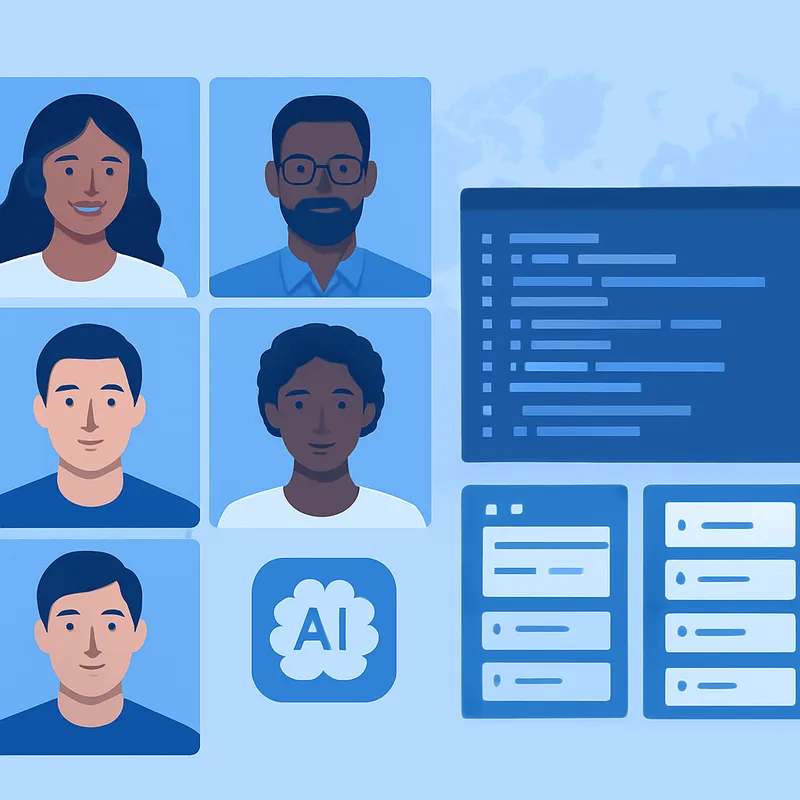
Establish a few hours of overlapping working time so live discussions, code reviews, and stand-ups can happen synchronously. Use project management tools to keep tasks transparent, and version control platforms like Git to keep everyone working from the same source of truth. Record key meetings so team members in other regions can catch up without losing context.
For AI projects specifically, shared access to data, experiment-tracking tools, and model registries keeps everyone aligned on what has been tried and what worked. A reliable specialist partner such as WebPeak can manage these collaboration frameworks for you, so your internal team focuses on outcomes rather than logistics. If your roadmap is heavily AI-driven, WebPeak's dedicated artificial intelligence services provide ready-built teams that already follow these best practices.
Understanding the Real Cost
Cost is often the headline reason for going offshore, but it pays to look at the full picture rather than hourly rates alone. The cheapest developer is rarely the most cost-effective once rework, missed deadlines, and communication overhead are factored in.

When budgeting, consider the engagement model. A fixed-price contract suits well-defined projects with clear deliverables, while a dedicated-team or time-and-materials model fits evolving AI products where requirements shift as you learn from data. Factor in onboarding time, tooling and cloud costs, and any project-management fees charged by an agency.
The genuine savings come from the combination of lower rates and higher flexibility. You avoid recruitment fees, office overhead, and the long-term commitment of full-time salaries, while still getting senior-level expertise. For many businesses, partnering with a managed provider for artificial intelligence services delivers the best balance of cost, quality, and accountability, because the provider absorbs the risk of vetting and retaining talent.
Common Pitfalls and How to Avoid Them
Offshore AI development is powerful, but it is not automatic. The most common failures stem from poor scoping, weak communication, and inadequate vetting rather than from the offshore model itself.
Avoid vague project briefs. AI work is exploratory by nature, so define clear milestones, success metrics, and data expectations up front. Insist on a paid trial or small initial task before committing to a long engagement, which lets you assess real skill rather than relying on interviews alone. Protect your intellectual property with proper contracts and ensure data privacy compliance, especially when handling sensitive or regulated information.
Finally, treat your offshore developers as part of the team rather than as a faceless vendor. Teams that feel included, informed, and respected consistently produce better results and stay engaged for the long term.
The Future of Offshore AI Development
The trend toward distributed, global AI teams is only accelerating. As tools for remote collaboration mature and AI itself helps automate routine coding tasks, the practical distance between an in-house engineer and an offshore one continues to shrink. Companies that learn to build and manage global AI teams now will hold a lasting advantage in talent access and cost efficiency.

Generative AI, autonomous agents, and increasingly capable models will keep raising the bar for what businesses can build, and the demand for skilled engineers will only grow. Offshore artificial intelligence developers are not a temporary cost-cutting trick. They represent a fundamental shift in how innovative products get built in a connected world.
Final Thoughts
Hiring offshore artificial intelligence developers gives your business access to elite talent, meaningful cost savings, and the flexibility to scale at the speed your projects demand. Success comes down to choosing the right people, setting clear expectations, and supporting strong collaboration across time zones. Whether you build the relationship directly or work through a trusted partner, the opportunity is real and the timing has never been better. Start with a clearly scoped project, vet for both technical and communication strength, and you will be well on your way to building AI products that compete with anyone, anywhere.