
A practical guide to evaluating vendor AI and machine learning platforms like Navax.com, including architecture, costs, governance and buying criteria.
Navax.com AI Artificial Intelligence Machine Learning
Searches that combine a vendor domain with the phrases artificial intelligence and machine learning usually signal one underlying question: is this platform worth adopting, and how do I judge it fairly? Vendor sites rarely answer that. They publish capability lists, not evaluation criteria. This guide flips the perspective. Instead of describing what any single provider claims, it gives you the technical framework used to assess an AI and machine learning platform, whether that platform is Navax.com, a hyperscaler service, or a bespoke build. Every section is written so you can apply it during a live procurement cycle.
Quick Answer: Navax.com style AI and machine learning platforms should be judged on five measurable factors: data readiness, model lifecycle tooling, integration depth, total cost of ownership, and governance controls. Artificial intelligence is the broad discipline; machine learning is the subset that learns patterns from data. Verify claims with a scoped pilot before signing.
Table of Contents
- What Artificial Intelligence and Machine Learning Actually Mean
- What a Vendor AI Platform Like Navax.com Typically Provides
- How Machine Learning Models Are Trained and Deployed
- AI vs Machine Learning vs Deep Learning Compared
- Build, Buy, or Blend: Comparing the Three Paths
- How to Evaluate an AI Vendor in Ten Steps
- Governance, Data Quality, and Realistic Limitations
- Key Takeaways
- Frequently Asked Questions
What Artificial Intelligence and Machine Learning Actually Mean
Artificial intelligence is the field concerned with building systems that perform tasks normally requiring human judgment, such as classification, prediction, language understanding, or planning. Machine learning is a subset of artificial intelligence in which a model derives its rules from historical data rather than from hand written logic. Deep learning is a further subset that uses multi layer neural networks and typically needs far more data and compute.
The distinction matters commercially. A rules engine marketed as artificial intelligence can be perfectly useful, but it will not improve as your data grows. A machine learning system will, provided the data pipeline stays healthy. When a vendor page uses the terms interchangeably, ask a direct question: which components learn from data, and how often are they retrained?
Why Precise Terminology Protects Your Budget
Imprecise language creates mispriced contracts. If you buy what you believe is an adaptive machine learning system and receive a static scoring model, you will still be paying platform fees while accuracy decays. Ask for the retraining cadence in writing, expressed in days or weeks, and ask who owns the retrained weights.

What a Vendor AI Platform Like Navax.com Typically Provides
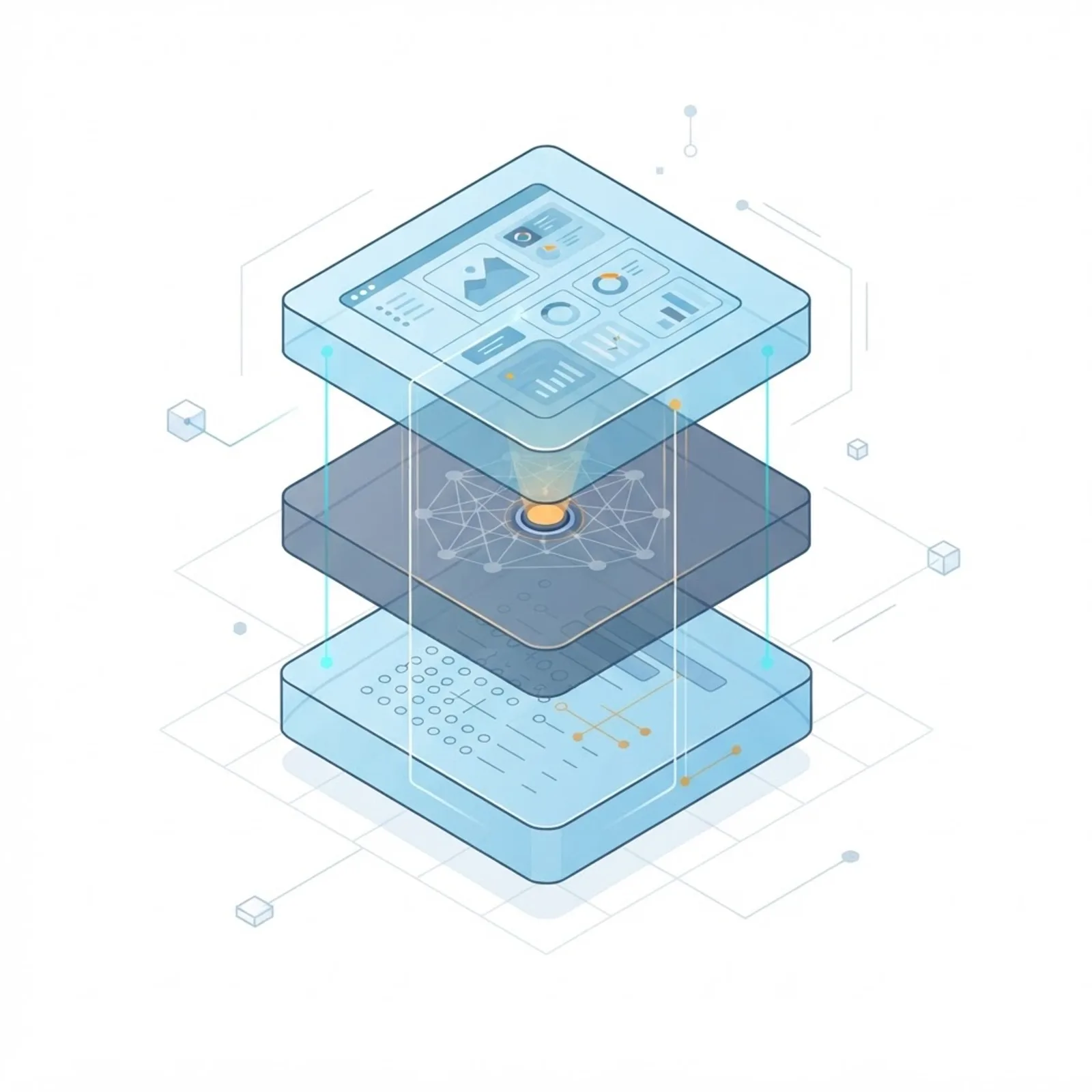
Most commercial AI and machine learning platforms are assembled from four layers, and knowing the layers lets you compare any two vendors on equal terms.
- Data layer: connectors, ingestion jobs, storage, and feature preparation.
- Model layer: training environments, pretrained or foundation models, evaluation tooling, and a model registry.
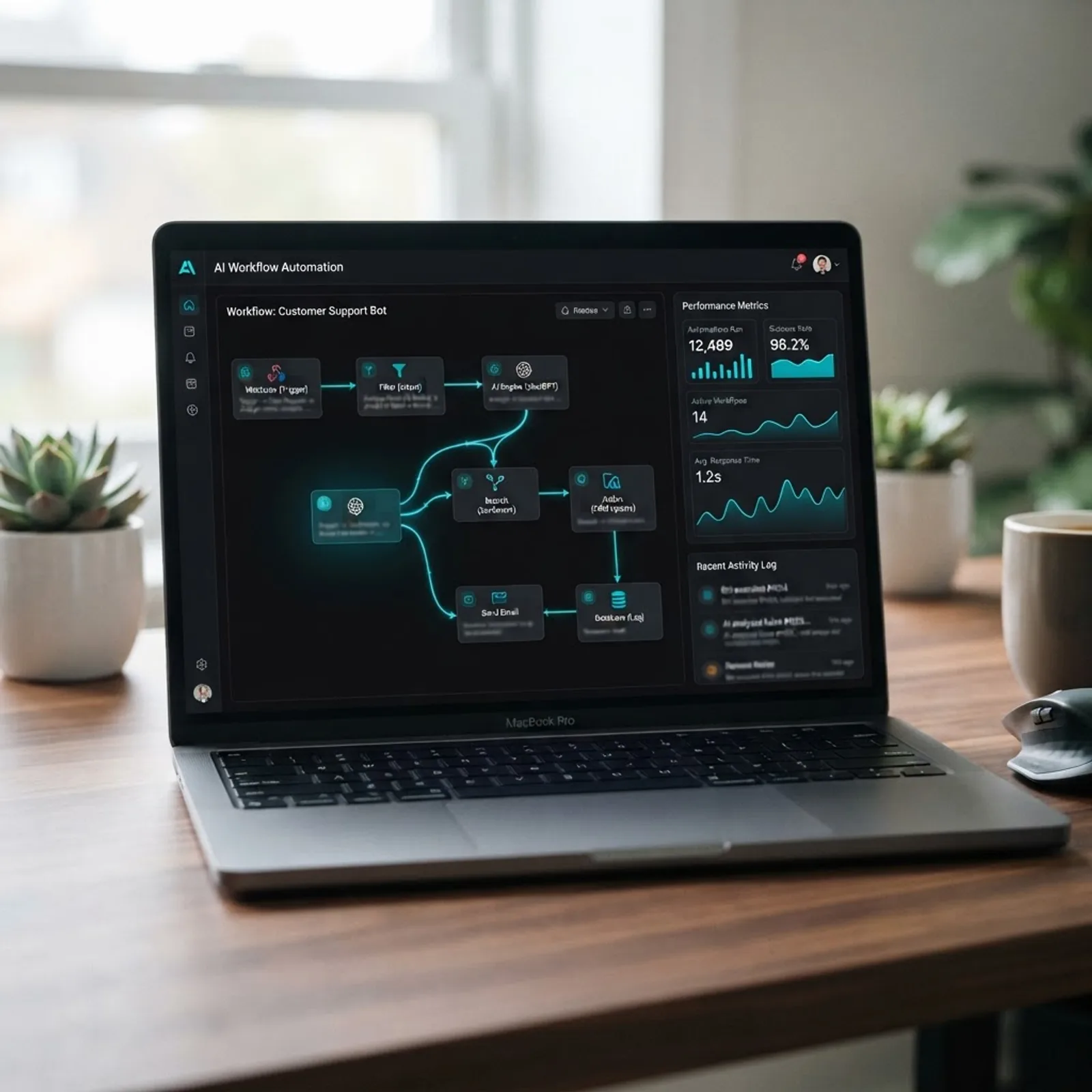
- Application layer: dashboards, workflow automation, APIs, and embedded predictions inside existing software.
- Operations layer: monitoring, drift detection, access control, audit logging, and cost reporting.
A platform that is strong at the application layer but thin at the operations layer will demo beautifully and become difficult to maintain in month nine. That gap is the single most common source of stalled AI projects, because monitoring is what tells you a model has quietly stopped working.
The Questions That Reveal Real Capability
Request three artifacts during evaluation: a sample model card, a redacted monitoring dashboard, and an architecture diagram showing where your data physically resides. Vendors with mature engineering practices can produce all three quickly. Vendors that cannot usually depend on manual work behind the interface.
How Machine Learning Models Are Trained and Deployed
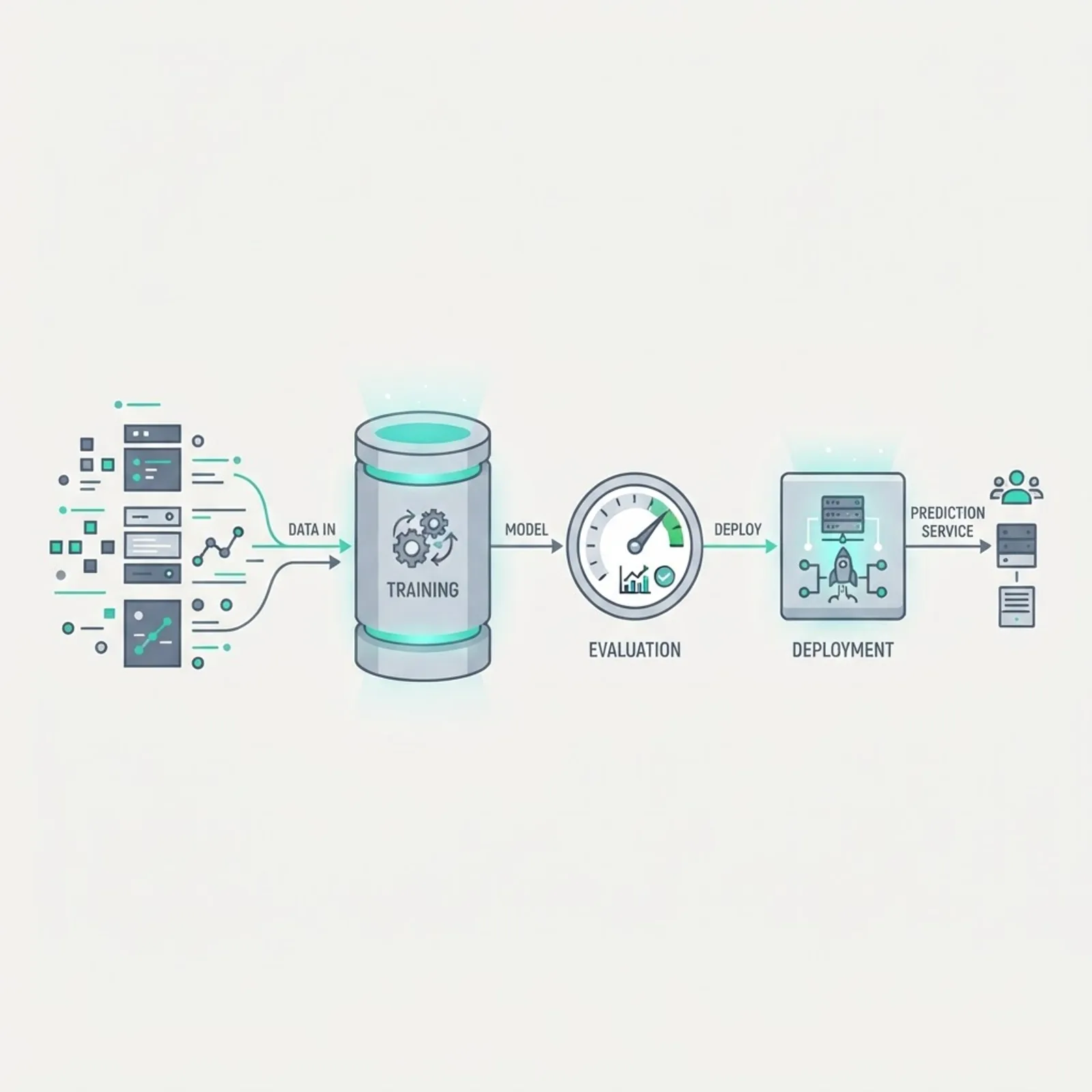
A machine learning model moves through six repeatable stages, and any credible platform should make each stage visible.
- Problem framing: define the prediction target and the decision it will influence.
- Data collection and labeling: assemble historical examples with known outcomes.
- Feature preparation: clean, encode, and transform inputs consistently for training and inference.
- Training and validation: fit the model, then measure it on data it has never seen.
- Deployment: expose the model behind an API, batch job, or embedded application.
- Monitoring and retraining: track accuracy and input drift, then refresh the model.
Stage six is where value is preserved. Input distributions shift as pricing, seasonality, and customer behavior change, and accuracy erodes even though the code has not changed. This phenomenon is called drift, and it is the technical reason continuous monitoring is not optional.
A Concrete Example
Consider invoice classification for a mid sized distributor. Historical invoices are labeled by category, a gradient boosted model is trained on vendor name, line item text, and amount, and validation shows the model handles common categories well but struggles with rare ones. The sensible deployment routes high confidence predictions automatically and sends low confidence cases to a human reviewer. That hybrid design is usually more valuable than chasing a higher headline accuracy number, because it converts uncertainty into a workflow rather than an error.
AI vs Machine Learning vs Deep Learning Compared
| Dimension | Rules Based AI | Classical Machine Learning | Deep Learning |
|---|---|---|---|
| How logic is created | Written by humans | Learned from tabular data | Learned by neural networks |
| Typical data need | None beyond configuration | Thousands of labeled rows | Large volumes, often unstructured |
| Explainability | Very high | Moderate to high | Low without added tooling |
| Compute cost | Minimal | Low to moderate | High, often GPU dependent |
| Best fit | Stable policies, compliance checks | Forecasting, scoring, churn, pricing | Images, audio, language, generative tasks |
| Maintenance burden | Manual rule updates | Periodic retraining | Retraining plus infrastructure work |
The practical conclusion is that many business problems are solved more reliably by classical machine learning than by deep learning. Choosing the heavier approach without a data volume justification increases cost and reduces explainability at the same time.
How to Evaluate an AI Vendor in Ten Steps
Use this sequence when reviewing Navax.com or any comparable platform. Each step produces evidence rather than an impression.
- Write the business decision the system must improve, in one sentence.
- Define one success metric and one guardrail metric before any demo.
- Audit your own data first, including completeness, history depth, and label quality.
- Ask which components learn from data and how frequently they retrain.
- Request the integration list and confirm the systems you actually run are supported.
- Review data residency, retention, and whether your data trains shared models.
- Run a paid pilot on a narrow use case with a fixed evaluation window.
- Compare pilot results against a simple baseline such as a rule or a moving average.
- Model total cost of ownership across licenses, compute, integration, and internal time.
- Negotiate exit terms covering data export format and model ownership.
Step eight is the one buyers skip most often. If a machine learning model cannot beat a well constructed baseline, the platform is not the problem and neither is the vendor. The problem is usually data quality or an unclear decision target. Teams that need help closing that gap often bring in an AI workflow solutions partner to run the pilot and baseline comparison in parallel.
Budgeting Realistically
Two documented industry patterns are worth planning around. First, data preparation consistently consumes the largest share of machine learning project effort, which is why teams routinely report spending the majority of project time on cleaning and integration rather than modeling. Second, model performance measured in a controlled pilot typically declines once exposed to live traffic, because production data is messier than curated samples. Budget for both realities by reserving engineering capacity after launch, not only before it.
Governance, Data Quality, and Realistic Limitations
Governance is the set of controls that make an AI system auditable and reversible. At minimum, insist on four items: a documented data lineage, role based access to models and predictions, logged human overrides, and a rollback path to the previous model version.
Be equally clear about limitations. Machine learning cannot invent signal that is absent from your data, it reproduces historical bias unless bias is measured and corrected, and it degrades silently rather than failing loudly. Generative components add a further caveat because fluent output can be factually wrong, which makes human review essential for customer facing and regulated content.

A Sensible Rollout Sequence
Start with an internal, low risk use case where errors are recoverable. Measure for a full business cycle. Expand only after monitoring proves stability. Teams following that sequence typically reach production faster than teams attempting a broad transformation, because each stage produces evidence that justifies the next investment. Agencies such as the ZoneTechify Team structure engagements this way for the same reason.

Key Takeaways
- Artificial intelligence is the broad field; machine learning is the data driven subset; deep learning is a compute heavy subset of machine learning.
- Evaluate any vendor platform across four layers: data, model, application, and operations.
- Ask for the retraining cadence in writing, because static models decay as data shifts.
- Classical machine learning often outperforms deep learning on tabular business problems while remaining cheaper and more explainable.
- Always compare pilot results against a simple baseline before attributing value to a platform.
- Data preparation, not modeling, consumes the largest share of project effort.
- Governance requires lineage, access control, override logging, and version rollback.
Frequently Asked Questions (FAQ)
What is the difference between AI and machine learning?
Artificial intelligence is the overall field of building systems that perform tasks requiring judgment. Machine learning is the subset where models learn rules from historical data instead of following hand written instructions. Every machine learning system is AI, but not every AI system uses machine learning.
How do I know if a vendor AI platform is right for my business?
Define one decision you want improved, one success metric, and one guardrail metric before booking a demo. Then run a narrow paid pilot and compare results against a simple baseline. If the platform cannot beat that baseline, the issue is usually data quality or an unclear target.
How much data do I need for machine learning?
It depends on the technique. Classical models on tabular data often work with a few thousand well labeled examples covering enough history to include seasonality. Deep learning generally needs far more, especially for images, audio, or language. Label quality matters more than raw volume.
Why does model accuracy drop after launch?
Production data differs from curated training samples, and input distributions shift as pricing, demand, and behavior change. That shift is called drift. Accuracy declines even though the code is unchanged, which is why continuous monitoring and a scheduled retraining cadence are required rather than optional.
Should I build my own machine learning system or buy a platform?
Buy when the use case is common, timelines are short, and internal machine learning expertise is limited. Build when the model is a core competitive differentiator and you can staff ongoing maintenance. A blended approach, buying infrastructure while building models, suits many mid sized teams.