
A practical, data-backed guide to how Google Trends breakout terms are calculated, how to validate them, and how to turn sudden search spikes into durable SEO and AI-citation wins in 2026.
How Google Trends Breakout Terms Work for SEO in 2026

Most SEO teams open Google Trends, see the word "Breakout" next to a related query, and assume they have found a goldmine. Half the time they have. The other half, they publish an article for a term that had eleven searches last month and nineteen this month. The label looks identical in both cases.
That gap between what "Breakout" actually measures and what marketers think it measures is the single most expensive misunderstanding in trend-driven SEO. This guide explains the mechanics precisely, then gives you the validation workflow we use before committing content resources to any spiking term.
Quick Answer: A Google Trends breakout term is a related query whose search interest grew more than 5,000% over the selected period, or grew from a base so small that Trends cannot calculate a reliable percentage. It signals velocity, not volume, so every breakout term must be validated against absolute search data before you build content around it.
What a Breakout Term Actually Means
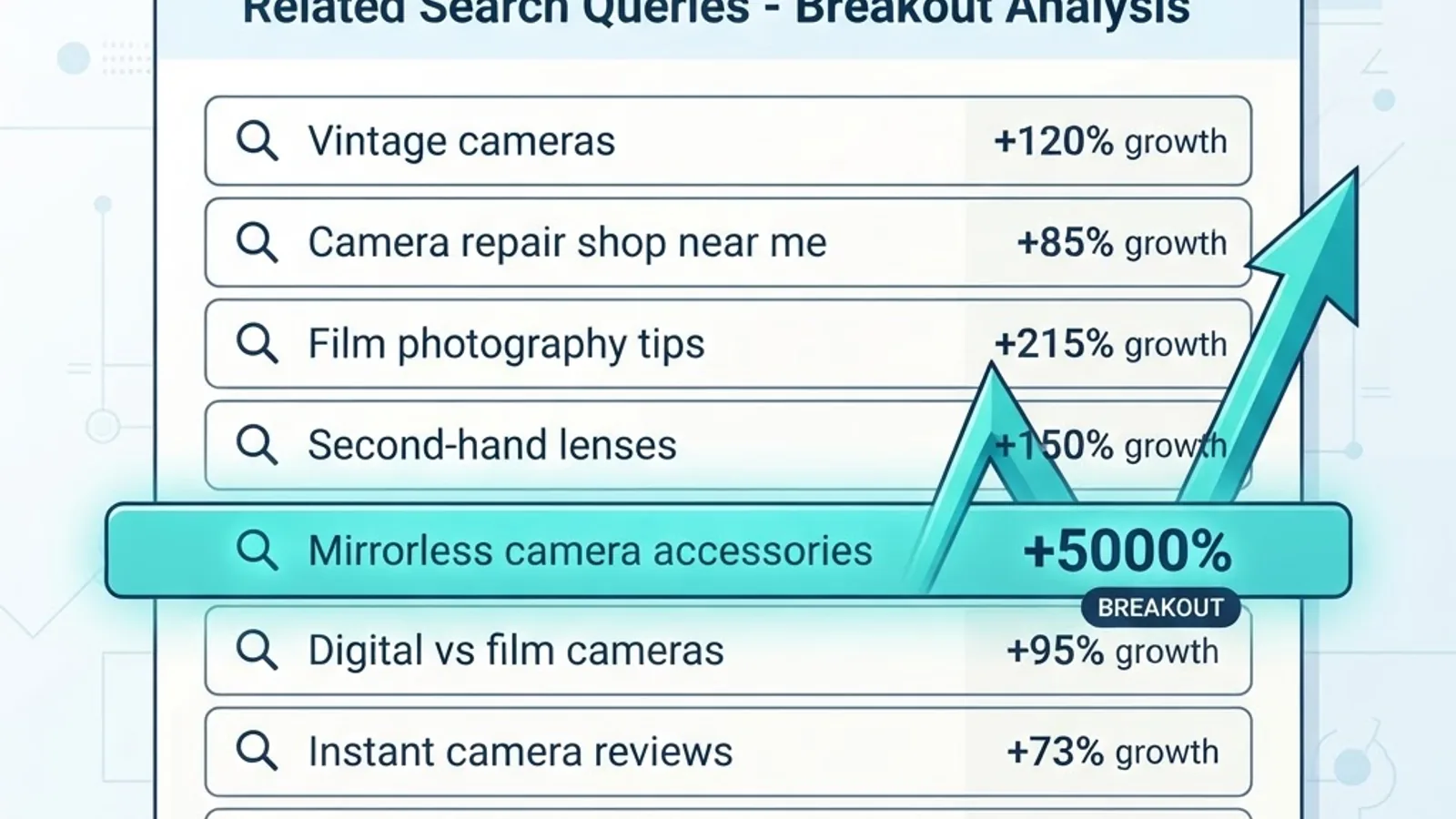
In the Related Queries panel of Google Trends, you can toggle between Top and Rising. Top shows the most-searched related terms for your seed keyword. Rising shows the terms with the largest percentage growth in the selected timeframe. Within Rising, any term whose growth exceeds roughly 5,000% is labelled Breakout instead of showing a number.
Definition: A breakout term is a search query that experienced growth so steep, or started from such a low base, that Google displays a qualitative label rather than a percentage figure.
Two distinct scenarios produce the same label:
- Genuine mass adoption. A term went from moderate volume to very high volume because a real event, product launch, or cultural shift occurred.
- Low-base statistical noise. A term went from near-zero to slightly-above-zero. Percentage growth is mathematically enormous; commercial value is close to nothing.
Google does not distinguish between the two in the interface. You have to. This is why breakout terms are a starting point for research, never a conclusion.
The Data Model Behind Google Trends
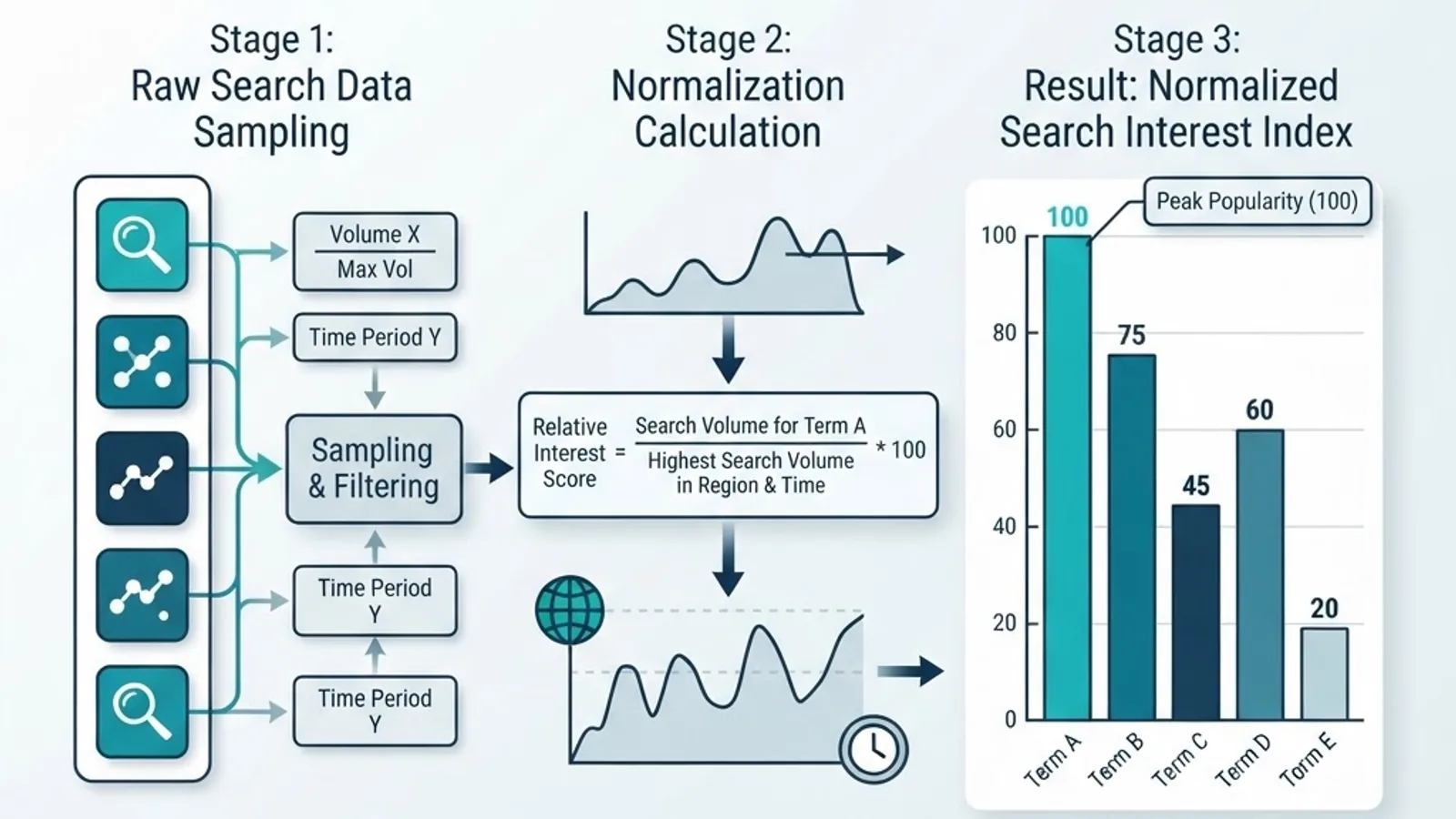
Understanding three properties of the Trends dataset prevents nearly every misreading.
It Is Normalized, Not Absolute
Google Trends never shows search counts. It shows relative interest indexed 0 to 100, where 100 is the peak point in your selected range and region. Change the date range and every number changes, because the peak moves. A term at 100 in a one-week view might sit at 4 in a five-year view.
It Is Sampled
Trends is built from a sample of total Google searches, not the complete log. Google has confirmed the data is both normalized and sampled, which is why the same query pulled twice can return marginally different figures. For high-volume topics, sampling error is negligible. For niche or emerging terms, it is significant, and emerging terms are exactly where breakouts live.
It Filters Duplicates and Low-Volume Queries
Repeated searches from one user in a short window are de-duplicated, and terms below a volume threshold are excluded entirely. So a breakout term that appears has cleared a minimum bar, but that bar is low.
According to Google, roughly 15% of daily searches are queries never seen before. That statistic is the engine behind breakout terms. New phrasings enter the index constantly, and Trends surfaces the ones accelerating fastest.
Why Breakout Terms Matter More in 2026
Three structural shifts have raised the stakes.
AI answer engines reward freshness. Generative results increasingly cite recently published, tightly-scoped pages. When a topic is new, there is no entrenched authority to outrank, so a well-structured page can become the reference source within days.
Keyword tools lag by 30 to 90 days. Traditional volume databases refresh on monthly or quarterly cycles. Google Trends reflects behaviour within hours. That lag is your competitive window.
Zero-click behaviour concentrates value at the top. Research across the industry consistently shows a majority of Google searches now end without a click to an external site. Ranking third for a mature keyword returns less than it did five years ago. Being the definitive source for a new query returns more, because you get cited in the answer itself.
Spike, Season, or Shift: The Three Curve Shapes
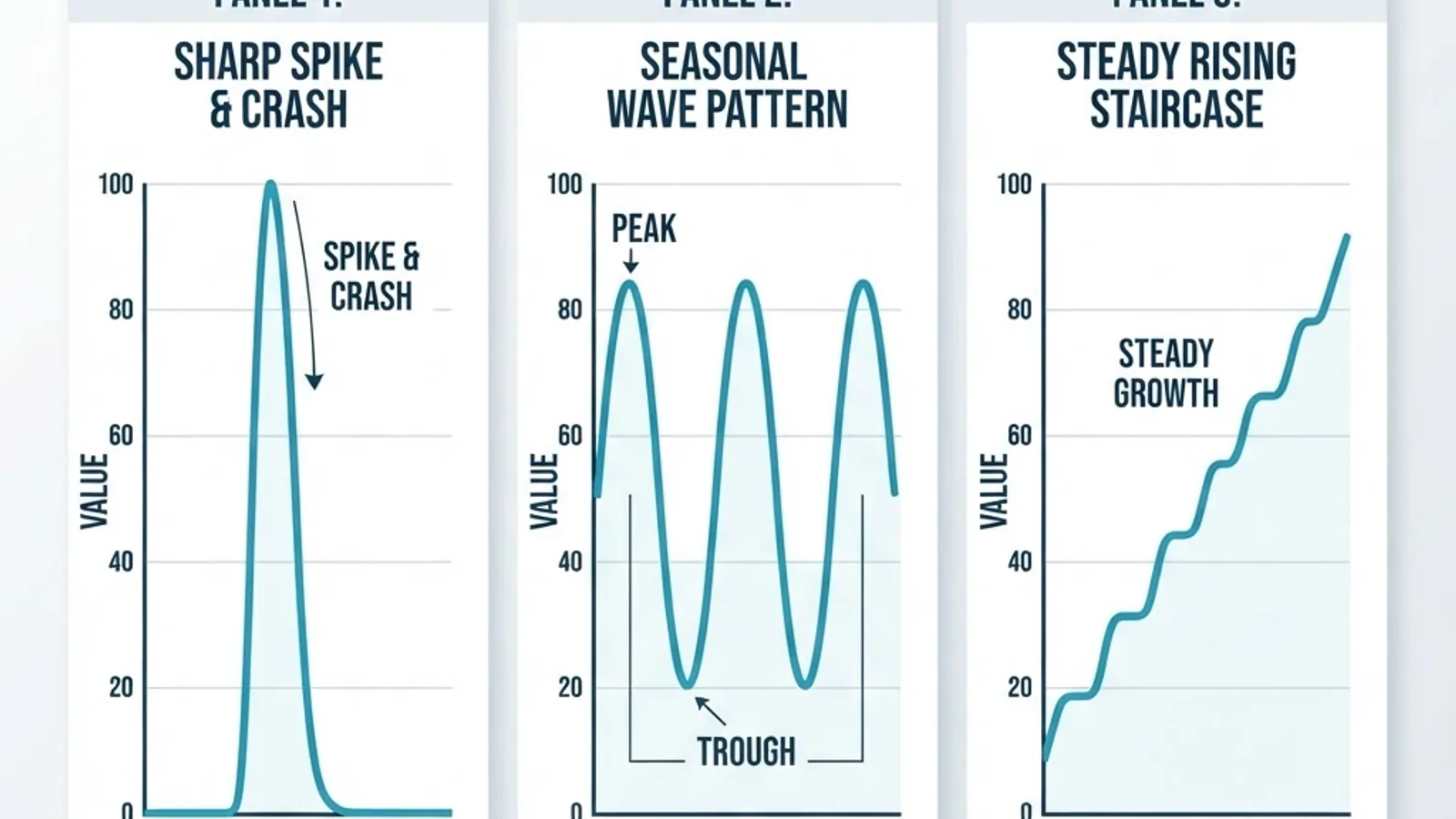
Before you assess a breakout term, classify its curve. The shape determines whether the content is worth writing and what format it should take.
| Curve Shape | What It Looks Like | Lifespan | Content Worth Building | Best Format |
|---|---|---|---|---|
| Spike | Vertical rise, then collapse within days | Under 2 weeks | Rarely | Short news update |
| Seasonal | Repeating peaks at fixed intervals | Recurring yearly | Yes, updated annually | Evergreen guide with dated sections |
| Sustained shift | Stair-step climb that holds its new level | Months to years | Almost always | Pillar page plus cluster |
| Flat low-base | Jagged movement near zero | Unpredictable | No | Skip or monitor only |
The sustained shift is what you are hunting. Pull a five-year view of the term. If the recent rise sits meaningfully above every prior peak and has held for at least four to six weeks, you are looking at a behavioural change rather than a news cycle.
The Five-Step Breakout Validation Workflow
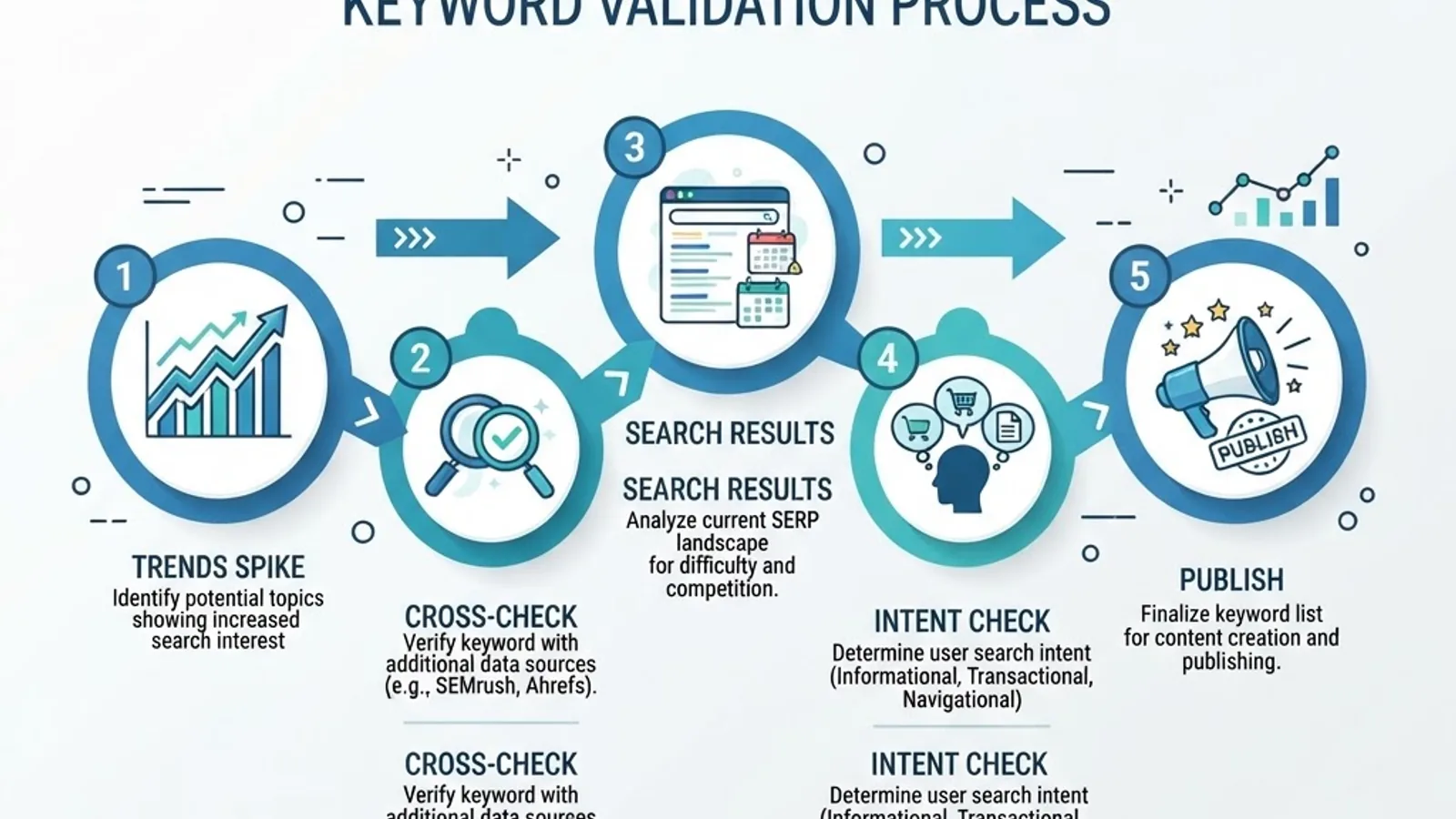
This is the sequence we run before any trending term enters a content calendar. It takes about fifteen minutes per term and eliminates the low-base traps.
- Widen the timeframe. Switch from 7-day or 30-day to 12-month, then 5-year. If the breakout disappears at the wider view, it was noise or a one-off event.
- Cross-check absolute volume. Look the term up in any keyword volume tool. Two outcomes are useful: a real number confirms demand, and "no data" on a term whose Trends curve is climbing steeply confirms you are early. What kills the idea is "no data" plus a flat five-year curve.
- Read the SERP. Search the term manually. Count how many results genuinely address it versus how many are loosely-related pages Google surfaced because nothing better exists. Thin results plus real interest is the ideal gap.
- Classify intent. Determine whether searchers want a definition, a comparison, a tutorial, a price, or a news update. Breakout terms skew heavily informational, which means your page should lead with a direct answer, not a brand pitch.
- Check commercial adjacency. Does the term sit near something you sell or serve? A breakout you cannot monetise or convert is a traffic vanity metric.
If a term clears all five, publish within 72 hours. Velocity compounds: the earlier you publish on a rising curve, the more link and citation equity you accumulate before competitors arrive.
Structuring Content So AI Engines Cite It
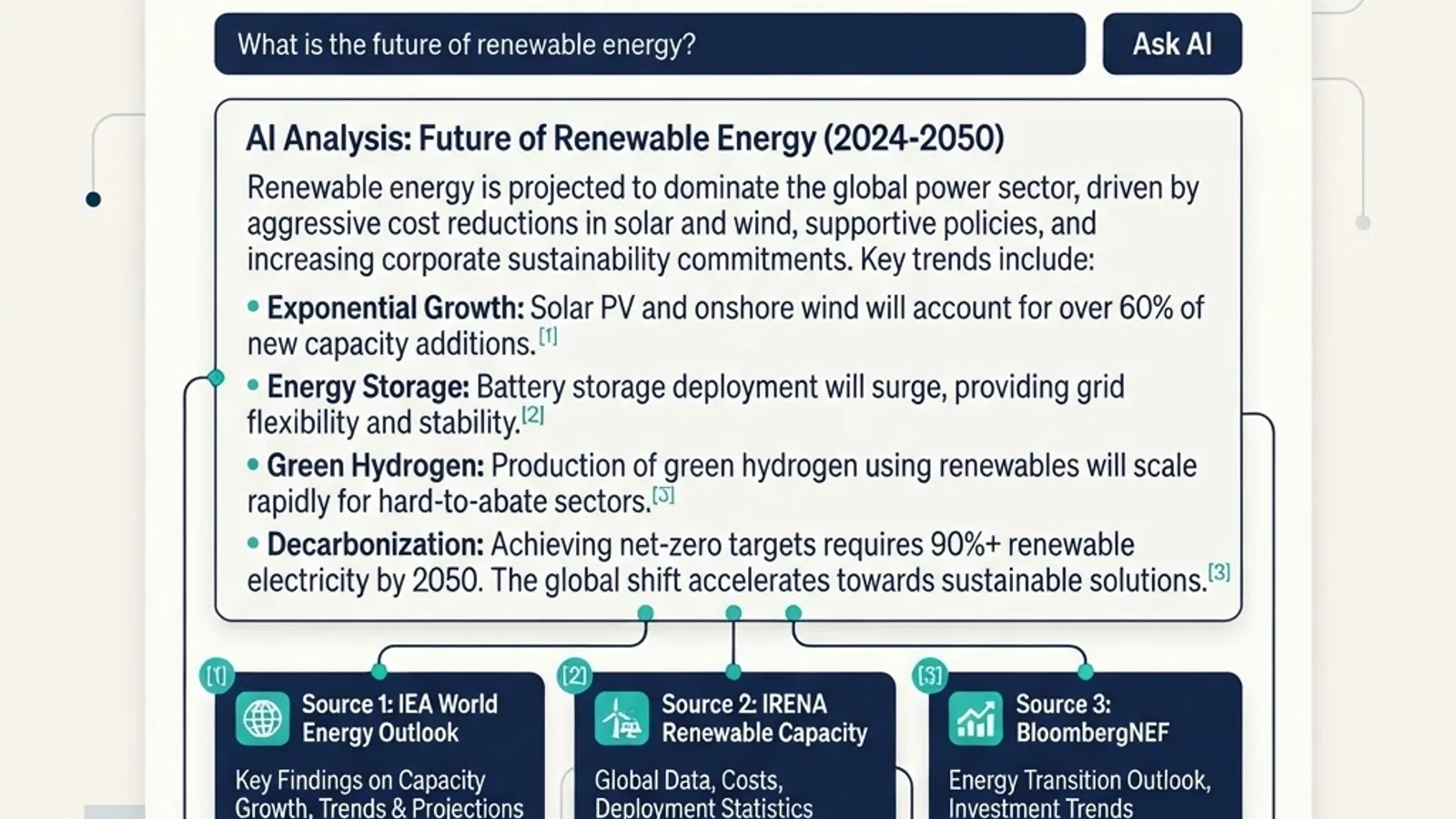
Ranking and being cited are now separate outcomes requiring overlapping but distinct tactics. For breakout topics specifically, citation is often the bigger prize because the term is too new for anyone to hold a durable ranking.
What makes a page extractable:
- A definition in the first 100 words. Lead with a plain-language sentence defining the new term. Language models extract definitions readily.
- Self-contained sections. Each H2 should answer one question completely without requiring the reader to have read the previous section.
- Specific numbers with context. "Growth above 5,000%" is citable. "Massive growth" is not.
- Comparison tables. Structured rows are parsed reliably and reused frequently.
- A publish and update timestamp. For emerging topics, recency is a ranking and trust signal.
Teams that need this systematised across a content library often bring in specialists — this is the core of how ZoneTechify's content writing team approaches trend-driven briefs, pairing velocity with structural discipline so pages stay useful after the spike passes.
Mistakes That Waste Real Budget
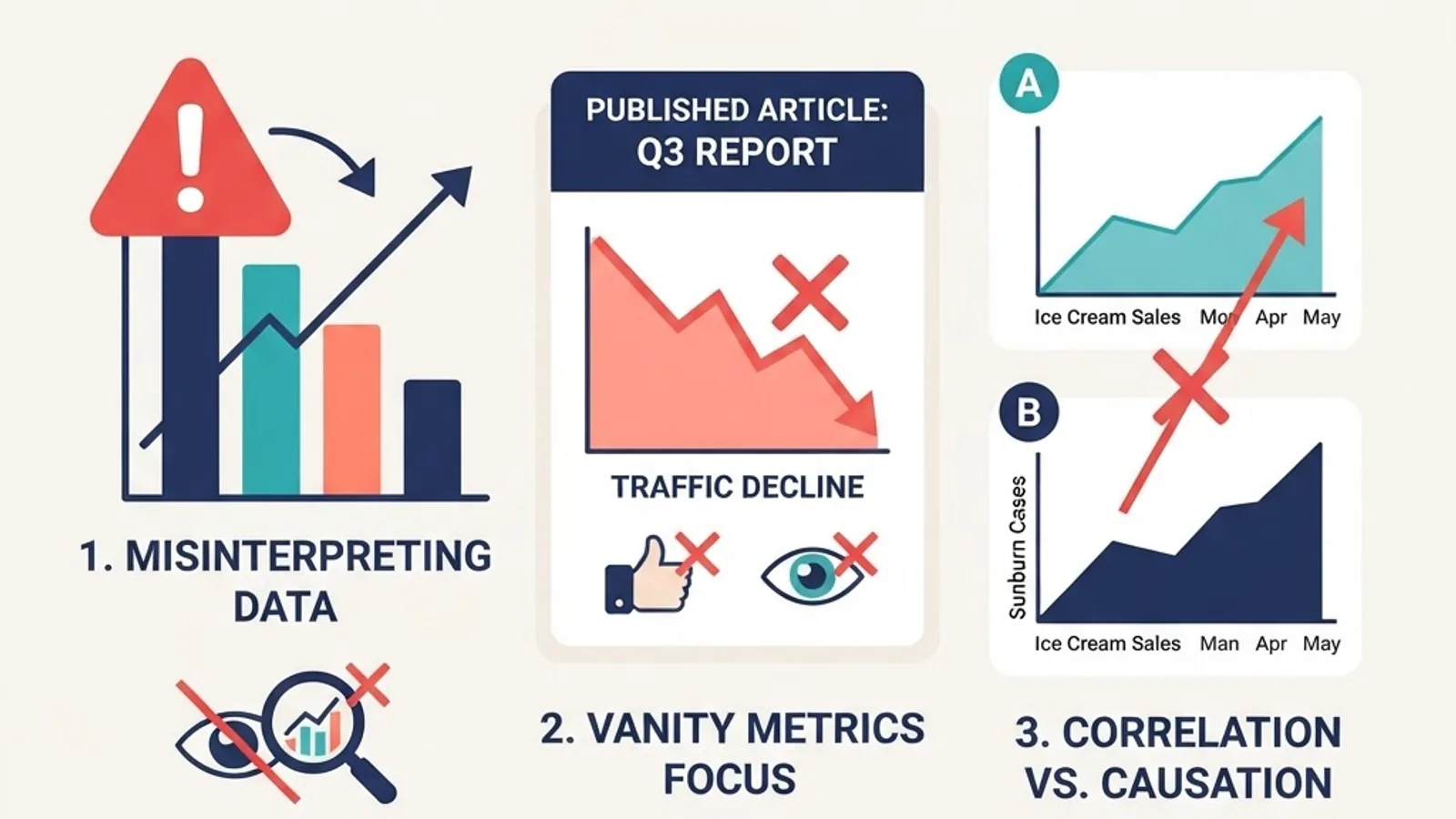
Treating the Label as a Volume Estimate
Breakout describes rate of change only. A term can be labelled Breakout and still have fewer than 100 monthly searches. Always pair Trends with an absolute volume source.
Using the Default Region
Google Trends defaults to a broad geography that may not match your market. A term breaking out globally may be flat in your service area. Always set region — and for local businesses, set it to the specific state or metro.
Confusing a Search Term With a Topic
Trends offers both. Search term matches the literal string. Topic groups synonyms, translations, and misspellings into one entity. Topics give a cleaner demand picture; search terms give exact phrasing for your headline. Use both, for different purposes.
Publishing Thin Content Fast
Speed only wins when quality holds. A 400-word post rushed onto a trending term ranks briefly, then decays and drags site quality signals down. Publish fast and comprehensively, or wait.
Never Revisiting the Piece
Breakout terms mature. The query that had no competition in month one has eight competing guides by month four. Schedule a 60-day review on every trend-driven article.
Building a Repeatable Trend Pipeline
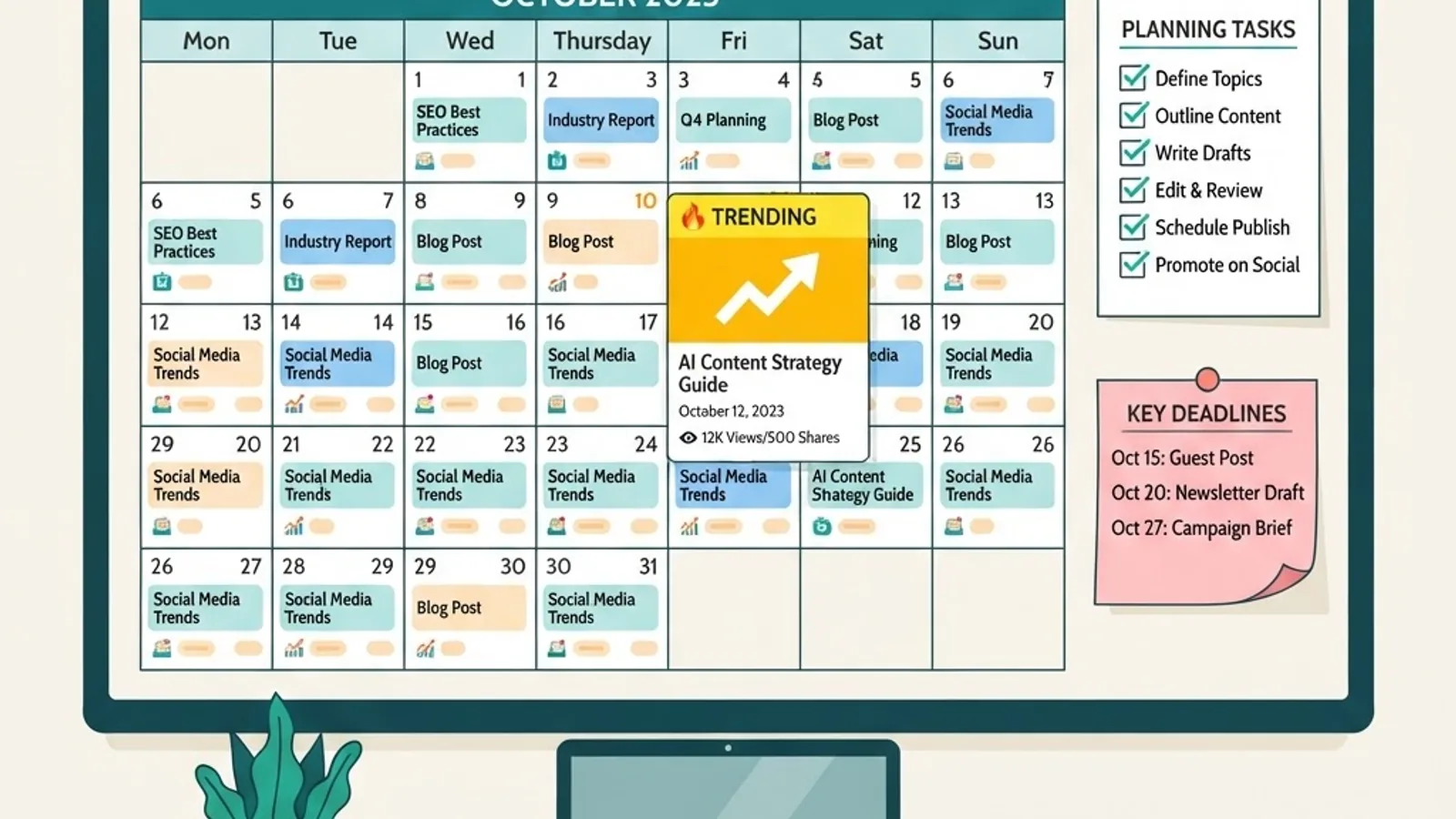
One-off trend spotting produces one-off results. A pipeline produces compounding ones.
Weekly, 30 minutes. Check Rising Queries for your three to five core seed topics. Log every breakout term in a sheet with date, seed term, curve shape, and a validation verdict.
Reserve 20% of your calendar. Keep roughly one in five content slots unassigned so you can move within days when something real emerges. Fully-booked calendars cannot exploit velocity.
Attach every trend piece to a pillar. A standalone article on a spiking term collects traffic and loses it. The same article internally linked into an existing topic cluster passes authority both directions and survives the decay.
Set up alerts, not just checks. Google Alerts and Trends email subscriptions catch movement between your manual reviews.
Agencies handling this at scale typically automate the monitoring layer and reserve human judgement for validation and writing. The technical infrastructure side of that — dashboards, scheduled pulls, alerting — is standard work for teams like WebPeak, while the broader strategy sits alongside search and campaign work at ZoneTechify.
Measuring Whether It Worked
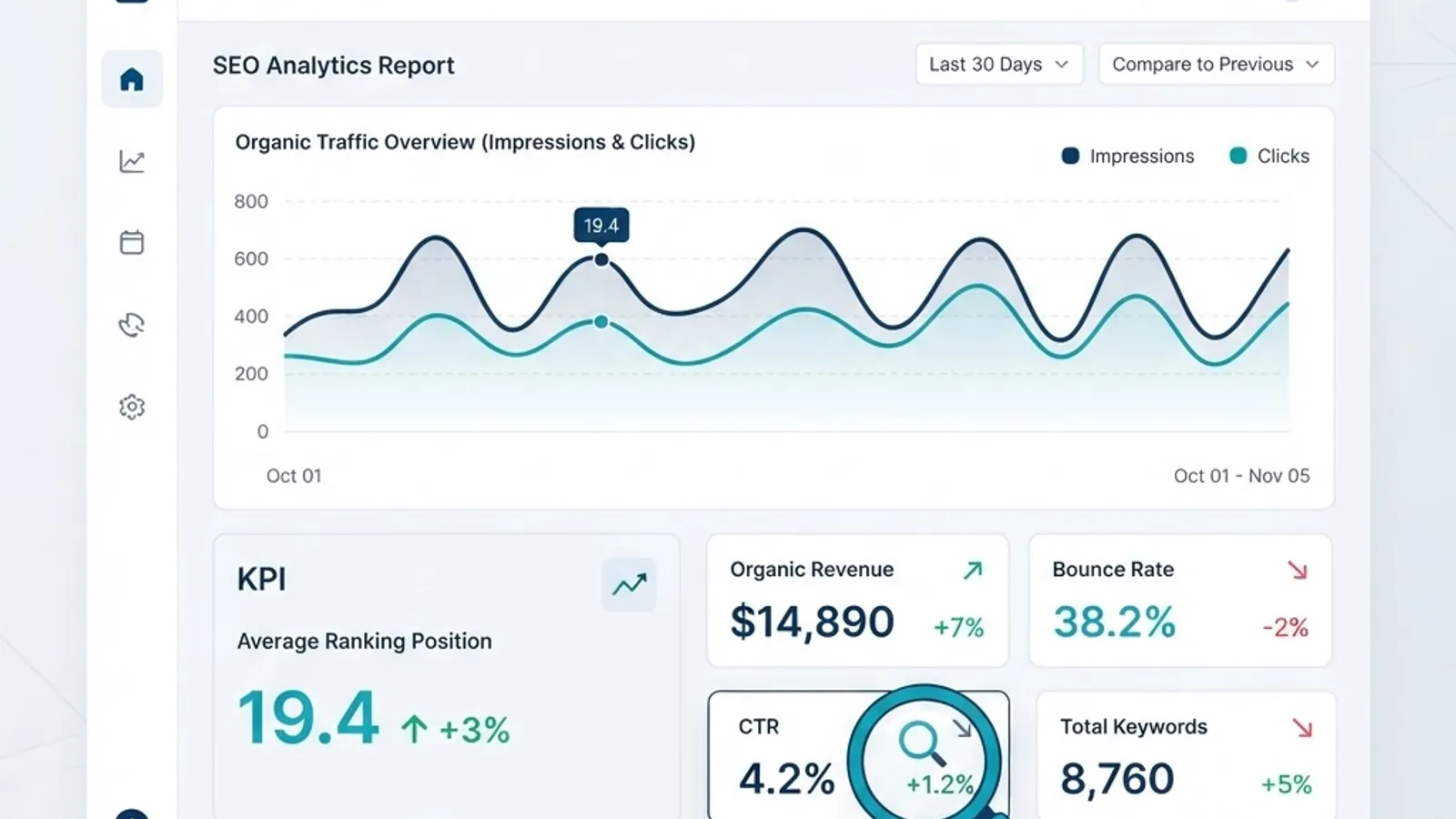
Trend content fails standard SEO reporting because it does not follow standard curves. Judge it on different metrics.
- Time to first impression. How many days from publish until Search Console shows impressions? Under seven days on a new topic means your indexing and internal linking are healthy.
- Peak position within 30 days. On low-competition breakout terms, a top-five position inside a month is a realistic benchmark.
- Query expansion count. Check how many distinct queries the page earns impressions for after 90 days. Strong trend pages expand from one term into dozens as the topic vocabulary settles.
- Post-spike floor. Compare traffic at day 120 against the peak week. A page holding 30% or more of peak has become evergreen. Holding under 10% was a news cycle, and that is fine, as long as you priced it that way.
- Citation appearances. Manually query the term in AI assistants monthly and note whether your page is referenced.
Key Takeaways
- A Google Trends breakout term indicates growth above approximately 5,000%, or growth from a base too small to calculate a percentage.
- Google Trends data is normalized to a 0 to 100 scale, sampled rather than complete, and relative to the exact timeframe and region selected.
- Around 15% of daily Google searches are queries never seen before, which is the underlying source of breakout terms.
- Breakout status measures velocity, never volume. Cross-referencing with an absolute volume tool is mandatory.
- Widening the timeframe from 30 days to 5 years is the fastest single test for separating real shifts from noise.
- Sustained stair-step curves justify pillar content; sharp spikes rarely justify more than a short update.
- Publishing within 72 hours of validation captures the largest share of early link and citation equity.
- Every trend article needs a 60-day review, because competition on a breakout term arrives within months.
Frequently Asked Questions (FAQ)
What does breakout mean on Google Trends?
Breakout means a related search query grew more than about 5,000% during your selected timeframe, or grew from a base so low that Google cannot calculate a meaningful percentage. It measures how fast interest is rising, not how many people are searching, so it always needs volume verification.
Is a breakout keyword always worth writing about?
No. Many breakout terms start from near-zero volume, so the percentage looks dramatic while actual demand stays tiny. Validate by widening the timeframe to five years, checking absolute volume in a keyword tool, and confirming the term connects to something you actually sell or serve.
How accurate is Google Trends data for SEO decisions?
Google Trends is directionally accurate but not precise. It uses a sample of searches, normalizes results to a 0 to 100 index, and removes duplicate and very low-volume queries. Treat it as a reliable timing and momentum signal, then confirm scale using absolute search volume data.
How quickly should I publish content for a breakout term?
Aim to publish within 72 hours of validating the term. Early publication on a rising curve accumulates links, engagement, and AI citations before competitors arrive. Speed only pays off if the article is genuinely complete, so never trade depth for a faster publish date.
Can Google Trends show me search volume numbers?
No. Google Trends only shows relative interest indexed from 0 to 100 within your chosen date range and region. It never displays raw search counts. For absolute monthly volume you need Google Keyword Planner or a third-party SEO tool alongside Trends.
What is the difference between search term and topic in Google Trends?
A search term matches only the exact string you typed. A topic groups related queries, synonyms, misspellings, and translations into one entity. Use topics to measure true overall demand, and use search terms to identify the precise phrasing for your headings and title tag.
How often should I check Google Trends for breakout terms?
Once a week is sufficient for most sites. Spend about 30 minutes reviewing Rising Queries for your core seed topics, log every breakout term with its curve shape, and set up Trends email subscriptions or Google Alerts to catch significant movement between manual reviews.