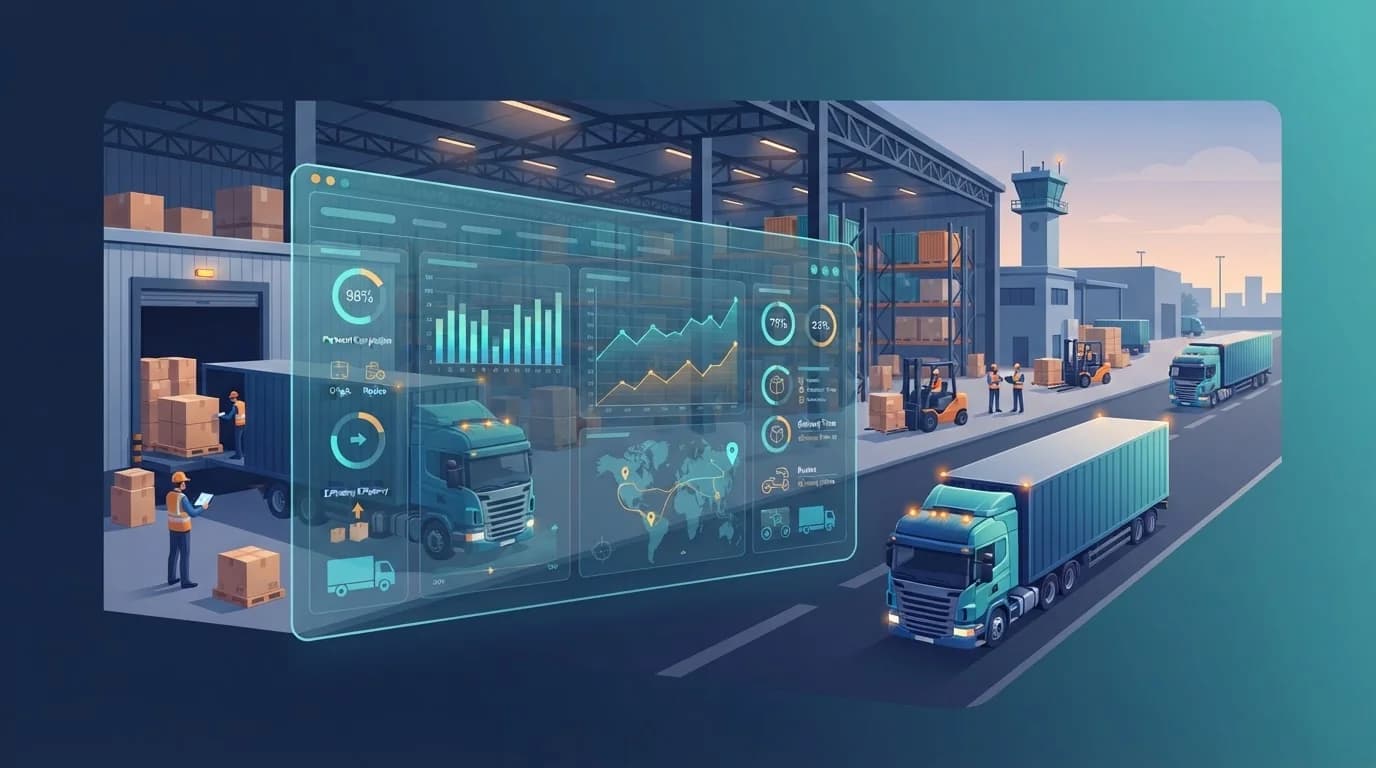
Drive qualified freight quotes with tailored digital marketing for logistics companies. Boost supply chain visibility, generate B2B leads, and expand revenue.
Digital Marketing for Logistics Companies
The freight transportation industry has undergone a structural shift in how enterprise shippers source transportation partners. Traditionally, freight brokers, third-party logistics providers, and carriers relied on outbound cold calling, trade shows, and relationship networks. Today, corporate logistics managers, supply chain directors, and procurement specialists conduct exhaustive digital research before speaking to sales representatives.
Modern logistics marketing requires a credible digital footprint that validates operational reliability, geographic capacity, and regulatory compliance. Shippers operate under intense margin pressure and demand real-time visibility. If your firm remains invisible across organic search engines, generative artificial intelligence platforms, and professional networks, prospective shippers will award freight contracts to digitally visible competitors.
Digital marketing for logistics companies requires a distinct B2B approach. Contract values often exceed hundreds of thousands of dollars, and decision committees involve procurement, operations, and executive leadership. Building an inbound growth engine requires aligning technical web infrastructure, authoritative content, paid acquisition channels, and search visibility into a unified commercial system.
Quick Answer: Digital marketing for logistics companies is a targeted B2B growth system combining search engine optimization, account-based advertising, content marketing, and conversion-focused web architecture. It helps freight brokers, 3PLs, and carriers build pipeline trust, capture high-intent shipping procurement searches, lower customer acquisition costs, and secure recurring, long-term enterprise freight contracts.
Defining Essential Logistics Marketing Terminology
To build an effective acquisition program, internal teams and marketing partners must align on specific supply chain marketing definitions.
- Third-Party Logistics (3PL): A provider managing outsourced warehousing, fulfillment, transportation, and inventory operations for commercial shippers.
- Freight Brokerage: An intermediary connecting commercial shippers requiring cargo transportation with authorized motor carriers to haul freight.
- Customer Acquisition Cost (CAC): The total sales and marketing spend required to sign a new paying shipper account.
- Shipper Lifetime Value (LTV): The cumulative gross margin generated across the contractual lifespan of a shipper relationship.
- Spot Freight: Urgent shipment requests prompted by immediate capacity constraints, requiring rapid quotation.
- Contract Freight: Recurring lane volume negotiated through formal requests for proposals over multi-year terms.
Search Engine and Answer Engine Optimization for Logistics Providers
Logistics procurement starts with specialized search queries. When supply chain managers experience lane failures or sudden volume surges, they turn to search engines to locate warehousing, temperature-controlled transportation, or intermodal capacity. Dominating organic search visibility requires addressing standard search algorithms as well as answer engine optimization, which powers generative summaries in modern search engines.
Capturing High-Intent Spot and Contract Inquiries
Broad terms like freight shipping are dominated by global forwarders and directories. Regional carriers and specialized 3PLs must instead target high-intent commercial queries. Examples include drayage services near the Port of Savannah, hazmat cross-docking in Chicago, and cold storage fulfillment for pharmaceutical distributors.
Shippers searching for these specific terms have immediate operational needs and allocated procurement budgets. Your website must feature dedicated landing pages for individual shipping modes, cargo specializations, and geographic corridors. Each page should clearly highlight fleet specifications, terminal locations, safety ratings, and carrier certifications.
Engineering for Generative Answer Engines
Generative answer engines prioritize structured, factual content when answering procurement inquiries. Supply chain decision-makers increasingly ask artificial intelligence tools complex logistical questions, such as which carriers provide bonded warehousing with customs clearance in southern California.
To capture citations in generative AI search summaries, publish clear data tables, regulatory compliance details, operating capacities, and handling protocols. Implementing Schema.org structured data, specifically Organization, Service, and FAQPage schemas, helps search engines parse your operational parameters accurately. Direct answers positioned high on service pages drastically increase generative citations.
Paid Advertising Strategies and Budget Allocation
While organic visibility compounds over time, paid acquisition provides immediate access to active freight volume. Established practitioner benchmarks indicate that customer acquisition costs for enterprise logistics accounts typically range between 1500 dollars and 4500 dollars per signed contract. Given that high-volume shippers routinely represent over 50000 dollars in annual gross margin, paid campaigns deliver exceptional returns when managed precisely. Collaborating with an experienced ROI marketing agency ensures that media spend translates into verified shipper bids rather than wasted clicks.
Search Advertising for Immediate Capacity Procurement
Google Search Ads represent the fastest avenue to capture high-intent shippers during critical capacity crunches. Bidding on keywords related to emergency freight recovery, dedicated fleet outsourcing, and regional cross-docking captures procurement specialists at the exact moment of transactional failure.
Campaign efficiency depends heavily on negative keyword curation. Logistics firms must aggressively exclude consumer retail queries, job seeker searches, and driver training phrases. Without strict negative keyword lists, ad spend quickly evaporates on irrelevant consumer package tracking inquiries.
Account-Based Marketing on Professional Channels
Enterprise shippers rarely sign annual contracts based solely on search ads. Securing high-volume contract freight requires Account-Based Marketing on professional platforms like LinkedIn. This approach enables logistics providers to display custom messaging directly to titles like Director of Logistics, Vice President of Supply Chain, and Procurement Manager within target industries.
Tailor creative assets around operational risk mitigation, on-time delivery metrics, and disruption containment. Presenting case studies that demonstrate how your firm resolved port congestion or lowered freight variance for a peer manufacturer establishes immediate institutional credibility.
Converting Traffic Through Technical Infrastructure and User Experience
Traffic acquisition fails without an infrastructure built to convert B2B buyers. Verified industry research from Gartner indicates corporate buyers complete up to 70 percent of their research journey digitally before contacting sales personnel. Consequently, your website must function as an interactive sales engine rather than a static brochure.
Custom Logistics Portals and Web Architecture
Enterprise shippers expect self-service access to rate calculators, lane availability checkers, and instant shipment tracking. If a prospective shipper lands on an outdated website that lacks modern integration, they will assume your physical operations are equally archaic. Partnering with a specialized web application agency allows logistics organizations to build custom quotation portals, freight tracking dashboards, and seamless API integrations directly into their transportation management systems.
Streamlining the Request for Proposal Funnel
Conversion rate optimization in freight logistics centers on eliminating friction from proposal requests. Traditional inquiry forms ask for dozens of complex specifications, overwhelming prospects. Instead, implement dynamic forms that adapt based on the selected mode, such as full truckload, less than truckload, or intermodal.
Clearly present trust signals adjacent to form fields, including Department of Transportation safety ratings, SmartWay certifications, and verified client testimonials. Inquiries responding to spot quotes must receive rate estimates within fifteen minutes, as shippers routinely contact multiple competitors simultaneously.
Operational Implementation Checklist for Freight Marketers
Executing a successful logistics marketing program requires methodical execution across technical, content, and analytical disciplines.
- Audit website architecture to guarantee loading speeds under two seconds, mobile responsiveness, and intuitive navigation.
- Build landing pages for every specialized transportation mode, terminal facility, and key geographic corridor served.
- Establish Schema structured data for all operational locations, service descriptions, and shipping inquiries.
- Configure search advertising campaigns with strict negative keyword exclusions to prevent consumer package tracking waste.
- Launch LinkedIn Account-Based Marketing campaigns targeting supply chain and procurement leaders in target industries.
- Integrate dynamic quote request forms with your customer relationship management platform to trigger instant sales alerts.
- Implement closed-loop analytics to track customer acquisition costs and lifetime value by original marketing channel.
Comparing Modern Acquisition Channels for Freight Providers
Logistics leaders must evaluate marketing channels based on measurable commercial performance metrics. The following comparison illustrates how primary digital acquisition channels perform across standard B2B freight metrics.
| Marketing Channel | Average Lead Cost | Sales Cycle Length | Shipper Intent Level | Primary Commercial Objective |
|---|---|---|---|---|
| Organic Search (SEO) | Low (Long-term) | 3 to 9 Months | Moderate to High | Capturing specialized lane queries and sustainable pipeline |
| Google Search Ads (PPC) | High (Immediate) | 1 to 4 Weeks | High (Immediate Need) | Securing spot freight and urgent recovery volume |
| Account-Based Marketing | Medium to High | 6 to 12 Months | Controlled / Targeted | Winning enterprise annual contract freight and RFPs |
| Cold Outbound Email | Low to Medium | 2 to 6 Months | Low to Moderate | Prospecting cold commercial freight accounts directly |
A balanced commercial growth engine relies on a blended model. Paid search captures immediate transactional revenue, while organic search and account-based advertising steadily lower average enterprise acquisition costs over time.
Key Takeaways
- B2B supply chain procurement has shifted online, with logistics decision-makers conducting over two-thirds of vendor evaluations before contacting sales.
- Long-tail search optimization targeting specialized equipment, regional facilities, and niche commodities yields superior returns compared to generic freight terms.
- Customer acquisition costs for contract logistics typically range from 1500 dollars to 4500 dollars, making marketing return substantial against annual shipper values.
- Paid search delivers rapid results for spot freight recovery, while account-based marketing provides the precision needed for recurring enterprise contracts.
- Custom web application integration, including self-service rate calculators and digital shipment tracking, significantly improves inbound proposal conversion rates.
Frequently Asked Questions (FAQ)
How long does digital marketing take to generate freight leads?
Paid search campaigns can generate inbound freight inquiries within forty-eight hours of launch, capturing active spot requests immediately. Conversely, organic search engine optimization and account-based brand building typically require four to six months of consistent optimization before generating a sustainable, recurring stream of qualified enterprise shipper contract opportunities.
What is the most effective digital channel for third-party logistics?
A blended strategy yields the best results for third-party logistics providers. Google Search Ads effectively capture immediate transactional demand and capacity needs. Meanwhile, organic search combined with LinkedIn account-based advertising creates the authority required to secure profitable, multi-year supply chain partnerships and enterprise request-for-proposal invitations.
How much should a mid-sized logistics company spend on digital marketing?
Mid-sized logistics providers typically invest between two and five percent of annual gross revenue into commercial digital marketing and sales enablement. For growing firms, allocating five thousand to twenty thousand dollars monthly across paid media, technical search engine optimization, content production, and analytics delivers consistent, measurable pipeline expansion.
Why do traditional cold calls fail to win modern freight shippers?
Enterprise procurement professionals actively filter unsolicited phone calls and lack the time for unscheduled pitches. Shippers prefer conducting independent research online when disruptions occur or contracts expire. Relying exclusively on outbound cold calls leaves your logistics firm completely invisible during the crucial initial digital evaluation phase.
How do answer engines affect how shippers find logistics providers?
Answer engines synthesize direct solutions to complex procurement queries using structured data, verified service specifications, and authoritative case studies. If your website lacks clear technical descriptions, transparent operational parameters, and structured schema data, generative search engines will bypass your company in favor of digitally transparent competitors.
Conclusion
Digital marketing for logistics companies is no longer a peripheral experiment but the cornerstone of sustainable commercial freight growth. As procurement habits evolve and digital self-service becomes the industry standard, logistics providers must build robust inbound pipelines. By uniting technical search optimization, targeted paid acquisition, authoritative supply chain content, and modern web infrastructure, your logistics organization can consistently win profitable, long-term shipper relationships.