
A clear 2026 cost guide to the Concordia University St. Paul MS in Artificial Intelligence, covering per credit tuition, total price, aid and value.
Concordia St Paul MS Artificial Intelligence Tuition 2026
Graduate programs in artificial intelligence have multiplied quickly, and pricing between them varies more than most applicants expect. Concordia University St. Paul, a private university in Minnesota, offers a Master of Science in Artificial Intelligence delivered fully online, and its published rate is one of the lower per credit figures among private institutions offering an AI-focused master's degree. This guide breaks down what the 2026 tuition actually covers, what it does not cover, how the credit structure affects your total bill, and how to evaluate whether the price is justified for your specific career goal.
Quick Answer: Tuition for the Concordia University St. Paul MS in Artificial Intelligence is listed at 525 dollars per credit hour for the 2026-27 academic year. The program requires 30 credit hours, putting base tuition at roughly 15,750 dollars before textbooks, technology costs, loan fees, and course materials are added.
Table of Contents
- What Is the 2026 Tuition for the CSP MS in Artificial Intelligence
- How the 30 Credit Structure Shapes Your Total Cost
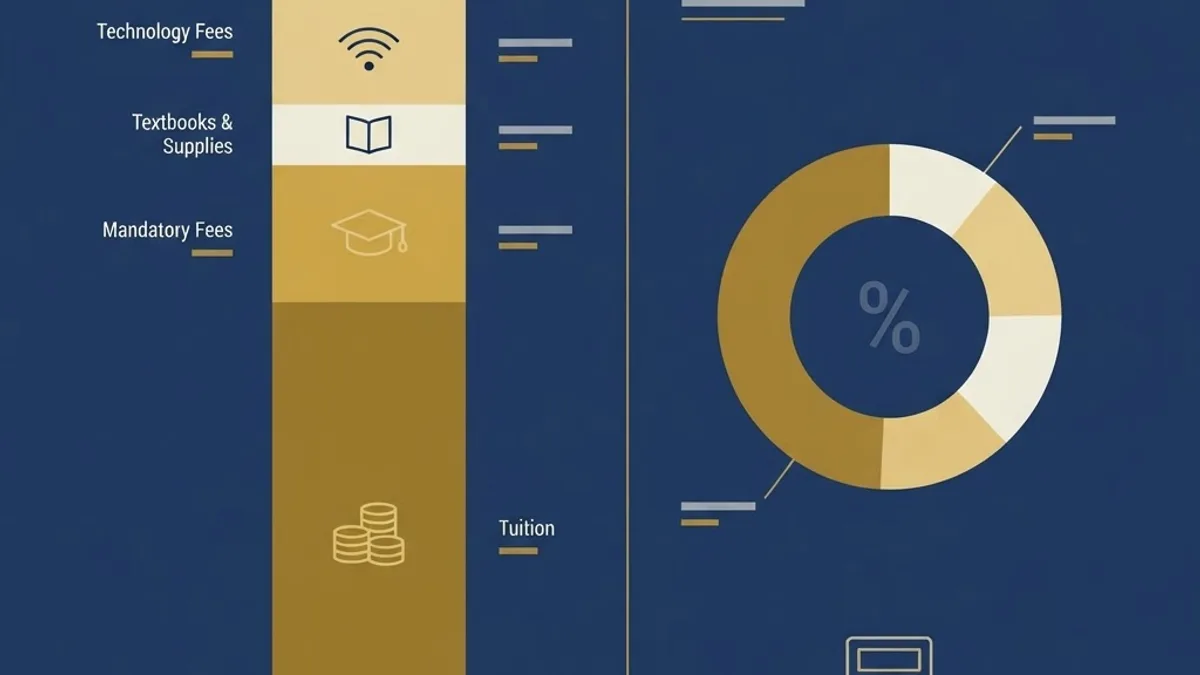
- What Tuition Does Not Include
- Financial Aid, Employer Support, and Scholarships
- How the Cost Compares to Other AI Master's Programs
- Is the Degree Worth the Price
- How to Budget and Apply Step by Step
- Key Takeaways
- Frequently Asked Questions
What Is the 2026 Tuition for the CSP MS in Artificial Intelligence
The published rate is 525 dollars per credit hour for the 2026-27 academic year, and the degree requires 30 credit hours. Multiplying those two numbers gives a base tuition figure of 15,750 dollars for the full program. That figure is the single most useful number to anchor your planning, because per credit pricing means your bill scales directly with how many courses you take, not with how many semesters you remain enrolled.
Per credit pricing is worth defining clearly. Under a per credit model, you pay a fixed amount for each credit hour you register for, so a three credit course costs three times the per credit rate. This differs from flat rate or banded tuition, where a full-time student pays one price for any course load within a defined range. The practical consequence is that slowing down does not increase your tuition at Concordia St. Paul, though it can increase indirect costs such as fees charged per term and the delay in reaching a higher earning role.
Why the Rate Is Lower Than Many Private Universities
Concordia University St. Paul is known in higher education circles for resetting its undergraduate tuition downward in the 2010s rather than following the standard high-sticker, high-discount model that many private institutions use. That pricing philosophy carries through to its graduate catalog, where rates are published transparently and discounting is less central to the enrollment strategy. For applicants, the benefit is predictability: the advertised number is close to the number you will actually pay, which is not always true at schools with large published prices and large individualized scholarships.
How the 30 Credit Structure Shapes Your Total Cost
A 30 credit master's degree is at the shorter end of the range for graduate programs, which typically run between 30 and 48 credits. Each credit you avoid saves you 525 dollars at the current rate, so program length is the largest single cost variable when comparing AI master's degrees. A 36 credit program at the same rate would cost 18,900 dollars, and a 45 credit program would cost 23,625 dollars.

Course Load and Pacing Decisions
Online graduate programs are commonly built in accelerated terms of seven or eight weeks, which allows students to take one course at a time while still finishing in under two years. Taking a single three credit course per term costs 1,575 dollars at the 2026 rate, a manageable amount for many working professionals paying out of pocket. Doubling up halves the calendar time but doubles the per term outlay, and it materially increases weekly study hours. Before committing to a faster pace, map your available hours honestly against the roughly 15 to 20 hours per week that a single accelerated graduate course often demands.
Prerequisites Can Add Credits
Applicants without a computing or quantitative background sometimes need foundational coursework in programming, statistics, or linear algebra before core AI courses. If any bridge or prerequisite courses are required in your case, they add credits at the same per credit rate. Ask the admissions office directly whether your transcript satisfies the technical prerequisites, because the answer can change your total cost by several thousand dollars.
What Tuition Does Not Include
Tuition covers instruction and credit, not the full cost of attendance. Cost of attendance is the standardized figure universities publish that combines tuition with estimated additional expenses, and it is the number financial aid offices use when determining loan eligibility. Concordia St. Paul's own estimates note that textbooks, loan fees, and course supplies sit outside base tuition.
Budget separately for these items:
- Textbooks and digital course materials. AI coursework often relies on licensed platforms and current editions rather than used books.
- Technology fees and hardware. Machine learning coursework benefits from a machine with adequate memory, and some assignments use paid cloud compute credits.
- Loan origination fees. Federal graduate loans carry an origination fee deducted before disbursement, so you receive slightly less than you borrow.
- Application and graduation fees. These are small individually but predictable.
- Opportunity cost. Hours spent studying are hours not spent on paid or freelance work, and this is frequently the largest hidden cost.
Adding a conservative allowance of 8 to 12 percent above base tuition for materials and fees produces a more realistic planning figure than tuition alone.
Financial Aid, Employer Support, and Scholarships
Graduate students in the United States are generally not eligible for federal Pell Grants, so the primary federal options are Direct Unsubsidized Loans and Grad PLUS Loans, both of which require submitting the FAFSA. Filing the FAFSA is worthwhile even if you plan to pay cash, because it establishes eligibility if your circumstances change mid-program.

Employer Tuition Assistance Is Often the Best Lever
Under Section 127 of the United States Internal Revenue Code, employers may provide up to 5,250 dollars per year in educational assistance that is excluded from an employee's taxable income. Applied across a program spread over two calendar years, that provision alone can offset a large share of a 15,750 dollar tuition bill. The reason this works better than most scholarships is simple: it is an employer budget decision rather than a competitive award, and AI skills are usually easy to tie to a business objective your manager already owns.
When you ask, bring a one-page case that names the specific courses, the internal problem they help you solve, and the retention commitment you are willing to make. Vague requests for support are declined far more often than specific ones.
Other Reductions Worth Checking
- Military and veteran benefits, including Yellow Ribbon participation where applicable
- Corporate or church-body partnership discounts, which some Concordia programs offer
- Alumni rates for graduates returning for a second credential
- Transfer credit for prior graduate coursework, which removes credits and therefore cost
Always confirm current amounts and eligibility with the university's financial aid office, because published rates and awards are revised annually.
How the Cost Compares to Other AI Master's Programs
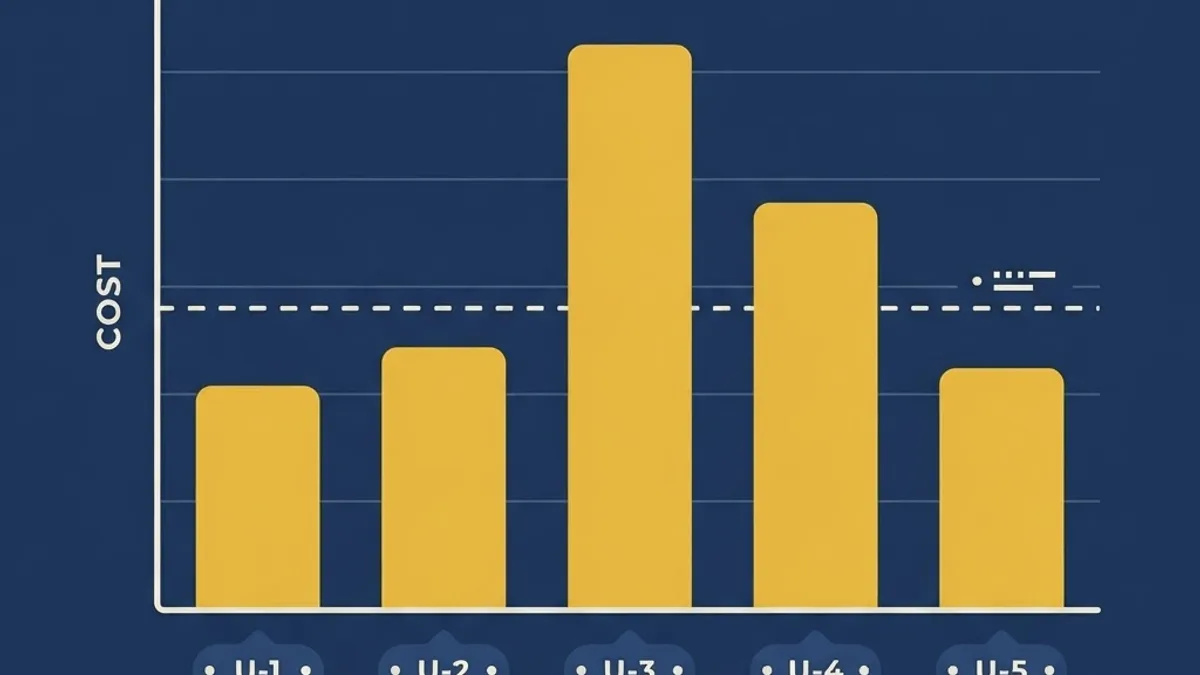
The AI master's market spans an unusually wide price range, from low-cost online programs at large public universities to residential programs at private research institutions costing many times more. The table below compares typical structures rather than naming specific competitor prices, since those change each cycle and should be verified at the source.
| Program Type | Typical Credit Count | Pricing Model | Delivery | Main Trade-Off |
|---|---|---|---|---|
| CSP MS in Artificial Intelligence | 30 | Per credit, 525 dollars for 2026-27 | Fully online | Applied focus over research depth |
| Large public online AI or CS master's | 30 to 36 | Per credit, often lower for residents | Online | Larger cohorts, less individual access |
| Private residential AI master's | 30 to 48 | Semester or flat rate | On campus | Higher cost, stronger research and lab access |
| Graduate certificate in AI | 9 to 15 | Per credit | Online | Faster and cheaper, no master's credential |
| Bootcamp or professional course | Not credit bearing | Flat fee | Online or hybrid | No accredited degree or federal aid access |
The honest comparison is not which option is cheapest but which credential your target roles actually screen for. If job postings in your field list a master's degree as a requirement, a certificate or bootcamp will not clear that filter regardless of the skills you gain.
Is the Degree Worth the Price
Value depends on the gap between your current role and your target role. The United States Bureau of Labor Statistics projects employment growth for data scientists at 34 percent from 2024 to 2034, far above the average across all occupations, which signals sustained demand for the analytical and machine learning skills an AI master's develops. Demand projections do not guarantee individual outcomes, but they do indicate that the skill set is unlikely to become obsolete during a two year program.

When the Investment Makes Clear Sense
- You already work in software, analytics, or IT and need formal credentials to move into an AI or machine learning title
- Your employer will reimburse a meaningful share of tuition
- Your target employers, particularly in healthcare, finance, government, or education, explicitly require a graduate degree
- You need structured accountability rather than self-directed study
When to Pause and Reconsider
- You want deep research or a doctoral pathway, where a research-intensive program serves you better
- You have no programming foundation and would need extensive prerequisite credits
- Your immediate goal is a single narrow skill that a focused certificate covers
- You would need to borrow the full amount without a clear plan for applying the degree
A simple test helps: if the realistic salary increase from the credential does not recover your total outlay within about three years, examine cheaper paths first. Teams that build and deploy machine learning systems commercially, including the specialists behind AI automation services, often value demonstrable shipped projects alongside formal credentials, so plan to build a portfolio during the program rather than after it.
How to Budget and Apply Step by Step
- Verify the current rate. Confirm the per credit figure and credit count on the official program page before budgeting, since rates are set annually.
- Calculate your realistic total. Multiply credits by the per credit rate, then add 8 to 12 percent for materials and fees.
- Check prerequisites early. Send your transcript for an informal review to learn whether bridge courses will add credits.
- File the FAFSA. Complete it as early as you can in the cycle to establish loan eligibility and meet institutional deadlines.
- Request employer assistance in writing. Reference the Section 127 exclusion and tie specific courses to business outcomes.
- Choose a pace you can sustain. One accelerated course at a time is a defensible default for full-time employees.
- Plan the portfolio alongside the coursework. Convert course projects into public repositories or case studies so the credential is backed by evidence.
Applicants who need help translating academic AI projects into client-ready deliverables sometimes work with an AI-augmented development team to understand how production systems differ from coursework, and that perspective is useful before you invest.

Key Takeaways
- Tuition for the CSP MS in Artificial Intelligence is 525 dollars per credit hour for 2026-27, and the program requires 30 credit hours.
- Base tuition totals approximately 15,750 dollars, excluding textbooks, loan fees, and course supplies.
- Per credit pricing means slowing your pace does not raise tuition, though per term fees and delayed earnings still apply.
- Section 127 allows employers to provide up to 5,250 dollars annually in tax-free educational assistance.
- The Bureau of Labor Statistics projects 34 percent employment growth for data scientists from 2024 to 2034.
- Prerequisite or bridge courses add credits at the same rate and should be confirmed before you enroll.
- Always verify published rates directly with the university, since tuition and aid amounts are revised each year.
Frequently Asked Questions (FAQ)
How much does the Concordia St Paul MS in Artificial Intelligence cost in total?
Base tuition is roughly 15,750 dollars, calculated from a rate of 525 dollars per credit hour across 30 required credit hours for the 2026-27 year. Textbooks, technology costs, loan origination fees, and course supplies are additional, so a realistic planning figure sits modestly above that base amount.
Is the Concordia St Paul AI master's degree fully online?
Yes, the program is delivered online, which is why it appeals to working professionals who cannot relocate or attend daytime classes. Online delivery at this level typically uses accelerated terms with asynchronous coursework, so confirm the current term length and any synchronous session requirements with an admissions advisor before enrolling.
Can I use financial aid or employer reimbursement to pay for it?
Yes. Graduate students can access federal Direct Unsubsidized and Grad PLUS loans after filing the FAFSA, and many employers reimburse tuition. Section 127 of the Internal Revenue Code lets employers provide up to 5,250 dollars per year in educational assistance excluded from your taxable income, which offsets a substantial share.
Do I need a computer science degree to be admitted?
Not necessarily, but you do need a quantitative and programming foundation to succeed in core coursework. Applicants from adjacent fields such as analytics, engineering, or IT are common. Submit your transcript for review early, because required prerequisite or bridge courses add credits and increase your total tuition cost.
How does this tuition compare to other AI master's programs?
It sits below many private university AI master's programs and near the middle of the online market, largely because the degree requires only 30 credits. Large public universities sometimes offer lower resident rates, while residential private programs generally cost more but provide stronger research facilities and on-campus lab access.