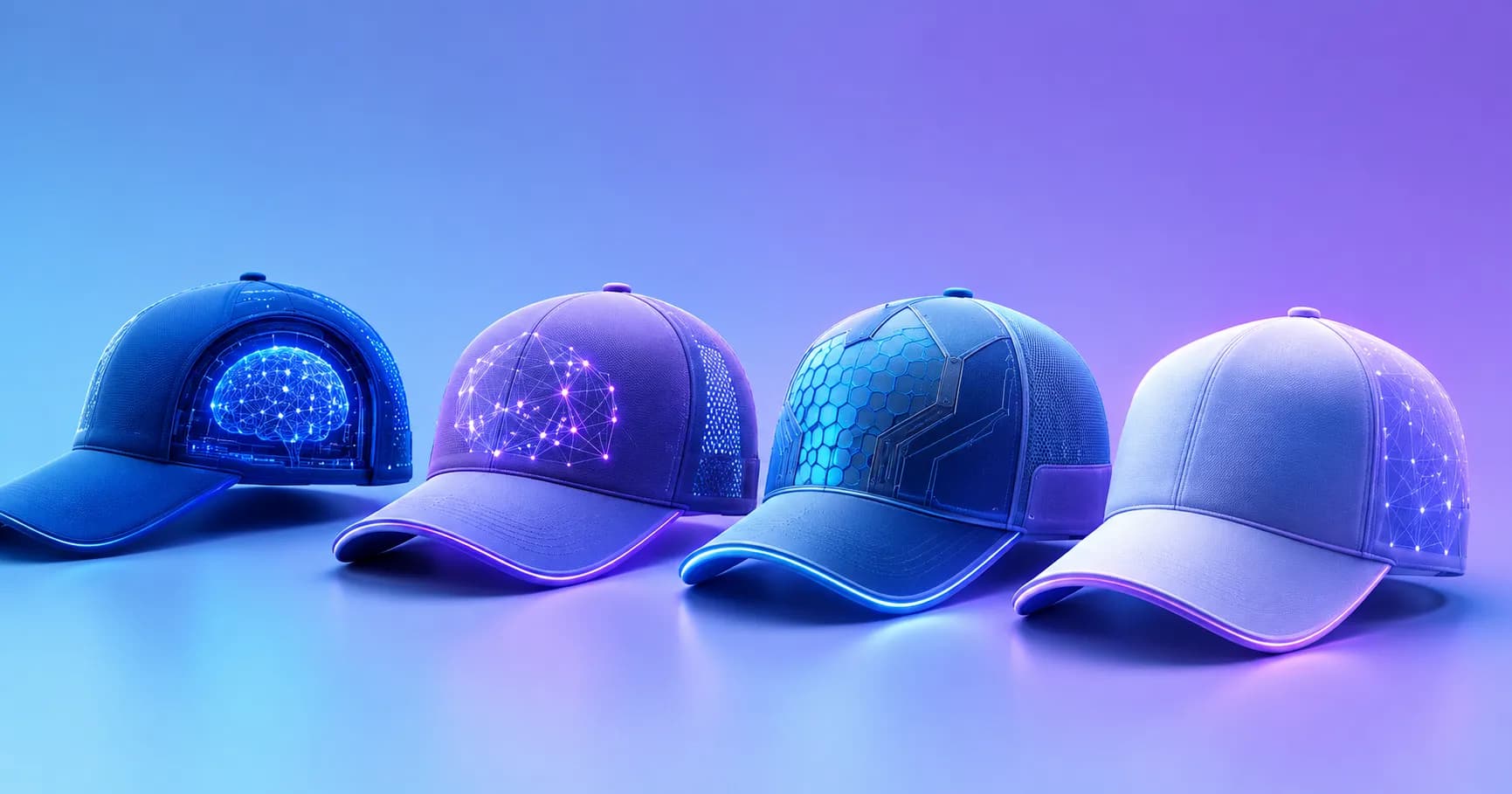
A practical guide to artificial intelligence hats: how smart headwear sensors work, real use cases, honest limitations, and how to evaluate one before buying.
Artificial Intelligence Hats
Artificial intelligence hats sit at an unusual intersection of textiles, sensors, and machine learning. The category covers two genuinely different things that often get confused: physical headwear with embedded electronics that runs or feeds AI models, and ordinary hats whose graphics, patterns, or production planning were created with generative AI tools. Understanding which one a product actually is changes the buying decision, the price you should expect, and the questions worth asking a seller.
Quick Answer: Artificial intelligence hats are headwear that either contains sensors and processors feeding machine learning models, or headwear designed using generative AI tools. Smart versions track posture, sun exposure, fatigue, or worker safety. Design versions are normal fabric hats with AI-created graphics and no electronics inside.
Table of Contents
- What an artificial intelligence hat actually is
- How AI hats work under the brim
- Where AI hats are already useful
- AI-designed hats versus AI-powered hats
- Comparison table of hat categories
- Honest limitations you should expect
- How to evaluate an AI hat before buying
- Key Takeaways
- Frequently Asked Questions
What Is an Artificial Intelligence Hat?
An artificial intelligence hat is headwear in which sensor data is interpreted by a machine learning model rather than simply displayed as a raw number. That distinction matters. A cap with a thermometer is a sensor product. A cap that measures skin temperature, motion, and ambient light and then classifies your state as heat-stressed is an AI product, because a model is making an inference.
Two terms are worth defining before going further. Edge inference means the model runs on a chip inside the hat itself, so no internet connection is needed. Cloud inference means the hat sends data to a phone or server where the model runs. Edge inference is faster and more private but limited by battery and chip size; cloud inference allows larger models but creates a dependency on connectivity and a vendor account.
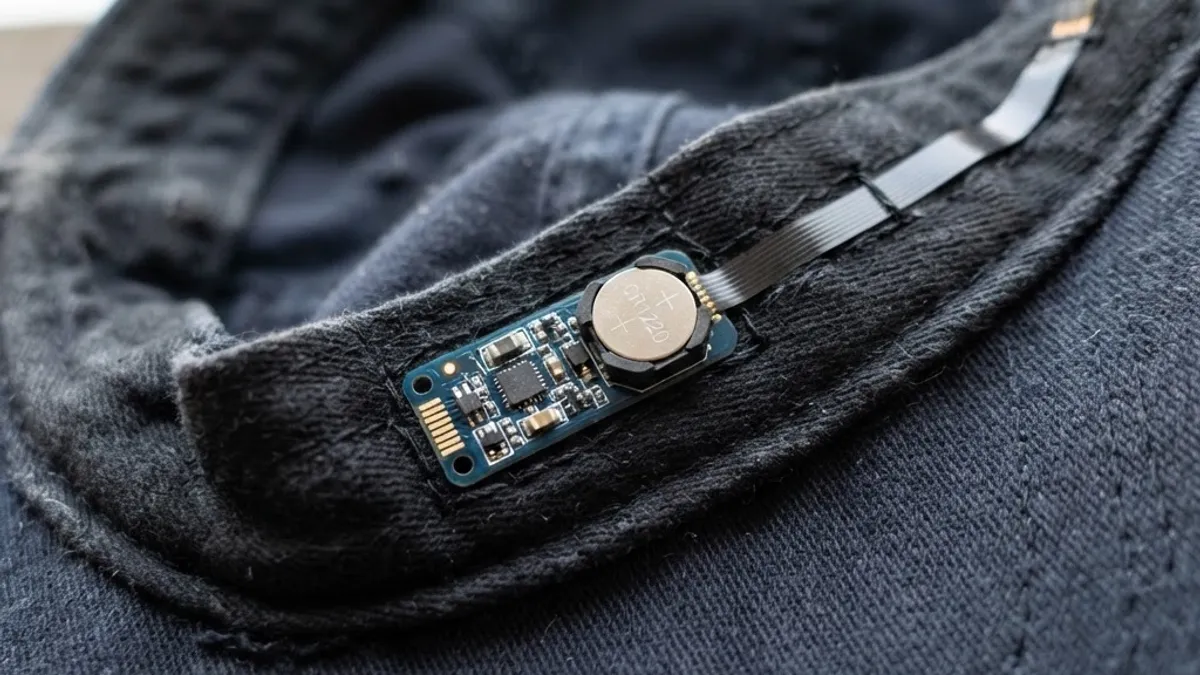
Why the Head Is a Useful Sensor Location
The head is stable, elevated, and close to the face, which makes it a strong mounting point for certain sensors. Skin temperature at the forehead responds quickly to heat stress. The head barely rotates during walking compared with a wrist, so motion data contains less noise. A brim points forward naturally, which is why forward-facing cameras and ultrasonic sensors for navigation assistance are frequently placed there rather than on a chest strap.
The head is also a poor location for some measurements. Continuous heart rate from the temple is harder to capture reliably than from the wrist or chest, because hair, hat movement, and sweat all interfere with optical readings. Treat any hat claiming clinical-grade cardiac accuracy with caution.
How Do AI Hats Work?
Most AI hats follow the same four-stage pipeline, regardless of brand or price.
- Sensing. A small board captures raw signals. Common sensors include a nine-axis inertial measurement unit for motion and head angle, a UV or ambient light sensor, a skin or ambient temperature sensor, and sometimes a microphone or camera.
- Preprocessing. Raw signals are filtered and windowed, usually into segments of one to ten seconds, because a single instantaneous reading rarely means anything on its own.
- Inference. A model classifies the window. Typical outputs are activity type, posture state, fatigue likelihood, fall detection, or cumulative sun exposure.
- Feedback. The result reaches the wearer through haptic buzz, a small audio cue, an LED, or a phone notification.
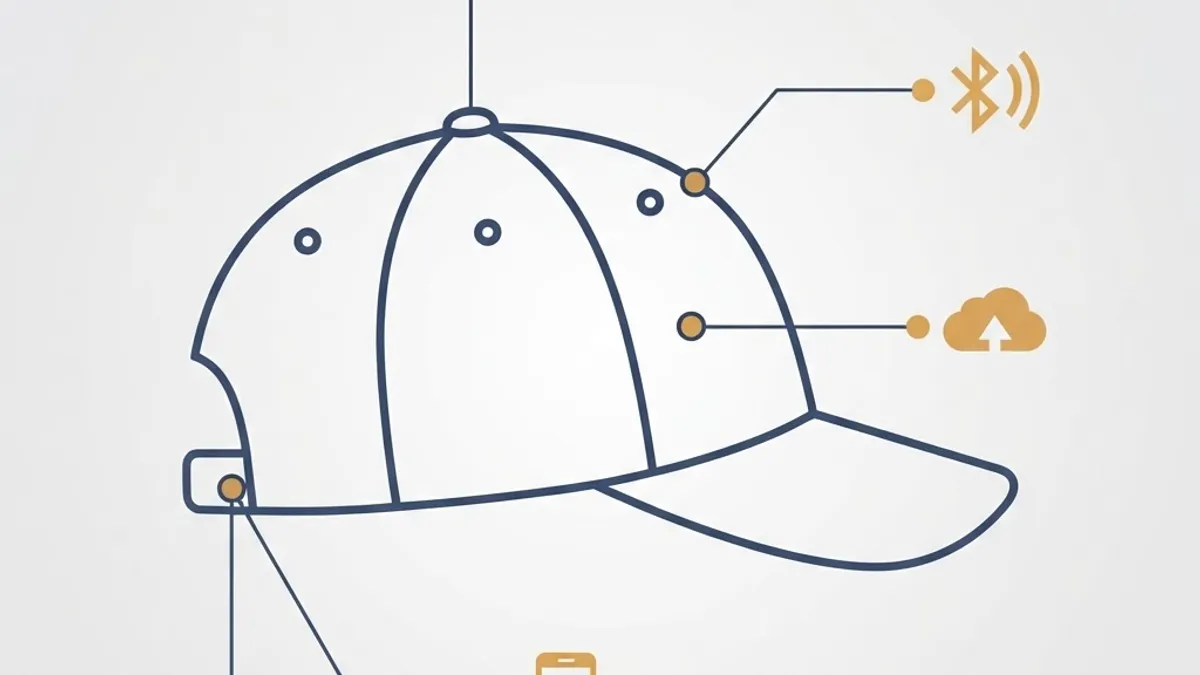
What Actually Limits Performance
Power is the primary constraint. A hat has almost no room for a battery, so designers usually fit cells in the range of roughly 100 to 400 milliamp-hours, which is a fraction of the 3,000 to 5,000 milliamp-hours in a typical smartphone. That gap forces trade-offs: lower sampling rates, duty cycling where sensors sleep between readings, and smaller models. When a product promises weeks of battery life and continuous camera inference at the same time, one of those two claims is usually doing quiet work.
The second constraint is fit. A hat that shifts by a centimeter changes sensor contact and angle. Products that survive real use tend to use adjustable tension, replaceable sweatbands, and calibration routines the wearer runs once at setup.
Where Are AI Hats Actually Used Today?
The most established deployments are industrial rather than consumer. Occupational safety is the clearest example. Heat illness and fatigue are recognised workplace hazards, and safety helmets fitted with sensor pods are used to flag conditions such as prolonged heat exposure, an impact event, or an unmoving worker. In this context the value is not novelty; it is shortening the time between an incident and someone noticing it.

Other active use categories include:
- Sports and training. Head-mounted inertial sensors measure running cadence, head stability, and stride symmetry, which are difficult to capture accurately from the wrist.
- Accessibility. Caps with forward-facing sensors provide obstacle cues through sound or vibration for people with limited vision.
- Sun safety. UV sensors combined with exposure models estimate cumulative dose over a day rather than reporting a single index value.
- Field research. Hats with cameras and audio capture free the hands of surveyors and biologists.
What Is Still Mostly Marketing
Claims that a hat can read thoughts, detect specific emotions, or improve focus through electrical stimulation deserve heavy scepticism. Consumer electroencephalography exists, but signal quality from dry electrodes under a fabric hat during movement is far below laboratory conditions. Ask any vendor making neurological claims which specific signal they measure, how they validate it, and what the accuracy is on moving subjects.
AI-Designed Hats Versus AI-Powered Hats
A large share of products marketed as artificial intelligence hats contain no electronics at all. They are conventional caps, beanies, or bucket hats whose graphics, colourways, or embroidery patterns were generated with image models, then printed or stitched normally. This is a legitimate design workflow rather than a gimmick, and it has changed small-brand economics: a single designer can test dozens of visual directions before committing to a sample run.

If you sell such products, the practical risks are commercial, not technical. Generated artwork can unintentionally resemble protected logos, and platform policies on AI-generated assets differ. Reviewing artwork before production is cheaper than reprinting stock. Brands building storefronts for this kind of catalogue often pair generated visuals with structured product pages and clear provenance labelling, an approach teams like the ZoneTechify Team apply when connecting design output to functioning commerce systems.
Comparison Table: Hat Categories Explained
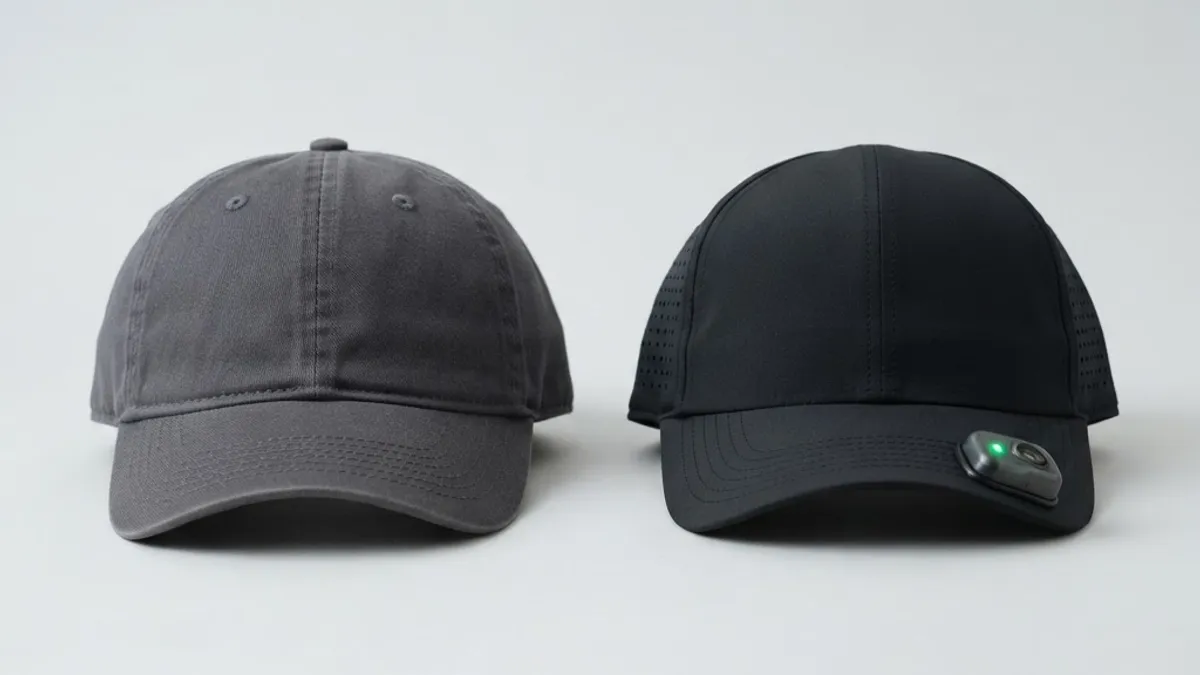
| Category | Electronics inside | What the AI does | Typical use | Charging needed |
|---|---|---|---|---|
| AI-designed hat | None | Generates artwork or patterns before production | Fashion, merchandise, small brands | No |
| Sensor hat, no model | Yes | Nothing; displays raw readings | Basic tracking | Yes |
| AI-powered smart hat | Yes | Classifies posture, fatigue, exposure, falls | Sport, safety, accessibility | Yes |
| Connected safety helmet | Yes | Detects impact, heat stress, inactivity | Industrial and field work | Yes |
| Camera or audio hat | Yes | Scene or speech interpretation | Research, accessibility | Yes, frequently |
What Are the Real Limitations?
Every honest assessment of this category includes constraints. Four recur consistently.
Battery reality. Small cells plus active sensing means daily or near-daily charging for any hat doing continuous inference. Products claiming long life usually sample intermittently.
Washing and durability. Fabric hats get sweaty. Ask whether the electronics module detaches and whether the shell is machine washable. A non-removable module is a durability problem, not a feature.
Privacy exposure. A hat with a microphone or camera records other people, not just the wearer. Recording consent rules vary by country and workplace, and some jurisdictions require all-party consent for audio. Check whether footage is processed on device or uploaded, and whether the vendor retains it.
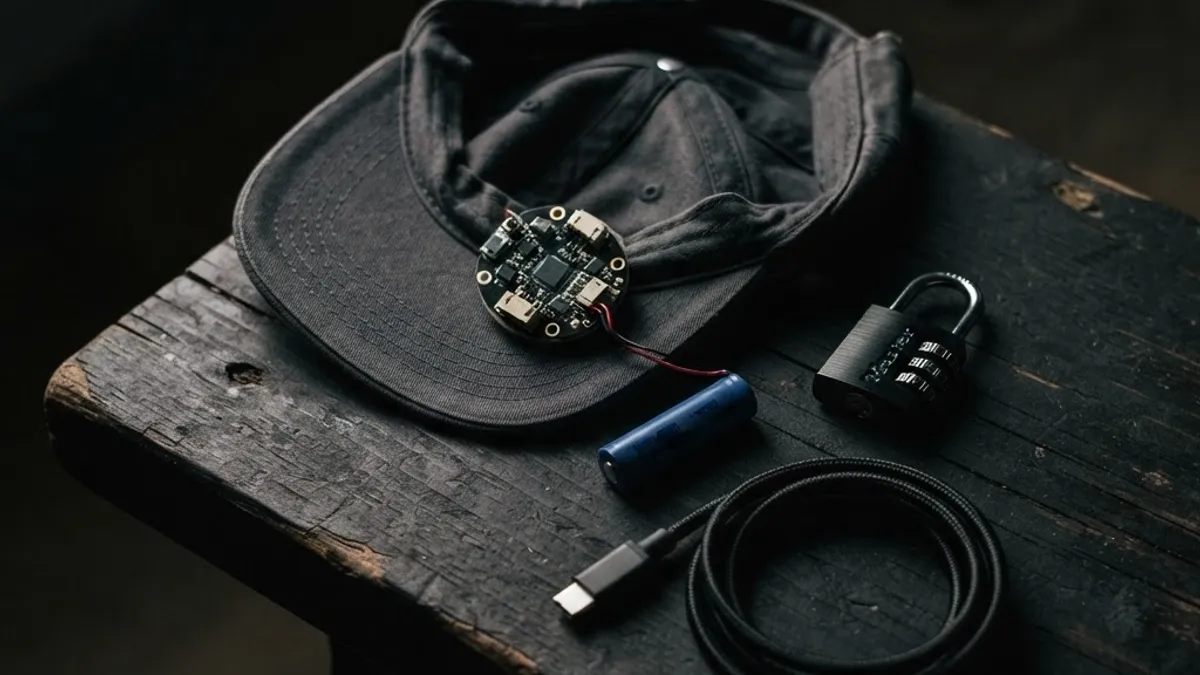
Accuracy claims. Classification accuracy quoted from a seated laboratory test rarely holds during running, cycling, or manual labour. Request accuracy figures measured on the activity you actually intend to do.
How to Evaluate an AI Hat Before You Buy
Use this sequence, in order, because each step eliminates products that fail cheaply.
- Identify the category. Ask directly whether the hat contains electronics. If it does not, judge it purely as apparel.
- Name the single job. A hat that claims six unrelated capabilities usually does none of them well within its power budget.
- Check where inference runs. On-device processing means fewer privacy questions and offline function.
- Confirm battery life under active use, not standby, and confirm the charging method.
- Verify washability and module removal.
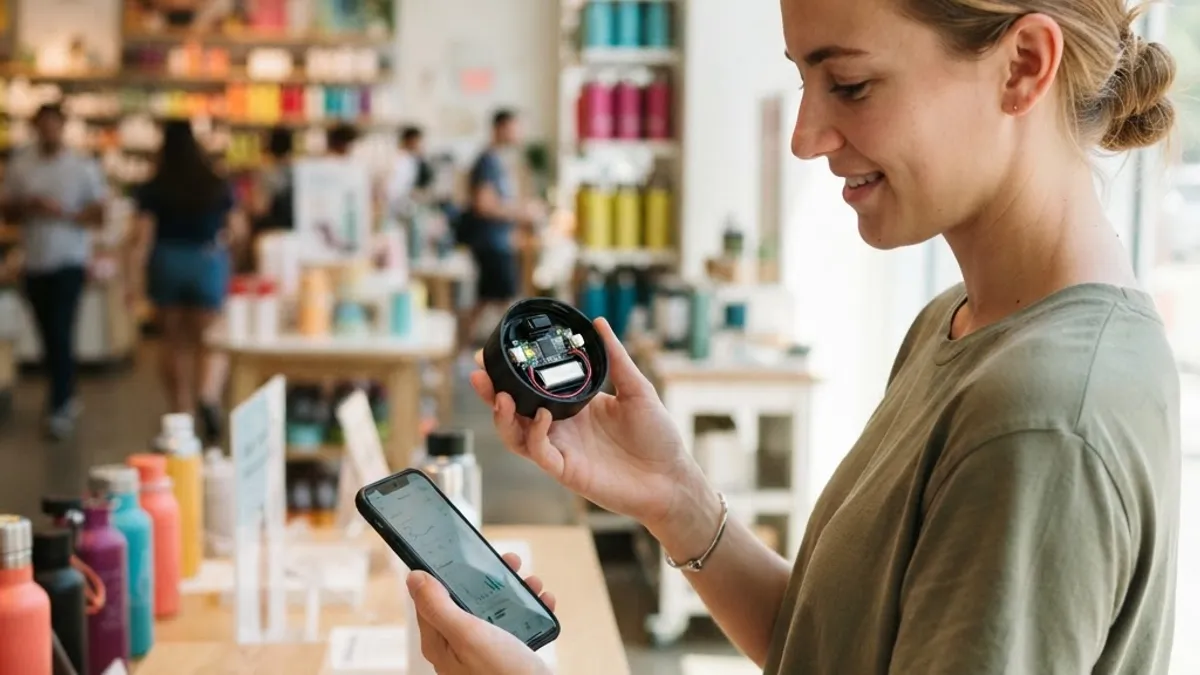
- Read the data policy. Look for retention periods, third-party sharing, and whether you can export or delete your data.
- Test the fit for a full day. Comfort failure, not software failure, is the most common reason wearables get abandoned.
- Check firmware update history. A product with no updates in a year signals an abandoned platform.
Key Takeaways
- Artificial intelligence hats split into two distinct groups: sensor-equipped smart headwear and conventional hats with AI-generated designs.
- Machine learning turns raw sensor readings into a classification such as fatigue, posture, or heat stress; without a model, a hat is only a sensor.
- Battery capacity in headwear is typically a small fraction of a phone battery, which directly caps sampling rates and model size.
- Occupational safety, sports biomechanics, accessibility, and UV exposure tracking are the most credible current applications.
- Claims about reading thoughts or detecting specific emotions from a fabric hat are not supported by consumer-grade sensing conditions.
- Removable electronics, on-device inference, and a clear data retention policy are the three strongest quality signals.
Frequently Asked Questions (FAQ)
What is an artificial intelligence hat?
An artificial intelligence hat is headwear containing sensors whose data is interpreted by a machine learning model, producing outputs such as posture alerts or heat-stress warnings. The term is also used loosely for ordinary fabric hats whose graphics were created with generative AI tools and contain no electronics.
Are AI hats worth buying right now?
They are worth buying when one specific job matters to you, such as jobsite heat monitoring, running form analysis, or obstacle cues for low vision. For general wellness tracking, a wrist or chest device usually offers better accuracy and much longer battery life at a lower price.
Can you wash a smart hat?
Often only partially. Many designs allow the electronics module to detach so the fabric shell can be hand or machine washed, while the module is wiped clean. Hats with permanently sealed electronics generally cannot be fully washed, which shortens usable life considerably in sweaty conditions.
Do AI hats record audio or video of other people?
Only models fitted with microphones or cameras do, and most smart hats have neither. If a product includes them, recording other people may require consent depending on your country or workplace. Confirm whether data is processed on the device or uploaded to a vendor server before use.
How long does the battery last in an AI hat?
Expect roughly one day of continuous sensing for most designs, because headwear batteries are small compared with phone batteries. Products advertising a week or more usually sample intermittently rather than continuously, which reduces detection speed for events such as falls or sudden heat stress.