Looking for an artificial intelligence development company in India? Discover costs, top skills, use cases, and how to choose the right AI partner in 2026.
Artificial Intelligence Development Company in India
India has quietly become one of the most important destinations on the planet for building artificial intelligence. What began as a hub for outsourced software has matured into a deep talent pool that ships production-grade machine learning, computer vision, and generative AI systems for global brands. If you are evaluating an artificial intelligence development company in India, this guide gives you the practical, experience-based picture: what these companies build, how their teams are structured, what you should pay, and how to pick a partner that delivers.
Having worked alongside Indian engineering teams on real AI deployments, I can tell you the difference between a good vendor and a great one rarely shows up in a sales deck. It shows up in how they scope data, handle model drift, and communicate across time zones. This article distills those lessons so you can make a confident decision.
Quick Answer: An artificial intelligence development company in India builds custom AI systems such as machine learning models, chatbots, computer vision, and generative AI apps. India offers world-class engineers at 40 to 60 percent lower cost than the US, making it a top global destination for scalable, production-ready AI development.
Why India Has Become a Global AI Development Hub
India produces the largest annual pool of STEM graduates in the world, and a growing share specialize directly in data science and machine learning. According to NASSCOM, India is home to over 2 million digitally skilled professionals, with AI and analytics among the fastest-growing skill categories. This scale means teams can be assembled quickly without sacrificing depth.
Cost is the second driver. Global businesses consistently report savings of 40 to 60 percent when they build AI in India versus North America or Western Europe, according to industry benchmarking data. Crucially, that saving no longer comes with a quality trade-off. Indian firms now hold partnerships and certifications with AWS, Google Cloud, and Microsoft Azure, and many maintain dedicated MLOps practices.
The third factor is time-zone advantage. A team in India can pick up work as your Western office logs off, effectively compressing delivery timelines. Agencies like ZoneTechify and platforms such as WebPeak have built delivery models around this rhythm, pairing overlapping hours with asynchronous documentation.
What an Artificial Intelligence Development Company Actually Does
An artificial intelligence development company designs, trains, deploys, and maintains software that performs tasks normally requiring human intelligence. That is a broad definition, so it helps to break it into concrete services.
Core Services You Can Expect
- Machine learning model development: predictive scoring, recommendation engines, fraud detection, and demand forecasting.
- Natural language processing (NLP): chatbots, sentiment analysis, document summarization, and voice assistants.
- Computer vision: quality inspection, facial recognition, medical imaging, and object detection.
- Generative AI: custom copilots, retrieval-augmented generation (RAG) systems, and content automation built on large language models.
- MLOps and deployment: pipelines that version data, monitor accuracy, and retrain models automatically.
A credible partner does not just hand you a model in a notebook. They deliver an operational system with monitoring, fallback logic, and clear ownership. If you want a deeper look at end-to-end delivery, the artificial intelligence services from ZoneTechify outline how discovery, prototyping, and production phases connect.
Inside an Indian AI Development Team: Skills and Structure
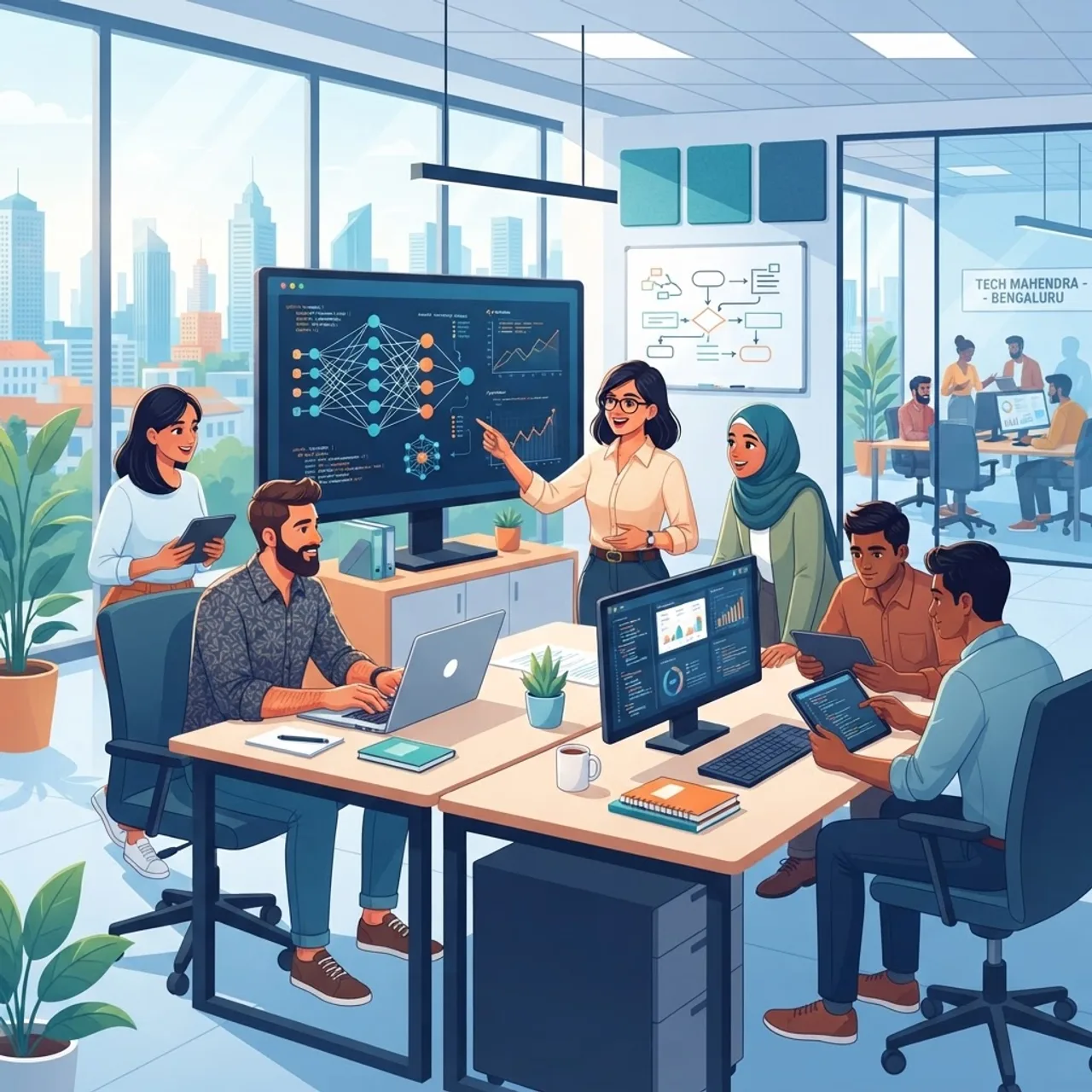
Understanding team structure protects you from paying for titles instead of outcomes. A healthy AI project team in India typically blends five roles.
- Data engineer who builds clean, reliable pipelines so models train on trustworthy data.
- Machine learning engineer who selects algorithms, trains models, and tunes performance.
- MLOps engineer who handles deployment, scaling, and monitoring in production.
- Product or project manager who translates business goals into measurable milestones.
- QA and domain specialist who validates that outputs make sense in the real world.
In my experience, the single biggest predictor of success is whether the data engineer is involved from day one. Teams that treat data as an afterthought spend the last third of the project firefighting quality issues. Ask any prospective partner how they audit and label data before you sign anything.
Machine Learning Solutions Indian Companies Build
Machine learning is the engine behind most commercial AI, and Indian firms have deep, repeatable expertise here. Machine learning is defined as a method where software improves its predictions by learning patterns from data rather than following hard-coded rules.
Typical solutions include recommendation systems that lift e-commerce revenue, credit-risk models that reduce loan defaults, and predictive-maintenance systems that flag equipment failures before they happen. According to McKinsey, businesses that adopt AI in core functions report measurable margin improvements, and recommendation engines alone can drive a double-digit share of revenue for large retailers.
What separates strong Indian teams is their comfort with the full lifecycle. They do not stop at model accuracy; they measure business impact, run A/B tests, and set up retraining triggers so performance does not silently decay. For AI-first product builds, the WebPeak artificial intelligence services focus specifically on this production reliability layer.
How Much Does AI Development Cost in India?
Cost is the question everyone asks first, so let us be direct. Pricing depends on scope, data readiness, and whether you need a prototype or a production system. The table below compares typical engagement models.
| Engagement Type | Typical Scope | Indicative Cost (USD) | Best For |
|---|---|---|---|
| AI proof of concept | Single model, limited data | 5,000 to 15,000 | Validating an idea |
| Custom ML application | Full pipeline plus UI | 20,000 to 60,000 | Launching a real product |
| Enterprise AI platform | Multi-model, integrations | 60,000 to 200,000+ | Large-scale operations |
| Dedicated AI team (monthly) | Ongoing development | 8,000 to 25,000 per month | Long-term roadmaps |
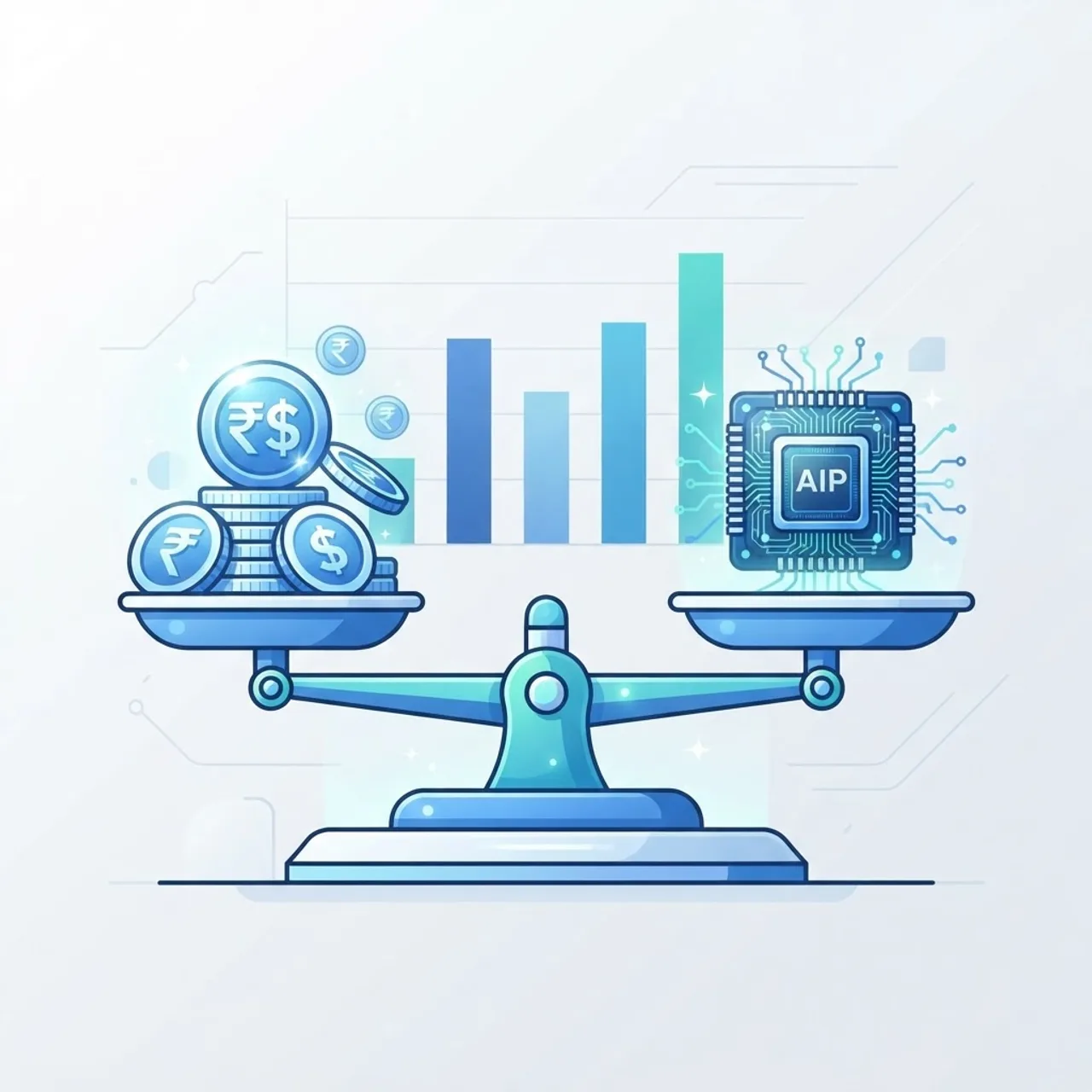
These ranges sit roughly 40 to 60 percent below equivalent US pricing. Beware of quotes far below these numbers; they usually signal missing MLOps, no monitoring, or offshore juniors working without senior review. A fair price buys you documentation, testing, and a maintainable codebase, not just a working demo.
How to Choose the Right AI Development Partner in India
Choosing well is mostly about diligence. Use this checklist during evaluation.
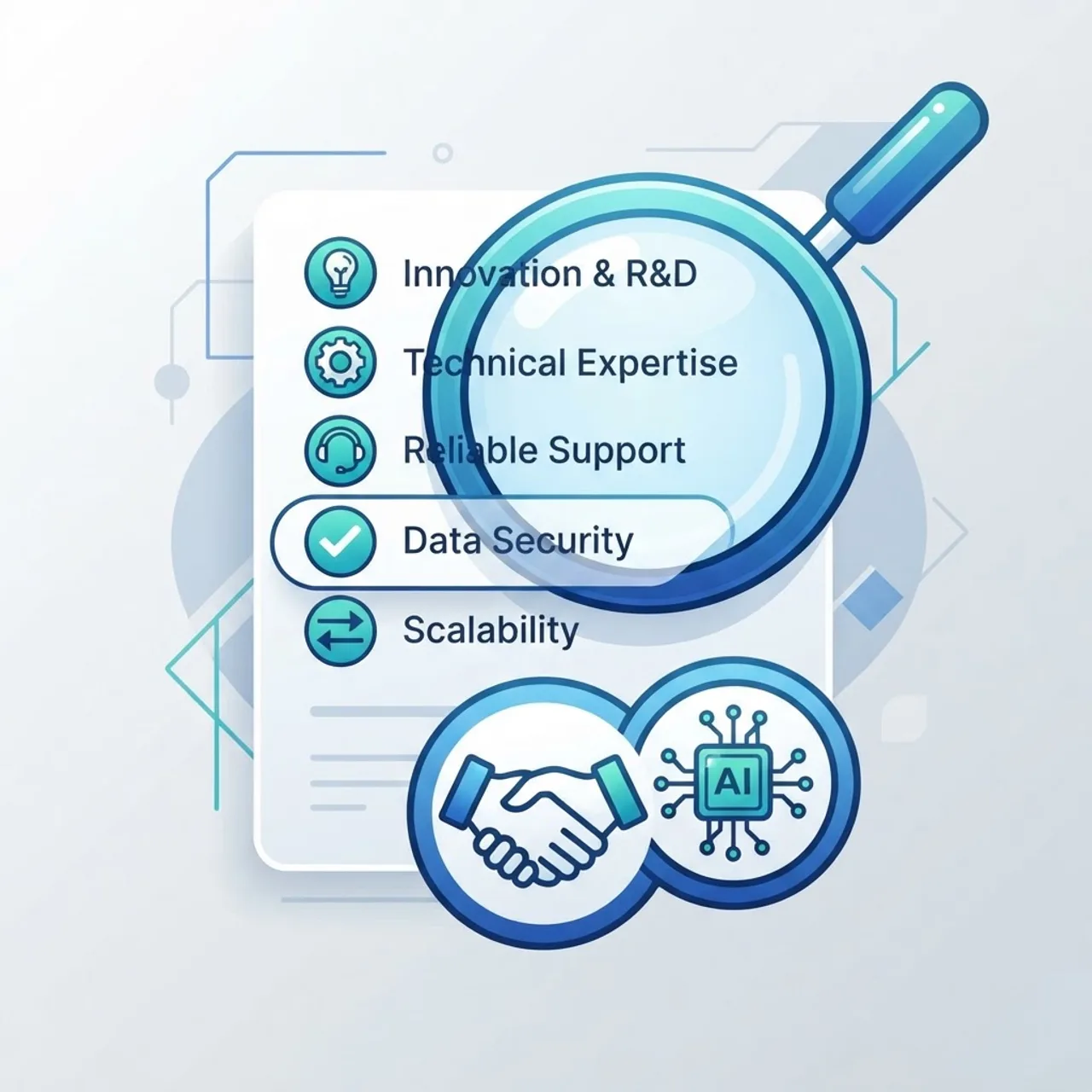
- Review real case studies. Ask for measurable outcomes, not adjectives. Accuracy gains, cost saved, or revenue added.
- Test their data process. A serious partner explains labeling, validation, and bias checks without prompting.
- Confirm cloud and MLOps maturity. Look for hands-on experience with deployment, monitoring, and retraining.
- Check communication rhythm. Overlapping hours, weekly demos, and written updates prevent costly drift.
- Clarify IP and data ownership. Contracts should assign all code, models, and data rights to you.
- Start with a paid pilot. A small, scoped engagement reveals far more than any reference call.
The partners that pass this checklist tend to say "no" to unrealistic requests. That honesty is a feature, not a red flag. It signals a team that has shipped enough to know where AI projects fail.
Real-World AI Use Cases Across Industries
AI in India is no longer experimental; it powers daily operations across sectors.
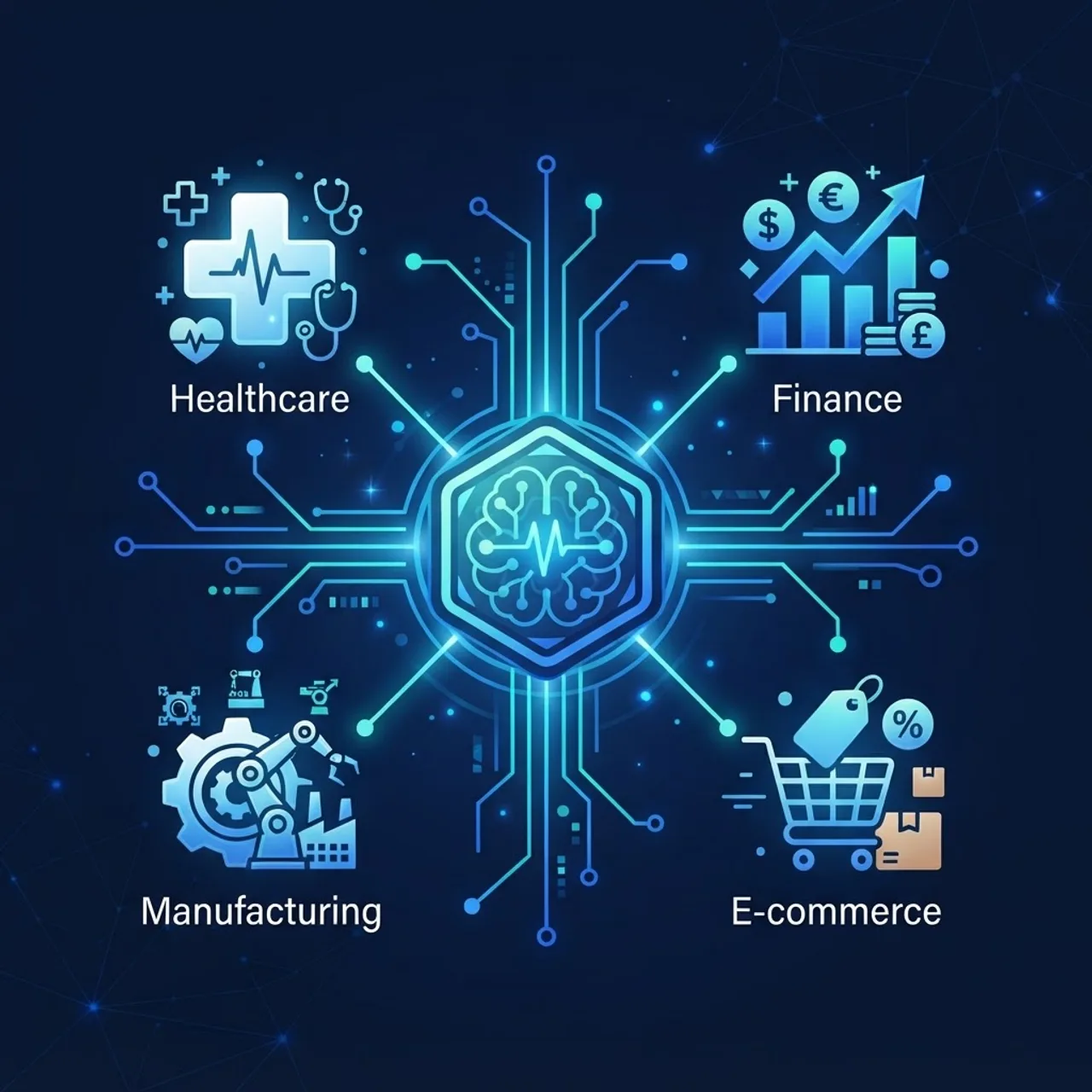
- Healthcare: diagnostic imaging, patient triage chatbots, and drug-discovery analytics.
- Finance: real-time fraud detection, credit scoring, and automated compliance checks.
- E-commerce: personalized recommendations, dynamic pricing, and demand forecasting.
- Manufacturing: predictive maintenance and computer-vision quality control.
- Logistics: route optimization and warehouse automation.
The common thread is that AI works best when aimed at a narrow, high-value problem with clean data. The most disappointing projects I have seen were vague "make us AI-powered" mandates. The winners defined one metric to move and moved it.
The Future of AI Development in India
India's AI trajectory points sharply upward. Government initiatives, a booming generative-AI startup scene, and rising enterprise budgets are compounding the existing talent advantage.
Expect three shifts over the next few years. First, generative AI and RAG systems will move from pilots to core infrastructure. Second, MLOps will become standard, not premium, as clients demand reliability. Third, Indian firms will increasingly own product IP rather than only executing contracts. For businesses choosing a partner now, aligning with a team already investing in these areas future-proofs your roadmap.
Key Takeaways
- India offers AI development at 40 to 60 percent lower cost than the US without sacrificing quality.
- India has over 2 million digitally skilled professionals, per NASSCOM, with AI among the fastest-growing skills.
- A strong AI team blends data, ML, MLOps, product, and QA roles, with data engineering starting on day one.
- AI proof-of-concept projects typically cost 5,000 to 15,000 USD; full applications range from 20,000 to 60,000 USD.
- Choose partners with proven case studies, clear data processes, MLOps maturity, and airtight IP ownership.
Frequently Asked Questions (FAQ)
What does an artificial intelligence development company in India do?
An AI development company in India designs, trains, and deploys intelligent software such as machine learning models, chatbots, computer vision, and generative AI apps. They handle data preparation, model building, deployment, and ongoing monitoring so businesses get reliable, production-ready systems rather than one-off experiments.
How much does it cost to build AI in India?
Costs vary by scope. A proof of concept typically runs 5,000 to 15,000 USD, a full custom application ranges from 20,000 to 60,000 USD, and enterprise platforms exceed 60,000 USD. These prices are roughly 40 to 60 percent lower than comparable US rates.
Is AI development in India good quality?
Yes, when you choose carefully. Leading Indian firms hold cloud certifications, follow MLOps best practices, and deliver documented, tested systems. Quality depends on the team, so review case studies, data processes, and start with a small paid pilot before committing to a large engagement.
How do I choose the right AI development partner in India?
Evaluate real case studies with measurable outcomes, test how they handle data and bias, confirm MLOps and cloud maturity, and check communication rhythm. Ensure the contract assigns full IP and data ownership to you, and begin with a scoped paid pilot to reduce risk.
Which industries use AI development companies in India?
Healthcare, finance, e-commerce, manufacturing, and logistics are the biggest adopters. Common applications include diagnostic imaging, fraud detection, product recommendations, predictive maintenance, and route optimization. AI performs best when focused on one narrow, high-value problem supported by clean, well-labeled data.
Choosing an artificial intelligence development company in India can give you world-class engineering, meaningful cost savings, and faster delivery, provided you vet for data discipline and production reliability. Use the checklist and pricing benchmarks above, start small, and scale what works.