
A practical, expert guide to artificial intelligence development in Charlotte, covering local industries, costs, processes, and how to choose the right AI partner.
Artificial Intelligence Development Charlotte

Charlotte has quietly become one of the most interesting cities in the American Southeast for artificial intelligence development. Known for decades as a banking capital, the Queen City now blends deep financial expertise with a fast-growing technology workforce, creating fertile ground for AI adoption. Whether you run a fintech startup in South End or a logistics company near the airport, AI development is no longer a luxury reserved for Silicon Valley budgets. This guide explains what AI development in Charlotte actually involves, what it costs, how the process works, and how to choose a partner that delivers measurable results instead of buzzwords.
We write this from the perspective of teams that have shipped real machine learning systems for regional businesses. The goal is simple: help you make an informed decision and avoid the expensive mistakes that sink most early AI projects.
Quick Answer: Artificial intelligence development in Charlotte means building custom AI tools, such as machine learning models, chatbots, and automation, tailored to local businesses in finance, healthcare, and logistics. Costs typically range from $15,000 to $150,000 depending on scope, with strong ROI when projects target clear, measurable problems.
Why Charlotte Is a Strong Market for AI Development
Charlotte's economy gives AI a head start. The region is home to major financial institutions, a growing healthcare network, and one of the busiest cargo airports in the country. Each of these sectors generates enormous volumes of structured data, which is exactly what machine learning systems need to perform well.

According to the U.S. Bureau of Labor Statistics, employment in computer and information technology occupations is projected to grow much faster than the average for all occupations through the early 2030s, and metro areas like Charlotte are absorbing a large share of that talent. The local presence of UNC Charlotte's data science programs also feeds a steady pipeline of engineers who understand applied AI, not just theory.
This matters for one reason: AI development is only as good as the data and people behind it. Charlotte offers both, which lowers the risk for businesses investing in their first intelligent systems.
What Artificial Intelligence Development Actually Means
Artificial intelligence development is the process of designing, training, and deploying software systems that can perform tasks normally requiring human reasoning, such as predicting outcomes, understanding language, or recognizing patterns. It is broader than a single product and usually combines several disciplines.
Key terms worth defining clearly:
- Machine Learning (ML): A subset of AI where systems learn patterns from data instead of being explicitly programmed for every rule.
- Natural Language Processing (NLP): The ability of software to understand and generate human language, powering chatbots and document analysis.
- Computer Vision: AI that interprets images and video, used in quality inspection and security.
- Generative AI: Models that create new content, such as text, images, or code, based on learned data.
Most Charlotte businesses do not need a research lab. They need focused applications that solve one painful problem extremely well. That distinction keeps budgets sane and timelines realistic.

High-Impact AI Use Cases for Charlotte Businesses
The strongest AI projects start with a business problem, not a technology. Across Charlotte's core industries, a few use cases consistently deliver returns.
Finance and Fintech
Fraud detection, credit risk scoring, and automated document processing are natural fits. A model that flags suspicious transactions in real time can save a mid-sized lender significant losses while improving the customer experience.
Healthcare
Charlotte's hospital systems use AI for appointment scheduling, patient triage support, and medical record summarization. NLP tools that extract structured data from clinical notes free clinicians to spend more time with patients.
Logistics and Manufacturing
With the airport and interstate corridors driving freight, demand forecasting and route optimization reduce fuel costs and delivery delays. Computer vision systems on production lines catch defects faster than manual inspection.
Customer Operations
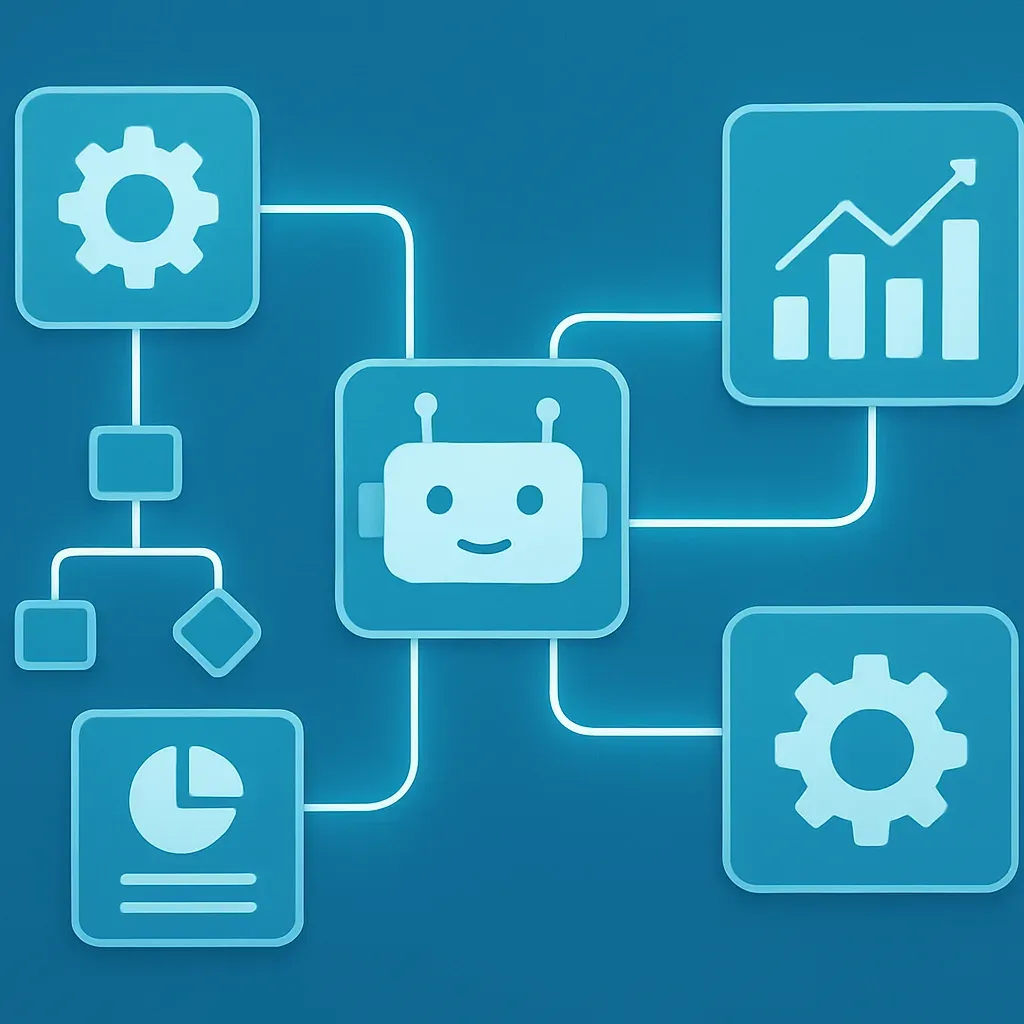
AI chatbots and automated email triage handle routine inquiries around the clock. According to Google, 53% of mobile site visits are abandoned if a page takes longer than three seconds to load, and the same impatience applies to support, where instant AI responses dramatically improve retention.
If your business needs custom intelligent systems built around these use cases, specialized artificial intelligence services can turn a vague idea into a working, measurable product.
The AI Development Process Step by Step
A disciplined process separates successful AI projects from expensive science experiments. Here is the workflow experienced teams follow.
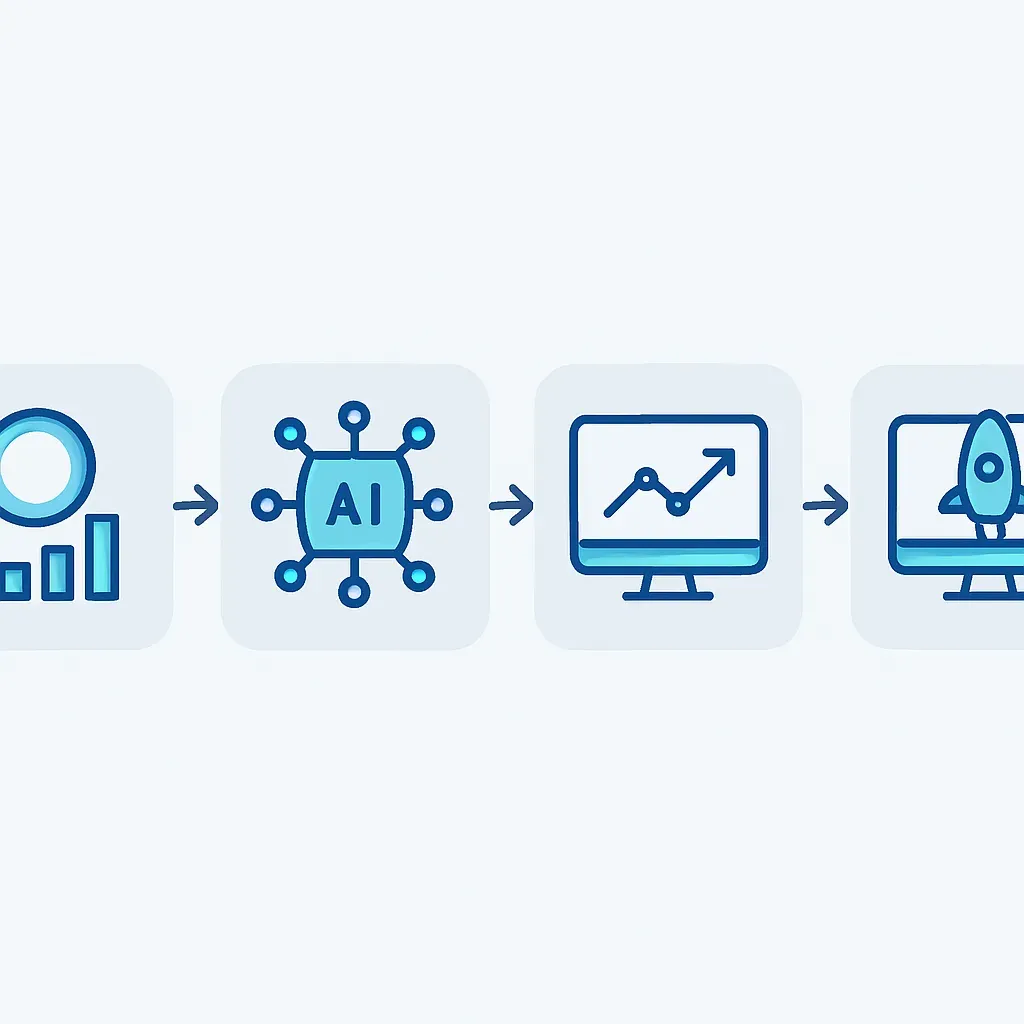
- Discovery and problem framing: Define the exact business outcome, success metric, and acceptable error rate before writing any code.
- Data assessment: Audit available data for quality, volume, and bias. Poor data is the number one reason AI projects fail.
- Prototyping: Build a small proof of concept to validate feasibility quickly and cheaply.
- Model development and training: Select algorithms, train models, and tune them against real metrics.
- Integration: Connect the model to existing software, dashboards, or workflows your team already uses.
- Testing and validation: Measure accuracy, fairness, and performance under realistic conditions.
- Deployment and monitoring: Launch the system and continuously track performance, retraining as data changes.
The monitoring step is where many vendors quietly disappear. AI models drift over time as real-world data shifts, so ongoing maintenance is not optional, it is the difference between a tool that improves and one that decays.
How Much Does AI Development Cost in Charlotte?
Pricing depends heavily on complexity, data readiness, and whether you need ongoing support. The table below gives realistic ranges based on typical regional projects.
| Project Type | Typical Cost Range | Timeline | Best For |
|---|---|---|---|
| AI chatbot or assistant | $15,000 - $40,000 | 4 to 10 weeks | Customer support, lead capture |
| Predictive analytics model | $30,000 - $80,000 | 8 to 16 weeks | Forecasting, risk scoring |
| Computer vision system | $50,000 - $120,000 | 12 to 24 weeks | Quality control, inspection |
| Custom enterprise AI platform | $100,000 - $150,000+ | 6 months+ | Multi-department automation |
These figures assume professional development with proper testing. Extremely cheap quotes usually skip data preparation or monitoring, which leads to failure later. According to McKinsey research, organizations that scale AI successfully consistently treat it as a long-term capability rather than a one-time build, and budgeting reflects that reality.
Build In-House or Hire a Charlotte AI Partner?
This is the decision most leaders wrestle with. Building an internal team gives you control but requires recruiting scarce, expensive talent and waiting months before shipping anything. Partnering with an experienced firm gets you to production faster and spreads risk.

A hybrid model often works best: an external partner builds the first systems and trains your internal staff to maintain them. When evaluating partners, prioritize teams that ask hard questions about your data and business goals before pitching technology. For broader strategy and implementation support, agencies offering dedicated AI services from WebPeak can complement local development with proven frameworks.
Red flags to avoid include vendors who guarantee specific accuracy before seeing your data, refuse to explain how models make decisions, or have no plan for post-launch monitoring.
Responsible and Trustworthy AI
Trust is central to AI adoption, especially in regulated Charlotte industries like banking and healthcare. Responsible development means building systems that are explainable, fair, and secure. Models should be auditable, customer data must be protected, and decisions that affect people should never be a black box.
This is not just ethics, it is risk management. Regulators increasingly expect transparency, and customers reward companies that handle their data carefully. Strong governance from day one prevents costly rework later.
The Future of AI Development in Charlotte
Charlotte's trajectory points toward broader, deeper AI integration. As generative AI matures, expect more small and mid-sized businesses to adopt it for content, coding assistance, and customer engagement. The financial sector will keep pushing real-time decisioning, while healthcare and logistics scale automation. Companies that start now build the data foundations and internal expertise that compound over years. Helpful, well-built AI systems in Charlotte are becoming a competitive necessity rather than an experiment.
For businesses ready to begin, explore practical resources at ZoneTechify and WebPeak to understand what a focused first project could look like.
Key Takeaways
- Charlotte combines strong financial, healthcare, and logistics sectors with a growing AI talent pool, making it a low-risk market for development.
- Successful AI projects start with a clear business problem and high-quality data, not technology hype.
- Typical AI development costs range from $15,000 for chatbots to $150,000+ for enterprise platforms.
- Ongoing monitoring and retraining are essential because models drift over time.
- Responsible, explainable AI is critical in Charlotte's regulated industries like banking and healthcare.
Frequently Asked Questions (FAQ)
How much does it cost to build an AI system in Charlotte?
Most Charlotte AI projects range from $15,000 for a chatbot to over $150,000 for an enterprise platform. The final cost depends on complexity, data readiness, and ongoing support needs. Simple automation is affordable, while custom predictive or vision systems require larger, longer investments.
How long does AI development usually take?
A focused AI tool like a chatbot can take four to ten weeks, while predictive models often need eight to sixteen weeks. Larger enterprise platforms can run six months or more. Clean, well-organized data is the single biggest factor that speeds up any AI development timeline.
Do small businesses in Charlotte really need AI?
Yes, when it solves a real problem. Small businesses use AI for customer support, lead scoring, and automating repetitive tasks that drain staff time. The key is starting small with one high-impact use case rather than attempting a large, expensive system before proving value.
What industries in Charlotte benefit most from AI?
Finance, healthcare, and logistics benefit most because they generate large volumes of structured data. Banks use AI for fraud detection, hospitals for record summarization, and logistics firms for route optimization. These data-rich sectors see the fastest, most measurable returns from well-planned AI development projects.
Should I hire a Charlotte AI agency or build an in-house team?
For most businesses, partnering with an experienced agency is faster and less risky than recruiting scarce AI talent. A hybrid approach often works best: a partner builds your first systems and trains internal staff to maintain and expand them over time.