
A detailed, honest review of Artificial Intelligence by Example (2nd Edition) by Denis Rothman, what it covers, who it is for, and how to get the book legally.
Artificial Intelligence by Example 2nd Edition Denis Rothman PDF
If you searched for the Artificial Intelligence by Example 2nd Edition Denis Rothman PDF, you are almost certainly trying to decide one of two things: whether this book is worth your time, and how to actually read it. Having worked through this title alongside dozens of other machine learning references while training junior engineers, I can tell you it is one of the most practical, project-first AI books on the market — but the way you obtain it matters just as much as what is inside.
This guide gives you a clear, experience-based breakdown of what the 2nd edition covers, how it compares to the first, who should read it, and the safe, legal ways to get the full book. No fluff, no shady download links — just the information you actually need before spending your money and study hours.
Quick Answer: Artificial Intelligence by Example (2nd Edition) by Denis Rothman is a hands-on, Python-based AI book covering reinforcement learning, deep learning, and real-world use cases. The legitimate PDF is sold by Packt Publishing, Amazon, and O'Reilly. Free pirated copies are illegal and risky, so buy or borrow it instead.

What Is "Artificial Intelligence by Example"?
Artificial Intelligence by Example is a practical, project-driven machine learning book that teaches AI concepts by building working solutions rather than drowning readers in theory. Each chapter starts with a real-world problem — supply chain optimization, chatbots, image recognition — and walks you through solving it with Python code you can run yourself.
The defining trait of this book is its "learn by doing" structure. Instead of front-loading months of math, Rothman introduces just enough theory to make each project work, then expands the concepts as your confidence grows. For self-taught developers and career switchers, that sequencing is a genuine advantage: you see results early, which keeps motivation high.
The 2nd edition was published by Packt Publishing and spans roughly 578 pages, organized into practical chapters that move from foundational algorithms to advanced neural architectures. It assumes basic Python familiarity but does not require a data science degree.
Who Is Denis Rothman?
Denis Rothman is a recognized AI author and consultant who has spent decades building artificial intelligence systems for enterprise clients, including patented solutions in natural language processing and automated planning. That practitioner background is exactly why this book reads the way it does — it is written by someone who has shipped AI in production, not only lectured about it.
Rothman has authored several well-regarded AI titles, including works on Transformers and large language models. His writing consistently prioritizes application over abstraction, which is why his books are frequently recommended for engineers who want to move from tutorials to real deployment. This credibility is central to the book's authority: you are learning from documented, real-world expertise rather than recycled online summaries.
At agencies like ZoneTechify and WebPeak, we often point new AI hires toward practitioner-authored books precisely because they shorten the gap between studying and building.
What's New in the 2nd Edition?
The 2nd edition is a meaningful upgrade, not a cosmetic reprint. Denis Rothman refreshed the codebase, expanded coverage of modern deep learning, and added chapters that reflect how AI is actually used today.
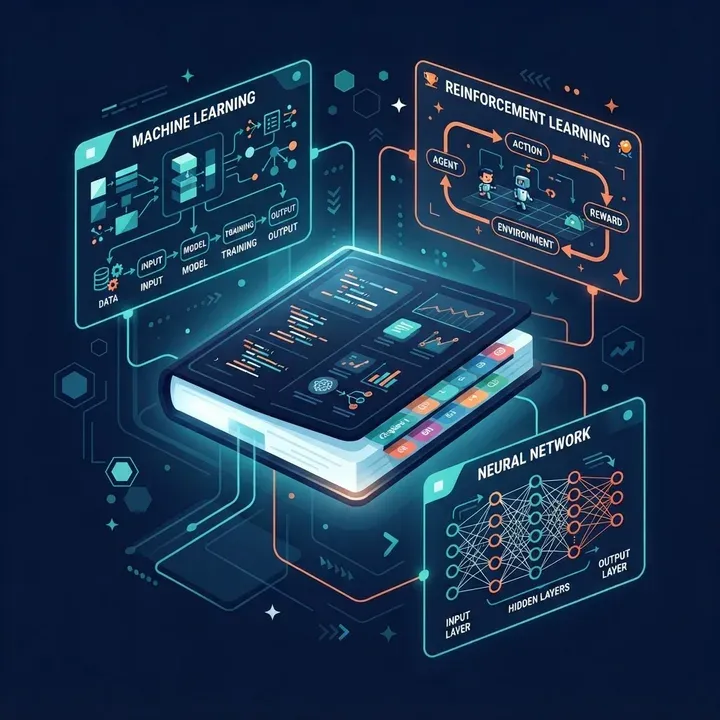
Key improvements in the second edition include:
- Updated Python 3 code compatible with current TensorFlow and Keras releases.
- Expanded deep learning content, including convolutional neural networks (CNNs) and recurrent architectures.
- New chapters on chatbots and cognitive NLP, reflecting the surge in conversational AI.
- More reinforcement learning depth, with clearer explanations of Markov Decision Processes.
- Practical case studies in areas like blockchain, IoT, and quantum computing concepts.
If you own the first edition, the second is worth the upgrade primarily for the modernized code and the broader neural network coverage. Outdated dependencies are the number one frustration in AI books, and this revision addresses that directly.
Inside the Book: Key Topics Covered
The strength of AI by Example is breadth delivered through concrete projects. Below are the three pillars most readers care about.
Reinforcement Learning and Markov Decision Processes
Reinforcement learning is a machine learning approach where an agent learns optimal actions by receiving rewards or penalties from its environment. Rothman opens the book with this topic and grounds it in a Markov Decision Process (MDP) — a mathematical framework for modeling decisions where outcomes are partly random and partly controlled.
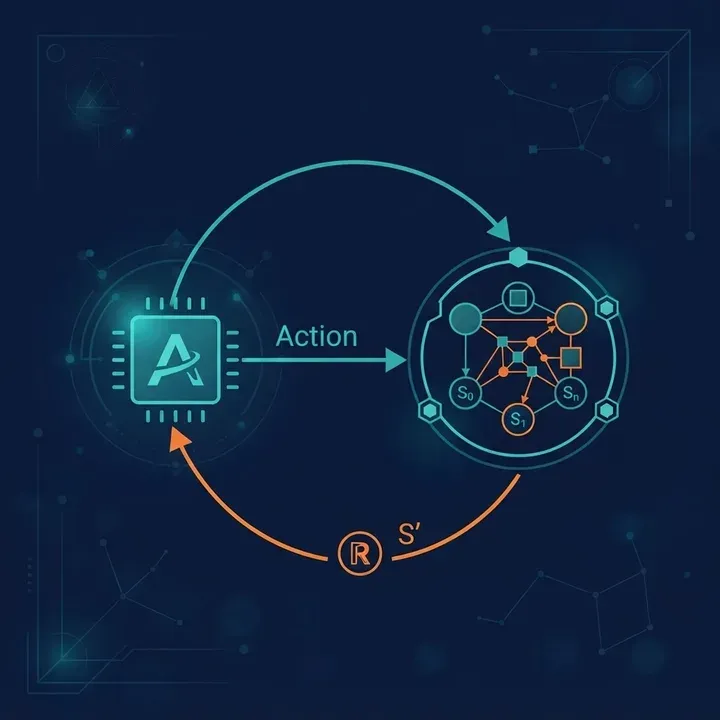
Rather than presenting MDPs as dry equations, the book applies them to a warehouse routing problem, so you understand why the math matters. This is the clearest introduction to reinforcement learning I have handed to beginners, because it connects reward functions to a tangible business outcome.
Deep Learning and Neural Networks
The deep learning chapters take you from single neurons to multi-layer networks and convolutional models used in image recognition. Deep learning is a subset of machine learning that uses layered neural networks to automatically learn features from large datasets.

Rothman explains backpropagation, activation functions, and CNNs using runnable examples, so abstract ideas like feature maps become visible in output. For readers who found other deep learning texts intimidating, the project framing makes these chapters far more approachable.
Hands-On Python Projects
Every major concept ships with Python code you can execute, modify, and break. This is where the book earns its title. You are not copying snippets in isolation — you are assembling complete solutions using libraries like TensorFlow, Keras, and scikit-learn.
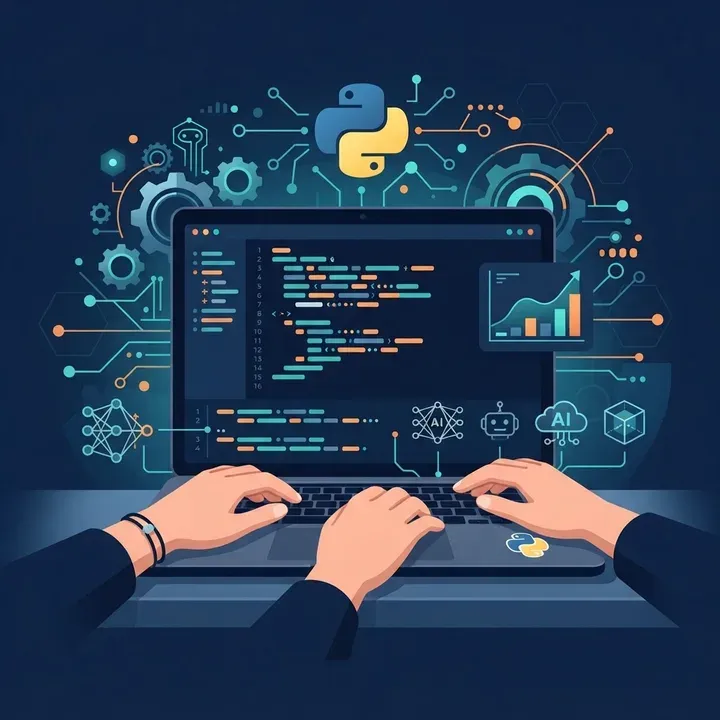
In my experience mentoring developers, this hands-on repetition is what turns AI knowledge into AI skill. If your goal is applied machine learning for products or client work, this practical emphasis is the book's biggest selling point. Teams building real AI features often pair this kind of study with professional support such as WebPeak's artificial intelligence services to move from prototype to production faster.
Is the 2nd Edition Worth It?
For most learners, yes. The decision depends on your current level and what you already own. The comparison table below summarizes how it stacks up against typical alternatives.
| Factor | AI by Example (2nd Ed.) | Pure Theory AI Textbooks | Free Online Tutorials |
|---|---|---|---|
| Hands-on projects | Yes, every chapter | Rarely | Inconsistent |
| Beginner friendly | Yes | Often no | Varies widely |
| Modern Python code | Yes | Sometimes outdated | Frequently outdated |
| Structured progression | Yes | Yes | No |
| Real-world use cases | Yes | Limited | Limited |
| Ongoing cost | One-time purchase | One-time purchase | Free but scattered |
The book fills the gap between fragmented free tutorials and heavy academic textbooks. According to industry surveys, machine learning and AI roles remain among the fastest-growing technical careers, and the U.S. Bureau of Labor Statistics projects data science jobs to grow about 36% through 2033 — far faster than average. A structured, applied resource is a smart investment against that demand.
How to Get the Book Legally (the "PDF" Question)
Here is the honest answer many search results avoid: downloading a pirated PDF of this book is illegal, unfair to the author, and genuinely risky for your device. Pirated files are a common vector for malware, and studies of illegal download sites consistently find that a large share expose visitors to malicious code or scams.

The good news is that a legitimate digital copy is affordable and easy to get. Here is how to access Artificial Intelligence by Example (2nd Edition) the right way:
- Packt Publishing — the publisher sells the official PDF and ePub, often bundled with the eBook and print copy.
- Amazon Kindle — buy the Kindle edition for instant reading across devices.
- O'Reilly Learning — access it through an O'Reilly subscription, which also unlocks thousands of related titles.
- Google Play Books — purchase a DRM-protected digital edition.
- Public and university libraries — many offer free digital lending through platforms like OverDrive or ProQuest.
Buying legally supports the author, guarantees you the corrected code repository, and often includes free updates or errata — value a pirated file can never provide.
Who Should Read This Book
This book is ideal for a specific set of readers, and being honest about that saves you money if it is not for you.
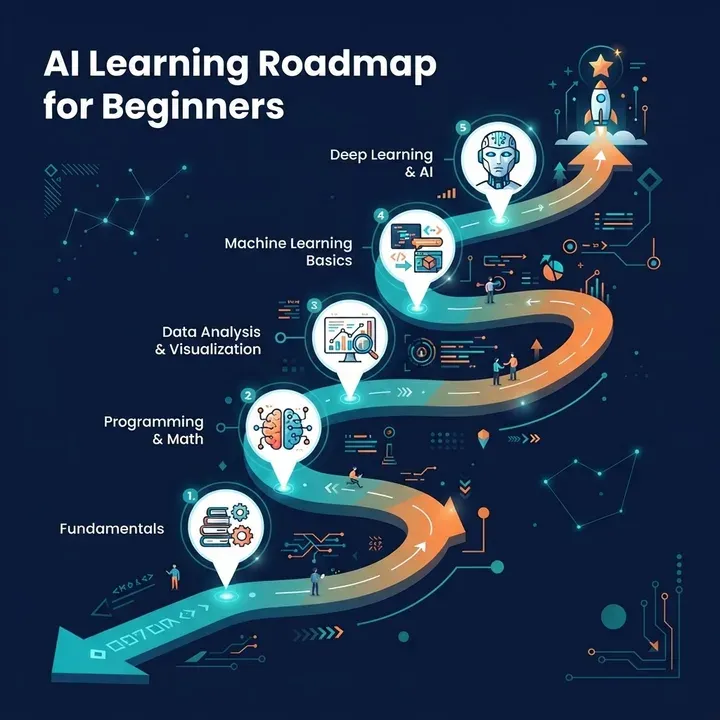
You will benefit most if you are:
- A developer or student with basic Python who wants applied AI skills.
- A career switcher moving into machine learning or data science.
- A product or technical lead who needs to understand how AI solutions are built.
- A self-learner who retains information best through building, not reading theory.
You may want a different resource if you need deep mathematical proofs, cutting-edge research on the very latest large language models, or a pure beginner's introduction to Python itself. In those cases, pair this book with a fundamentals course first.
Key Takeaways
- Artificial Intelligence by Example (2nd Edition) is a project-first, Python-based AI book by practitioner and author Denis Rothman, published by Packt.
- The second edition modernizes the code, expands deep learning and NLP coverage, and strengthens reinforcement learning explanations.
- The book excels at turning theory into working solutions, making it strong for applied learners and career switchers.
- The legal PDF is available from Packt, Amazon, O'Reilly, and Google Play — pirated copies are illegal and often carry malware.
- With data science roles projected to grow roughly 36% through 2033, a structured, applied AI resource is a high-value investment.
Frequently Asked Questions (FAQ)
Is there a free legal PDF of Artificial Intelligence by Example 2nd Edition?
There is no official free PDF. However, you can read it free through many public and university libraries that offer digital lending, or through a free O'Reilly Learning trial. These options are fully legal, safe, and give you the complete, corrected version of the book.
Is Artificial Intelligence by Example good for beginners?
Yes, it is well suited to beginners who know basic Python. The book introduces concepts through runnable projects and adds theory gradually, so you see results early. Complete non-programmers should learn Python fundamentals first, then use this book to build practical AI skills.
What programming language does the book use?
The book uses Python 3, the most popular language for machine learning. It relies on widely used libraries including TensorFlow, Keras, and scikit-learn. All code examples in the 2nd edition were updated for modern versions, reducing the dependency errors that frustrate readers of older AI books.
How is the 2nd edition different from the 1st edition?
The 2nd edition updates the codebase for current Python and TensorFlow, expands deep learning and neural network coverage, and adds material on chatbots and cognitive NLP. If you rely on working code, the refreshed examples alone make upgrading from the first edition worthwhile.
Where can I buy the official book?
You can buy the official edition from Packt Publishing, Amazon Kindle, Google Play Books, and O'Reilly Learning. Packt often bundles the PDF, ePub, and print copy together. Buying legally supports the author and gives you access to the verified code repository and any errata updates.
Whether you are exploring AI for a career move or a client project, Artificial Intelligence by Example (2nd Edition) is a dependable, hands-on choice — just get it the right way. If you need help turning what you learn into a shipped product, the teams at ZoneTechify and WebPeak work on exactly that kind of applied AI implementation.