A practical 2026 look at how Aldi Nord uses artificial intelligence across inventory, checkout, supply chain, personalization, and sustainability to stay a discount leader.
Aldi Nord Artificial Intelligence Applications 2026
Aldi Nord built its reputation on one promise: low prices without compromise. In 2026, keeping that promise increasingly depends on artificial intelligence. The German discounter is quietly weaving machine learning into forecasting, shelf management, checkout, and energy use, all while protecting the lean cost structure that defines the Aldi model. This article breaks down exactly where AI shows up in Aldi Nord's operations, why it matters to shoppers and competitors, and what it signals for the wider grocery industry.
We've analyzed retail technology adoption patterns across European discounters, and Aldi Nord's approach stands out for being deliberately practical. Rather than chasing headline-grabbing robots, the company applies AI where it directly cuts waste, saves labor hours, or lowers prices. That focus is the real story of 2026.
Quick Answer: In 2026, Aldi Nord applies artificial intelligence mainly to demand forecasting, automated inventory and shelf monitoring, AI-assisted checkout, supply-chain optimization, personalized app offers, and energy management. The goal is consistent: reduce waste and operating cost so the discounter can defend its low-price position.
What Artificial Intelligence Means for a Discounter Like Aldi Nord
Artificial intelligence, in a retail context, is software that learns patterns from data to make predictions or decisions without being explicitly programmed for each case. For Aldi Nord, that translates into systems predicting how many loaves of bread a store will sell on a rainy Tuesday, or spotting an empty shelf from a camera feed.
The strategic logic is simple. Discounters operate on razor-thin margins, often 2 to 4 percent net, far below premium supermarkets. Every percentage point of shrink, spoilage, or overstaffing threatens the model. AI is attractive precisely because it attacks those inefficiencies without raising shelf prices. Teams building similar retail intelligence systems, like those at ZoneTechify, consistently find that forecasting accuracy is where the fastest return on investment appears.
AI-Powered Demand Forecasting and Inventory Management
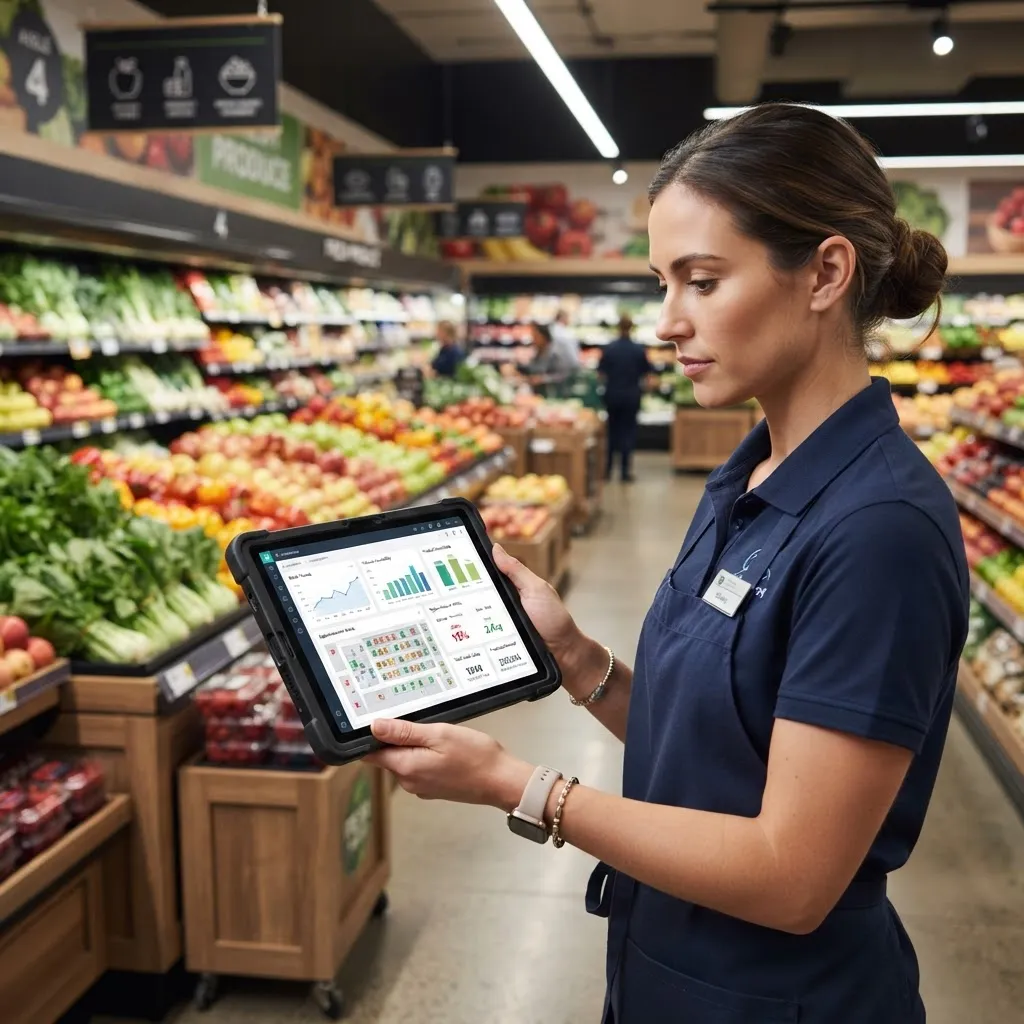
Demand forecasting is the backbone of Aldi Nord's AI strategy in 2026. Traditional grocery ordering relied on historical averages and manager intuition. Machine learning models now combine dozens of signals, weather, local events, holidays, promotions, and even social trends, to predict store-level demand for each product.
The payoff is measurable. According to the Food and Agriculture Organization, roughly one-third of all food produced globally is lost or wasted, and grocery retail is a significant contributor. AI forecasting directly attacks fresh-food spoilage by ordering closer to actual demand.
Here is how AI-driven inventory typically flows in a modern discounter:
- Data ingestion — sales, weather, promotions, and seasonality feed the model daily.
- Demand prediction — the system forecasts unit sales per SKU per store.
- Automated ordering — replenishment suggestions are generated with minimal manual input.
- Shelf verification — cameras or sensors confirm stock levels and flag gaps.
- Continuous learning — actual results are compared to predictions to sharpen accuracy.
This loop reduces both empty shelves and overstock, the two costliest failures in fresh grocery. Because Aldi Nord carries a deliberately limited assortment, often under 2,000 core products versus 30,000-plus at a full supermarket, its models train on cleaner, more concentrated data, which improves prediction quality.
Smart Checkout and Computer Vision
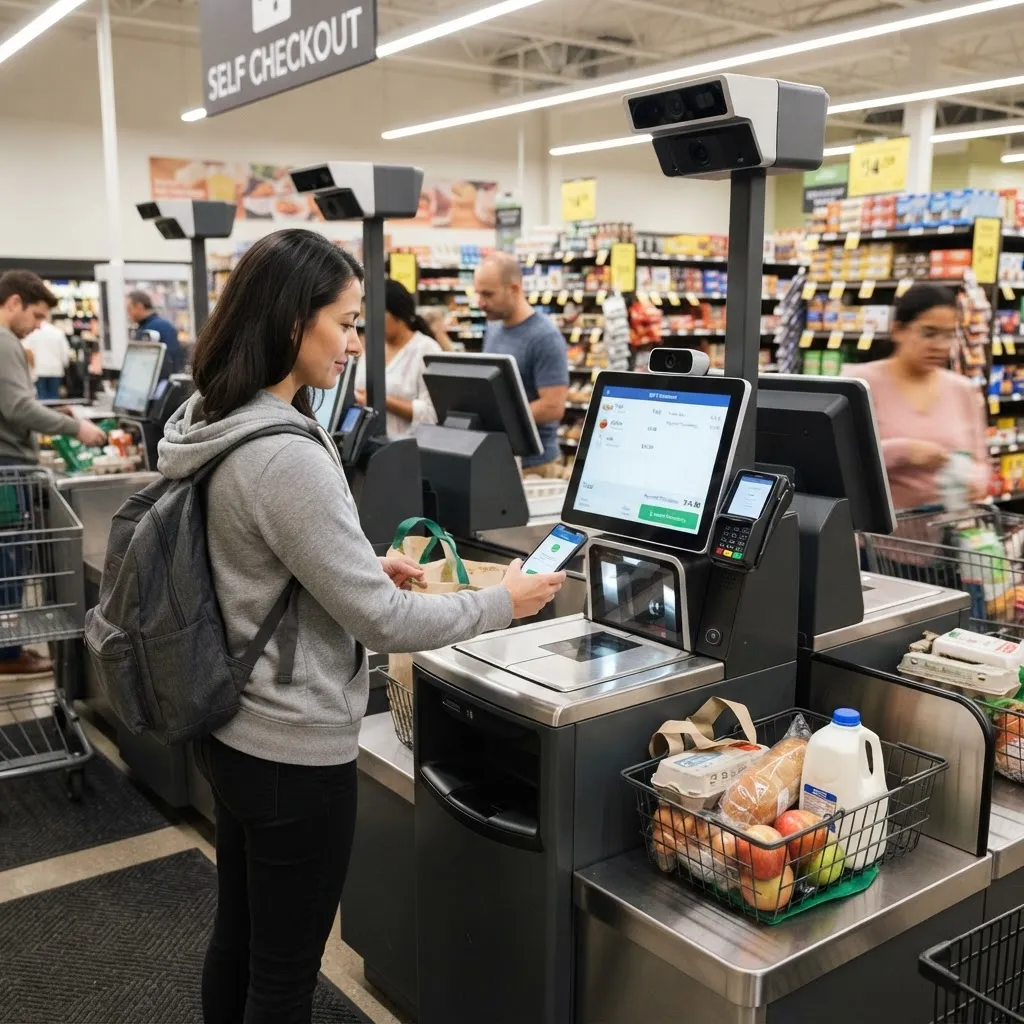
Checkout is where shoppers feel AI most directly. In 2026, Aldi Nord is expanding self-checkout and testing computer-vision systems that recognize items without barcode scanning. These systems use cameras and machine-learning models trained on thousands of product images to identify goods as they pass through.
The motivation is throughput and labor efficiency. Aldi has long been famous for extremely fast cashiers and multi-barcode packaging designed for rapid scanning. AI extends that philosophy rather than replacing it. Computer vision also strengthens loss prevention by flagging mismatches between scanned items and what the camera actually sees, addressing the shrink that self-checkout historically introduced.
Importantly, Aldi Nord treats these as additions, not full replacements. Staffed lanes remain, which reflects a trust-focused stance: technology should speed up the honest majority without alienating shoppers who prefer human service.
Supply Chain and Logistics Optimization
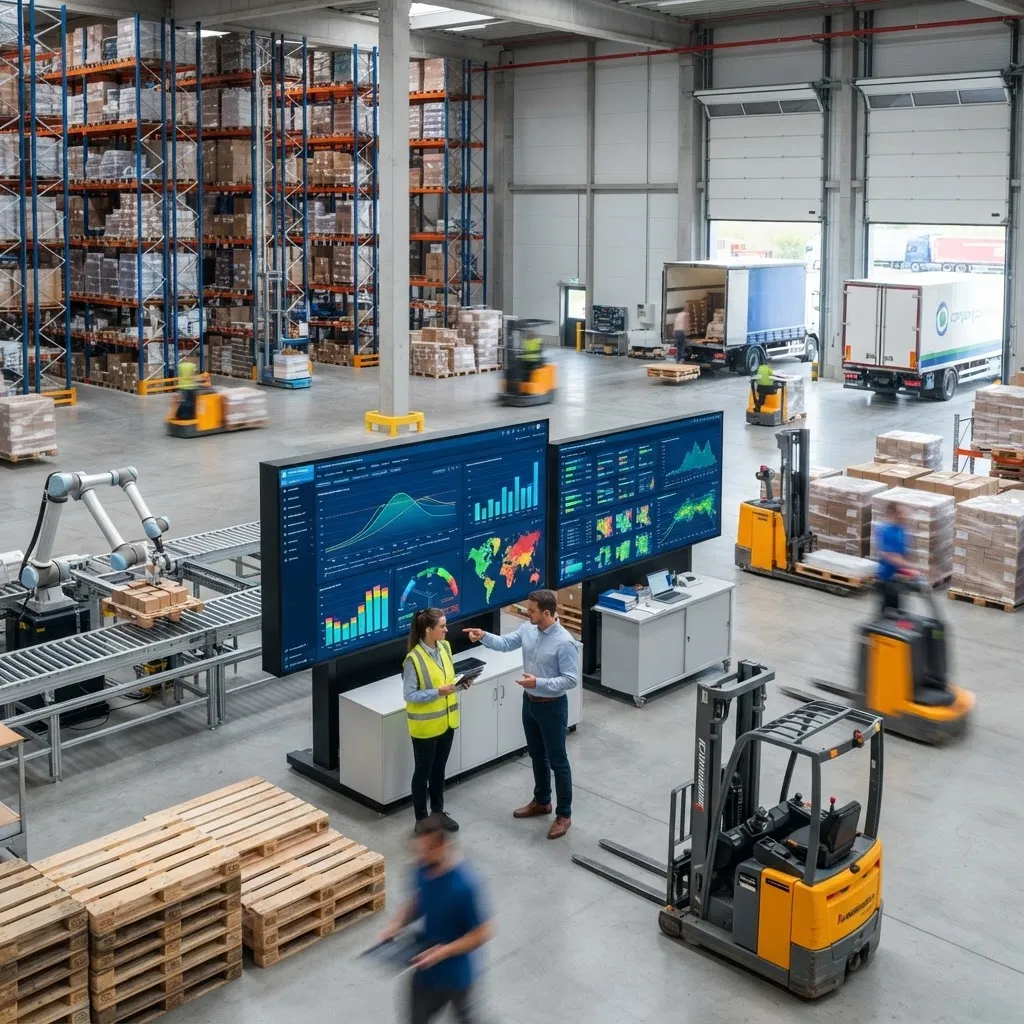
Behind every store sits a logistics network, and this is where AI delivers some of the largest, least visible savings. Aldi Nord uses machine learning to optimize warehouse slotting, delivery routing, and distribution-center throughput.
Route optimization models calculate the most fuel- and time-efficient delivery paths, adjusting for traffic, delivery windows, and vehicle capacity. According to McKinsey research on retail AI, advanced analytics in supply chain can reduce logistics costs by 15 percent or more while improving service levels. For a network shipping to thousands of stores across Europe, even modest per-route gains compound into major annual savings.
AI also improves warehouse labor planning. By predicting inbound and outbound volume, the system schedules the right number of workers per shift, avoiding both costly overstaffing and bottlenecks that delay store deliveries. This tight coordination between forecasting and logistics is what keeps Aldi shelves stocked without expensive buffer inventory.
AI Store Automation and Shelf Intelligence
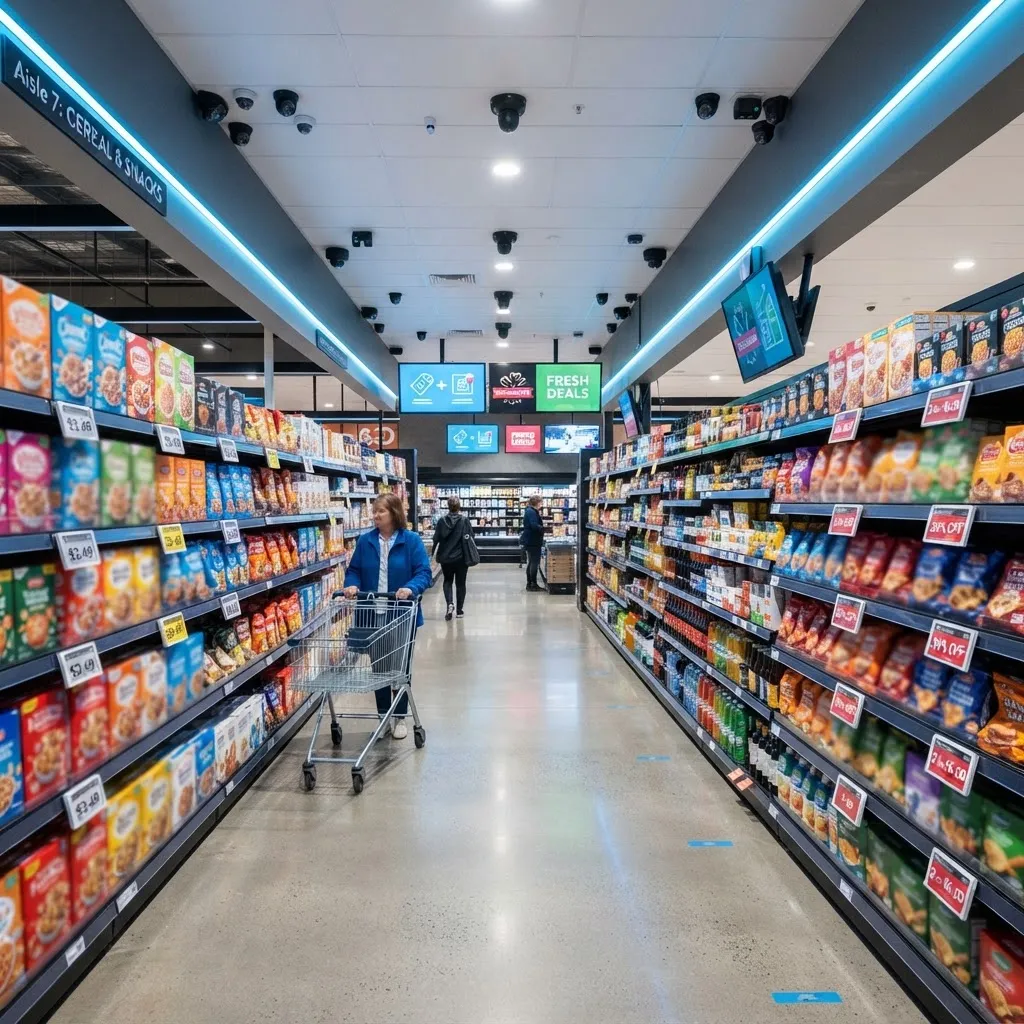
Inside the store, AI increasingly handles the repetitive monitoring tasks that once consumed staff time. Shelf-intelligence systems, using cameras or weight sensors, detect out-of-stock items, misplaced products, and incorrect pricing in near real time.
Electronic shelf labels connected to central systems let Aldi Nord update prices instantly and accurately across a store, eliminating the labor and errors of paper tags. When paired with AI, these labels can support dynamic responses, for example, marking down short-dated perishables automatically to sell them before they spoil. That single capability turns potential waste into recovered revenue and reinforces the low-price message.
The organizational benefit is subtle but powerful: staff shift from counting and checking toward customer-facing and restocking work, improving both store conditions and employee experience.
Personalization Through the Aldi App
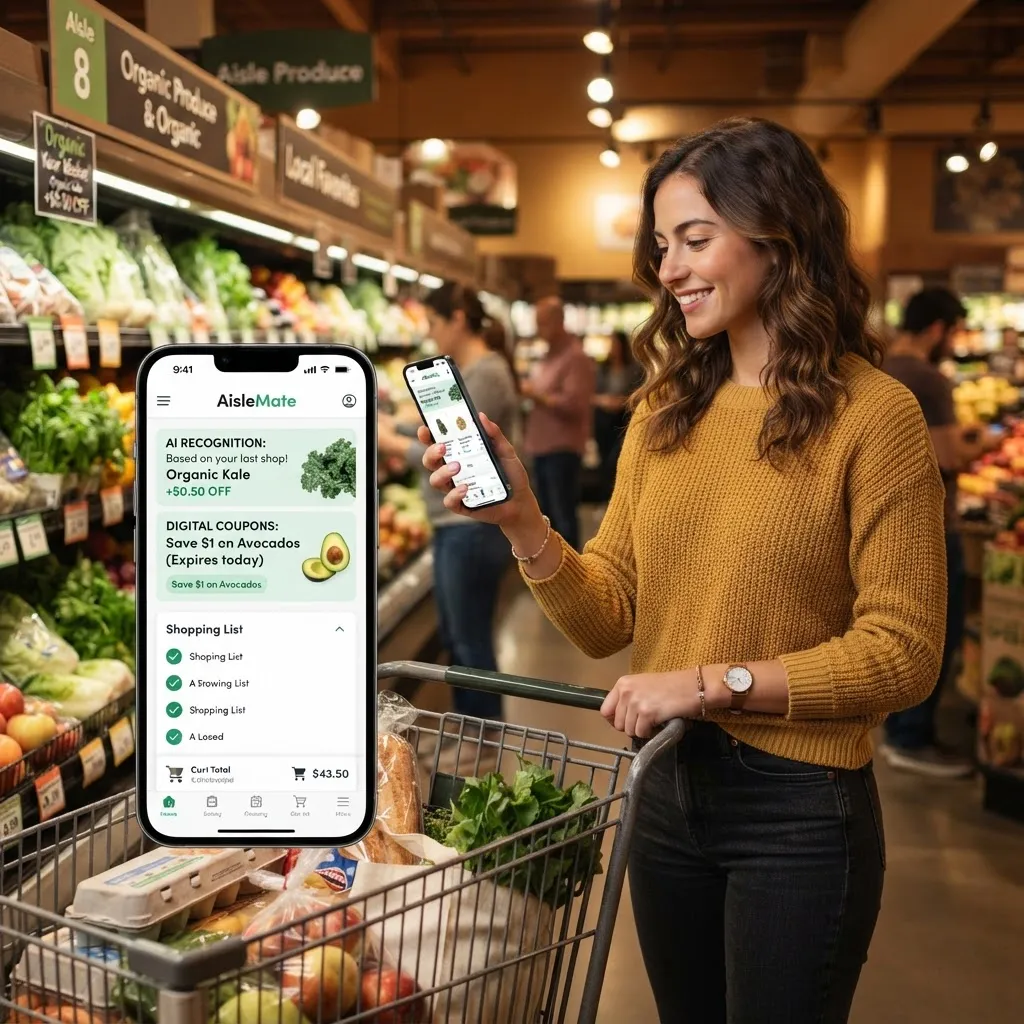
Discounters historically avoided loyalty programs, prizing simplicity over data collection. That is changing carefully. In 2026, Aldi Nord's digital app uses AI to surface relevant offers, recipes, and product suggestions based on shopping behavior, without abandoning the no-frills brand identity.
The balance matters. Personalization increases basket size and repeat visits, but Aldi's audience values privacy and low prices over gimmicks. So the AI here is restrained: it recommends genuinely useful deals rather than bombarding users. Businesses aiming to build this kind of respectful, data-driven personalization can explore dedicated artificial intelligence services to design models that boost engagement without eroding trust.
This measured approach reflects a broader 2026 truth: AI personalization succeeds when it feels helpful, not intrusive.
AI for Sustainability and Energy Management
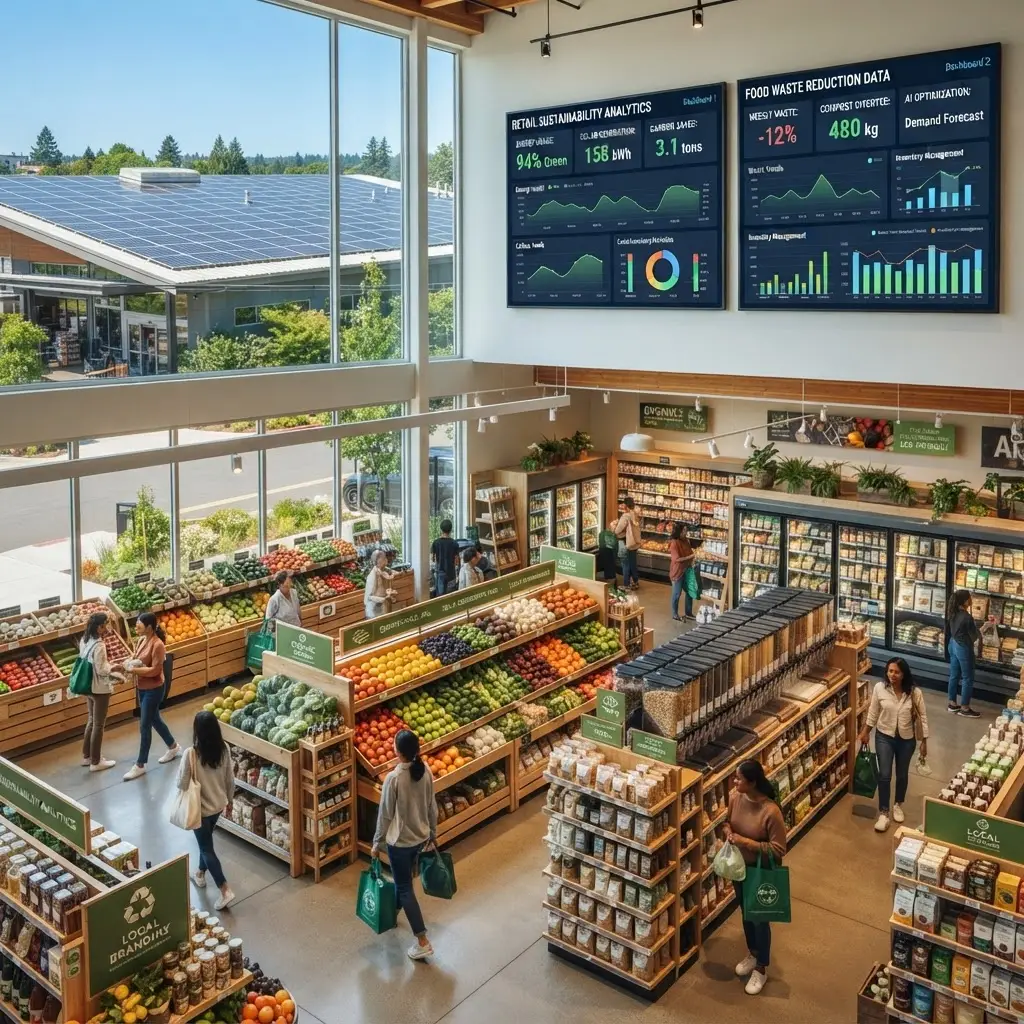
Sustainability and cost control overlap neatly at Aldi Nord, and AI sits at that intersection. Machine-learning systems manage refrigeration, lighting, and heating across stores, adjusting consumption to real conditions and cutting energy bills, one of a grocer's largest fixed costs.
AI also powers food-waste reduction. Predictive markdown systems identify products approaching expiry and recommend the optimal discount timing to clear them. This lowers waste-disposal costs, supports environmental goals, and passes savings to shoppers. It is a rare win that benefits margins and the planet simultaneously.
Expert insight: the most durable AI investments in retail are the ones that reduce a real physical cost, energy, spoilage, or transport. Aldi Nord's sustainability AI qualifies on all three counts, which is why it is expanding rather than being piloted and shelved.
Comparison: Aldi Nord AI Applications and Their Impact
| AI Application | Primary Goal | Shopper Benefit | Maturity in 2026 |
|---|---|---|---|
| Demand Forecasting | Reduce spoilage and stockouts | Fresher products, fewer gaps | High |
| Smart Checkout | Speed and labor efficiency | Faster, smoother checkout | Growing |
| Supply Chain AI | Lower logistics cost | Stable low prices | High |
| Shelf Intelligence | Real-time stock accuracy | Better availability | Growing |
| App Personalization | Relevant offers | Useful, targeted deals | Early |
| Energy Management | Cut energy and waste cost | Sustained low prices | High |
Why Aldi Nord's AI Strategy Works
The defining trait of Aldi Nord's 2026 approach is discipline. The company adopts AI only where it protects the core promise of low prices, avoiding expensive experiments that inflate cost. This is the opposite of technology for its own sake.
That philosophy offers a lesson for any business. AI delivers the strongest returns when tied to a clear operational metric, waste percentage, labor hours, energy spend, rather than vague ambitions of innovation. Companies looking to apply the same principled, ROI-first strategy can learn from resources published by teams like WebPeak, who focus on making advanced technology genuinely practical for real businesses.
Key Takeaways
- Aldi Nord's 2026 AI focus is practical: forecasting, inventory, checkout, logistics, personalization, and energy management.
- Demand forecasting is the highest-impact application, directly cutting food waste in a sector where the FAO reports roughly one-third of food is lost or wasted.
- Supply-chain AI can lower logistics costs by 15 percent or more, according to McKinsey, protecting Aldi's low prices.
- A limited assortment gives Aldi cleaner data, improving model accuracy versus full-range supermarkets.
- AI at Aldi Nord augments staff and human checkout rather than fully replacing them, preserving customer trust.
- Sustainability AI reduces energy and spoilage costs, aligning margins with environmental goals.
Frequently Asked Questions (FAQ)
How does Aldi Nord use artificial intelligence in 2026?
Aldi Nord uses AI for demand forecasting, automated inventory and shelf monitoring, smart checkout with computer vision, supply-chain and route optimization, app-based personalization, and energy management. Each application targets a specific cost, helping the discounter reduce waste and staffing needs while keeping its low shelf prices intact.
Does Aldi Nord use AI checkout without cashiers?
Aldi Nord is expanding self-checkout and testing computer-vision checkout that recognizes items without scanning, but it has not removed cashiers. Staffed lanes remain available alongside automated options. The strategy adds speed and efficiency for willing shoppers while preserving human service for customers who prefer a traditional, trusted checkout experience.
How does AI help Aldi Nord reduce food waste?
AI forecasting orders fresh products closer to real demand, cutting overstock that would otherwise spoil. Predictive markdown systems then identify items nearing expiry and recommend the best discount timing to sell them. Together these tools lower spoilage and disposal costs, which supports both sustainability goals and Aldi Nord's low-price commitment.
Is Aldi Nord's AI a threat to jobs?
Aldi Nord positions AI as support rather than replacement. Automation handles repetitive tasks like stock checks, pricing, and forecasting, freeing staff for restocking and customer service. Human cashiers and store teams remain central. The realistic 2026 effect is changed roles and higher efficiency rather than large-scale elimination of store jobs.
Why does a discount retailer invest in AI?
Discounters run on very thin margins, often 2 to 4 percent, so every bit of waste or inefficiency matters. AI reduces spoilage, logistics costs, and energy use without raising prices. For Aldi Nord, artificial intelligence is a defensive tool that protects the low-price model that its entire brand depends on.
Will other supermarkets copy Aldi Nord's AI approach?
Many already are. Aldi Nord's disciplined, cost-focused use of AI, applied only where it delivers measurable savings, is becoming a template across European grocery. Competitors are adopting forecasting, shelf intelligence, and energy AI. The differentiator in 2026 is execution quality and clean data, not simply having the technology available.