A clear, up-to-date breakdown of US AI regulation, federal executive orders, and the growing patchwork of state AI laws businesses must follow today.
AI Regulation News Today US Executive Order State AI Laws
Artificial intelligence policy in the United States is moving faster than at any point in the technology's history. Between shifting federal executive orders and a rapidly expanding web of state-level statutes, businesses are now navigating a legal landscape that changes almost monthly. If you build, deploy, or even purchase AI tools, understanding today's regulatory picture is no longer optional — it directly affects compliance costs, liability, and product roadmaps.
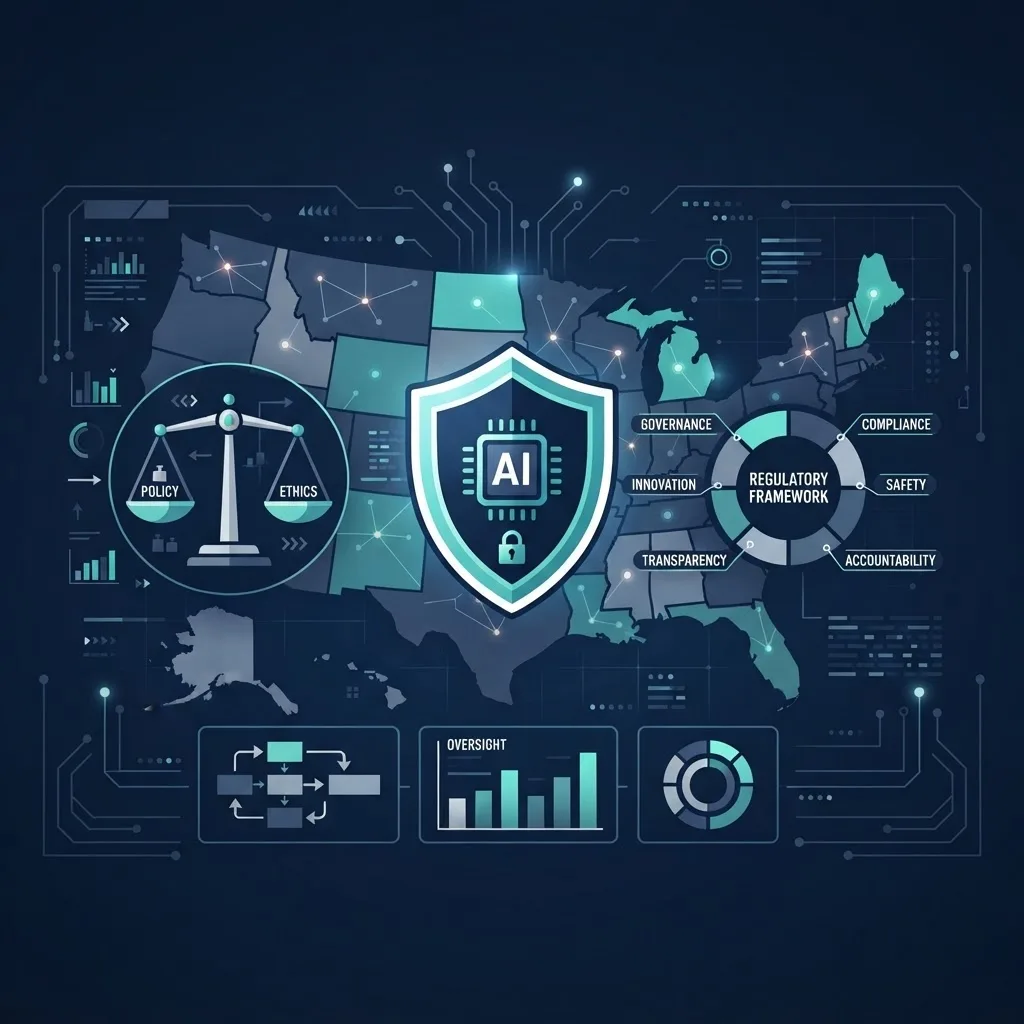
This guide breaks down the current state of AI regulation in the US: what the federal executive orders actually require, how state AI laws differ, and the practical steps organizations should take right now. As a team that helps companies deploy compliant AI solutions, we have watched these rules reshape real projects — and this article reflects that hands-on experience.
Quick Answer: US AI regulation today combines federal executive orders that set safety, transparency, and security standards for federal agencies with a fast-growing set of state laws — like those in California, Colorado, and Texas — that govern private-sector AI use, creating a patchwork businesses must actively track and comply with.
What Is AI Regulation and Why It Matters Now
AI regulation refers to the laws, executive actions, and enforcement rules that govern how artificial intelligence systems are developed, deployed, and used. In the US, there is no single comprehensive federal AI law. Instead, oversight comes from a mix of presidential executive orders, sector-specific agency rules, and individual state statutes.
This matters because AI adoption has outpaced governance. According to a 2024 McKinsey survey, roughly 65% of organizations reported regularly using generative AI — nearly double the figure from the prior year. When two-thirds of businesses use a technology that touches hiring, lending, healthcare, and consumer data, regulators inevitably follow. The result is a compliance environment where a single AI hiring tool could be subject to federal guidance, a state bias-audit law, and existing civil rights statutes all at once.
The US Federal Executive Order on AI Explained
Federal AI policy in the US has been driven primarily through executive orders rather than congressional legislation. An executive order is a directive issued by the President that manages operations of the federal government and carries the force of law for federal agencies.
The landmark 2023 Executive Order on Safe, Secure, and Trustworthy AI established the first broad federal framework. Its core requirements included:
- Safety testing disclosures — developers of the most powerful foundation models had to share safety test results with the government.
- Standards for content authentication — directing agencies to develop watermarking and labeling guidance for AI-generated content.
- Privacy and civil rights protections — instructing agencies to prevent algorithmic discrimination in housing, benefits, and hiring.
- Federal AI talent and governance — requiring agencies to appoint Chief AI Officers and adopt risk-management practices.
A critical point many businesses miss: executive orders can be rescinded or rewritten by a new administration. In early 2025, the federal approach shifted toward prioritizing AI innovation and reducing what officials described as regulatory barriers, rolling back several earlier mandates. This volatility is exactly why relying solely on federal rules is risky — the ground can move with each election cycle.
What the Executive Order Means for Private Companies
Most federal executive orders directly bind federal agencies, not private businesses. However, the downstream effect is significant. When agencies like NIST publish AI risk frameworks or procurement standards, those become de facto benchmarks. If you sell software to the government or operate in regulated sectors like finance and healthcare, federal AI guidance shapes your obligations even without a dedicated statute.
State AI Laws: The Real Battleground
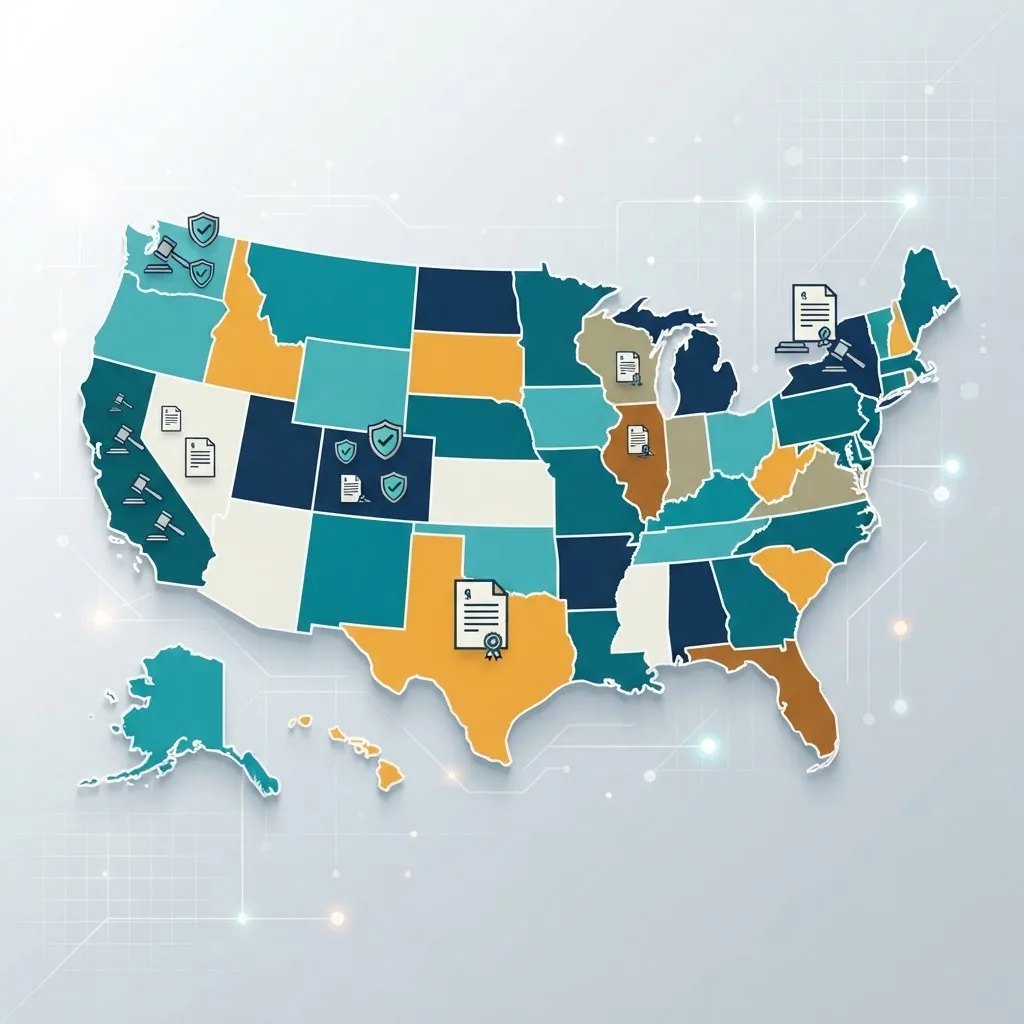
While Washington debates, states have become the most active source of enforceable AI rules for private companies. This is where day-to-day compliance risk truly lives. Dozens of states introduced AI-related bills in recent legislative sessions, and several have already enacted binding law.
Key examples include:
- Colorado AI Act (SB 205): The first comprehensive US state law targeting "high-risk" AI systems. It requires developers and deployers to use reasonable care to prevent algorithmic discrimination in consequential decisions like employment, lending, and housing.
- California: Multiple laws addressing AI transparency, training-data disclosure, deepfakes, and generative AI content labeling, alongside strong existing privacy rules under the CCPA/CPRA.
- Texas: Legislation focused on responsible AI use by government agencies and prohibitions on certain harmful AI applications.
- Illinois: Amendments extending its long-standing biometric and employment laws to cover AI use in video interviews and hiring decisions.
The core challenge is fragmentation. A company operating nationwide may need to satisfy several overlapping and occasionally conflicting standards. An AI recruiting tool compliant in one state could trigger audit or notice requirements in another.
Federal vs State AI Regulation: A Side-by-Side Comparison
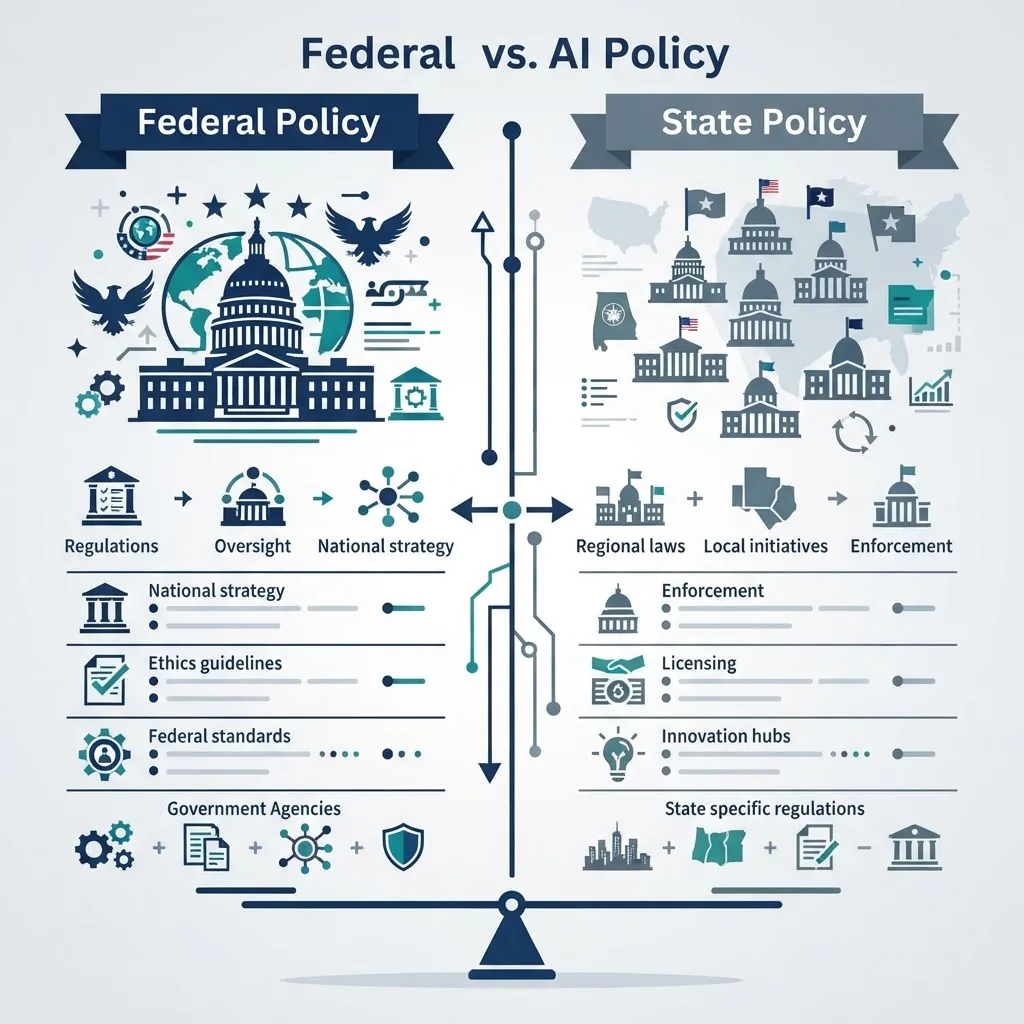
Understanding how these two layers differ helps you prioritize compliance effort. The table below summarizes the practical distinctions.
| Factor | Federal Executive Orders | State AI Laws |
|---|---|---|
| Primary target | Federal agencies and their vendors | Private companies operating in the state |
| Legal durability | Can change with each administration | More stable, requires legislative repeal |
| Enforcement | Agency-driven, procurement-based | State attorneys general, civil penalties |
| Scope | Broad national principles | Specific sectors and use cases |
| Business impact | Indirect for most private firms | Direct and immediate |
The takeaway is clear: for most private businesses, state laws create the more immediate and enforceable obligations, while federal orders set the broader direction and influence standards over time.
How Businesses Should Respond to AI Regulation Today
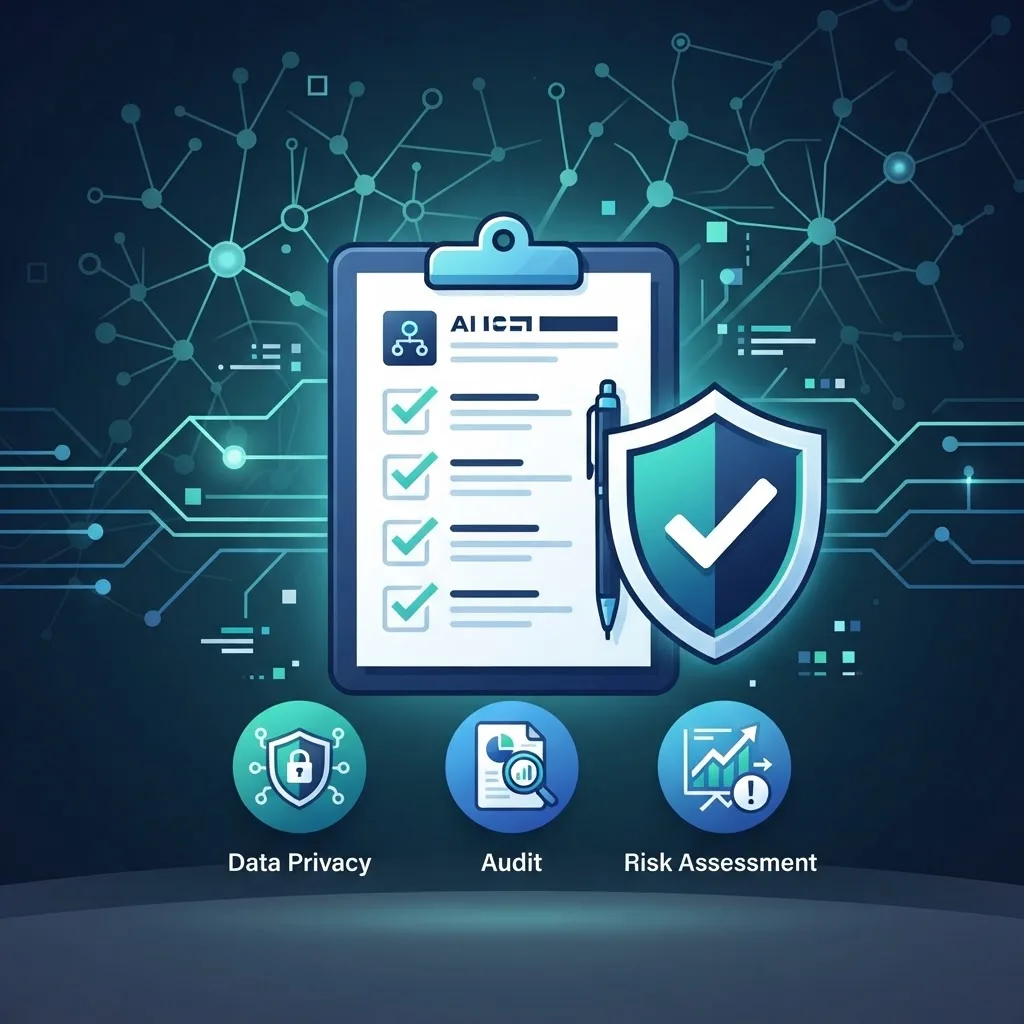
Regulatory uncertainty is not an excuse for inaction. In our project work, the companies that struggle most are those that treated AI governance as an afterthought. Here is a practical, experience-tested checklist:
- Inventory your AI systems. You cannot govern what you cannot see. Document every AI and automated decision tool in use, including third-party vendor tools.
- Classify by risk. Flag any system that affects hiring, credit, healthcare, insurance, or housing — these draw the most regulatory scrutiny.
- Adopt a recognized framework. The NIST AI Risk Management Framework is widely referenced and gives you a defensible foundation.
- Build documentation and audit trails. Many state laws require impact assessments or bias audits. Maintaining records before you are asked is far cheaper than scrambling later.
- Add human oversight and appeals. Consequential decisions should have a human review path and clear consumer notice.
- Track laws where you operate. Assign ownership for monitoring legislative changes in each state you serve.
Companies that need help operationalizing these steps often partner with specialists in artificial intelligence services to build governance directly into their AI workflows rather than bolting it on afterward.
Building AI Governance Into Your Strategy

AI governance is the framework of policies, roles, and controls an organization uses to manage AI risk and ensure responsible use. Treating it as a strategic function — not a legal box to tick — pays off. Assign clear accountability, ideally an AI lead or committee, and connect governance to procurement so risky tools are evaluated before purchase, not after deployment.
One pattern we consistently see: organizations with documented AI policies move faster, not slower. When teams know the guardrails, they can innovate confidently instead of pausing over every new use case. Good governance is a business enabler, and it signals trustworthiness to customers and partners — an increasingly important differentiator. For broader digital strategy support, resources at ZoneTechify and WebPeak can help align compliance with growth goals.
The Future of AI Regulation in the US
Expect the trajectory to intensify. Three trends are likely to define the next phase:
- More state action, not less. In the absence of a comprehensive federal law, states will continue filling the gap, deepening the patchwork.
- Sector-specific federal rules. Agencies overseeing finance, health, and consumer protection will keep issuing AI-specific guidance under existing authority.
- Pressure for federal preemption. Industry groups are pushing for a single national standard to replace the state patchwork, though passage remains uncertain.
The smartest strategy is to build for the strictest applicable standard. Systems designed around transparency, documented testing, and human oversight will comply with almost any future rule — turning regulatory readiness into a durable competitive advantage.
Key Takeaways
- The US has no single comprehensive federal AI law; regulation comes from executive orders, agency rules, and state statutes.
- Federal executive orders mainly bind federal agencies and can change with each administration, making them less stable than legislation.
- State laws create the most direct compliance obligations for private businesses, with Colorado, California, Texas, and Illinois leading.
- Around 65% of organizations now use generative AI regularly, driving the surge in regulatory activity.
- The NIST AI Risk Management Framework is a widely accepted foundation for defensible AI governance.
- Building to the strictest standard — transparency, testing, and human oversight — future-proofs your AI investments.
Frequently Asked Questions (FAQ)
Is there a federal AI law in the United States right now?
No single comprehensive federal AI law exists today. US federal AI policy is shaped mainly through executive orders and agency guidance, such as NIST frameworks. These set national direction and bind federal agencies, but binding rules for private companies currently come primarily from individual state laws.
Do state AI laws apply to my business?
Most likely, yes, if you operate in or serve customers in states like Colorado, California, Texas, or Illinois. State AI laws often apply based on where consumers are located, not just where your company is headquartered, so nationwide businesses usually face multiple overlapping state requirements at once.
Can a new president change AI executive orders?
Yes. Executive orders are presidential directives that a new administration can rescind, replace, or rewrite without congressional approval. This happened in early 2025 when federal AI priorities shifted toward innovation. This volatility is why businesses should not rely on executive orders alone for long-term compliance planning.
What is the Colorado AI Act?
The Colorado AI Act (SB 205) is the first comprehensive US state law targeting high-risk AI systems. It requires developers and deployers to use reasonable care to prevent algorithmic discrimination in consequential decisions like hiring, lending, and housing, including impact assessments and consumer notification obligations.
How should small businesses prepare for AI regulation?
Start by inventorying every AI tool you use, including vendor products. Classify systems that affect hiring, credit, or healthcare as high-risk, adopt the NIST AI Risk Management Framework, keep documentation, and add human oversight. These low-cost steps satisfy most current and expected regulatory requirements.