Discover how AI is reshaping the future for MIS students, including the skills, tools, career paths, and a practical roadmap to stay ahead in a data-driven world.
AI in the Future for MIS Students
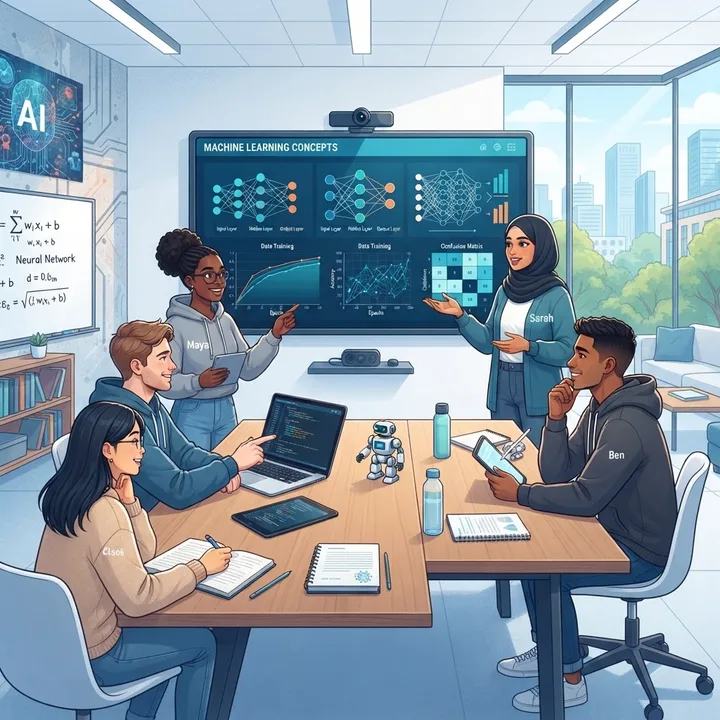
Management Information Systems (MIS) has always lived at the intersection of business strategy and technology, but artificial intelligence is redrawing that intersection faster than any shift in the field's history. For today's MIS students, AI is no longer an elective topic or a distant trend, it is becoming the core language of modern business operations. Understanding where AI is heading will decide whether graduates lead digital transformation or scramble to catch up.
This guide breaks down exactly how AI will shape the MIS profession, which skills matter most, and the concrete steps students can take now to future-proof their careers. It draws on current industry hiring patterns and the evolving MIS curriculum to offer a practical, experience-based roadmap rather than vague predictions. For more digital strategy insights, resources like ZoneTechify and WebPeak track these shifts closely.
Quick Answer: AI will transform MIS careers by automating routine data tasks and elevating roles that blend business insight with machine learning fluency. MIS students who master data analytics, AI tools, and strategic decision-making will thrive as data analysts, AI product managers, and digital transformation leaders throughout the coming decade.
What Is MIS and How Does AI Fit In?
Management Information Systems (MIS) is the study of how people, technology, and business processes work together to collect, manage, and use information for better decisions. Traditionally, MIS professionals designed databases, managed enterprise software, and translated business needs into technical requirements.
Artificial intelligence extends every one of those responsibilities. Where an MIS analyst once built a report, AI now generates predictive forecasts. Where a manager once reviewed dashboards manually, machine learning models surface anomalies automatically. AI does not replace the MIS discipline, it supercharges it, turning information managers into strategic intelligence architects.
Why AI Matters More Than Ever for MIS Students
AI adoption is accelerating across every industry that hires MIS graduates. According to the World Economic Forum's Future of Jobs report, 75% of surveyed companies plan to adopt AI technologies by 2027, and analytical thinking plus AI literacy rank among the fastest-growing skill demands. Separately, IBM's Global AI Adoption research found that roughly 42% of enterprise-scale businesses have already actively deployed AI in their operations.
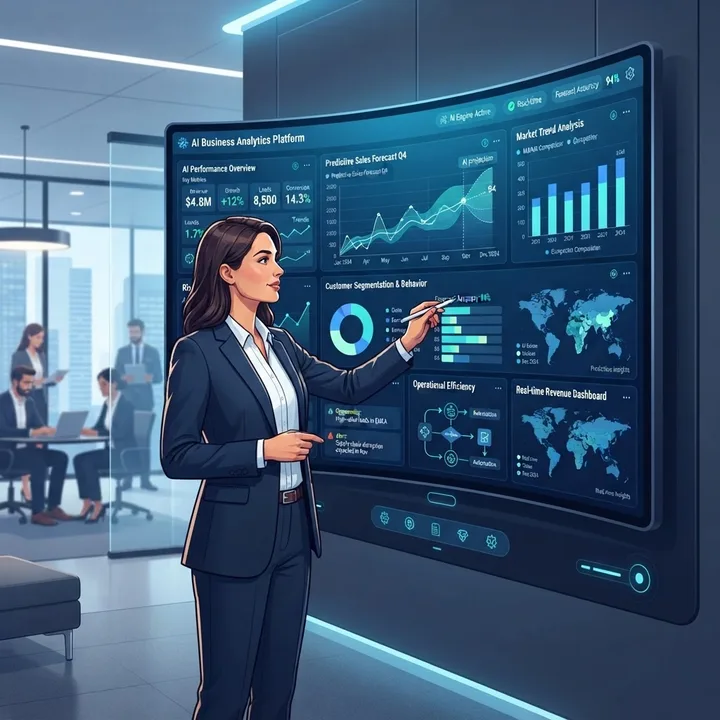
For MIS students, these numbers translate into a clear message: employers increasingly expect graduates who can bridge business and AI. The professionals who can explain a machine learning model's output to a CFO, evaluate data quality, and connect insights to revenue will command the highest value. MIS is uniquely positioned to produce exactly these translators.
The Skills MIS Students Need to Thrive with AI
Succeeding in an AI-driven workplace requires a balanced skill set. Purely technical students risk missing business context, while purely managerial students risk becoming irrelevant to technical teams. The winning profile combines both.
Core Technical Skills
- Data analytics and SQL: The ability to query, clean, and interpret data remains the foundation of every AI workflow.
- Python and basic machine learning: Understanding how models are trained, tested, and deployed, even at a conceptual level, is now expected.
- Data visualization: Tools like Power BI and Tableau turn AI outputs into decisions stakeholders can act on.
- Cloud and database fundamentals: Most AI systems run on cloud platforms, so familiarity with AWS, Azure, or Google Cloud is a major advantage.
Business and Human Skills
- Critical thinking: Knowing which questions AI should answer is more valuable than the answer itself.
- Communication: Translating technical results into business language is a defining MIS strength.
- Ethics and data governance: Understanding bias, privacy, and responsible AI use protects both companies and users.
- Adaptability: AI tools change monthly, so the ability to keep learning is the ultimate durable skill.
AI-Powered Career Paths for MIS Graduates
AI is expanding the range of roles available to MIS graduates rather than shrinking it. The table below compares traditional MIS roles with their emerging AI-enhanced counterparts.
| Traditional MIS Role | AI-Enhanced Future Role | Key AI Skill Added |
|---|---|---|
| Business Analyst | AI Business Analyst | Predictive modeling literacy |
| Database Administrator | Data Engineer | Automated data pipelines |
| IT Project Manager | AI Product Manager | Model lifecycle oversight |
| Systems Analyst | Machine Learning Analyst | Model evaluation and tuning |
| Reporting Specialist | Data Storyteller | AI-driven visualization |
Each of these paths rewards the MIS blend of business fluency and technical comfort. Students who intentionally build toward one of these roles during their degree, through projects, internships, and certifications, enter the job market with a decisive edge.
How AI Is Reshaping Business Analytics
Business analytics is where MIS students will feel AI's impact most directly. Descriptive analytics, which explains what happened, is quickly being automated. The real demand is shifting toward predictive analytics (what will happen) and prescriptive analytics (what should be done about it), and AI powers both.
Modern platforms now generate forecasts, detect fraud, and recommend actions with minimal manual coding. This means an MIS graduate's value moves away from producing reports and toward interpreting, validating, and acting on AI-generated insights. Students who practice questioning model assumptions and checking data quality will be far more employable than those who simply accept outputs at face value. Businesses that need this kind of intelligent transformation often partner with specialists such as the team behind ZoneTechify's artificial intelligence services.
Essential AI Tools Every MIS Student Should Learn
Hands-on tool experience separates job-ready graduates from theory-only candidates. Start with these categories:
- Generative AI assistants: ChatGPT, Gemini, and Claude for research, drafting, and rapid prototyping.
- Analytics platforms: Power BI and Tableau, both now embedding AI-driven insights.
- No-code and low-code AI: Tools that let you build automations without deep programming.
- Python libraries: Pandas for data handling and scikit-learn for entry-level machine learning.
- Automation tools: Platforms like Zapier and Microsoft Power Automate for connecting business workflows.
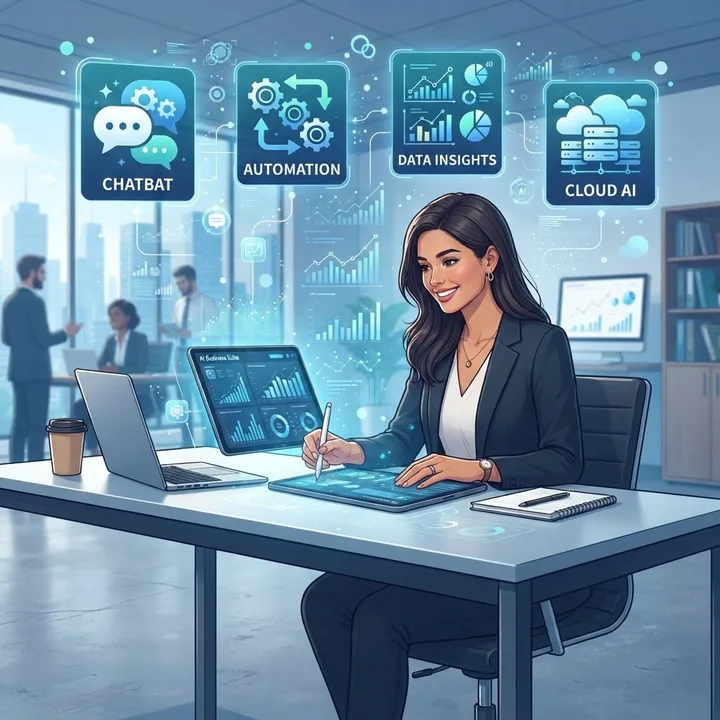
The goal is not mastery of every tool, but comfortable fluency across a few, plus the confidence to learn new ones quickly. Employers value adaptable learners over narrow specialists in a market where tools evolve constantly.
The Future MIS Workforce: Augmentation, Not Replacement
A common fear among students is that AI will eliminate MIS jobs. The evidence points the other way. AI automates tasks, not entire roles, and it creates new categories of work faster than it removes old ones. The World Economic Forum projects that while AI may displace some positions, it will also generate millions of new technology and analytics roles by 2027.
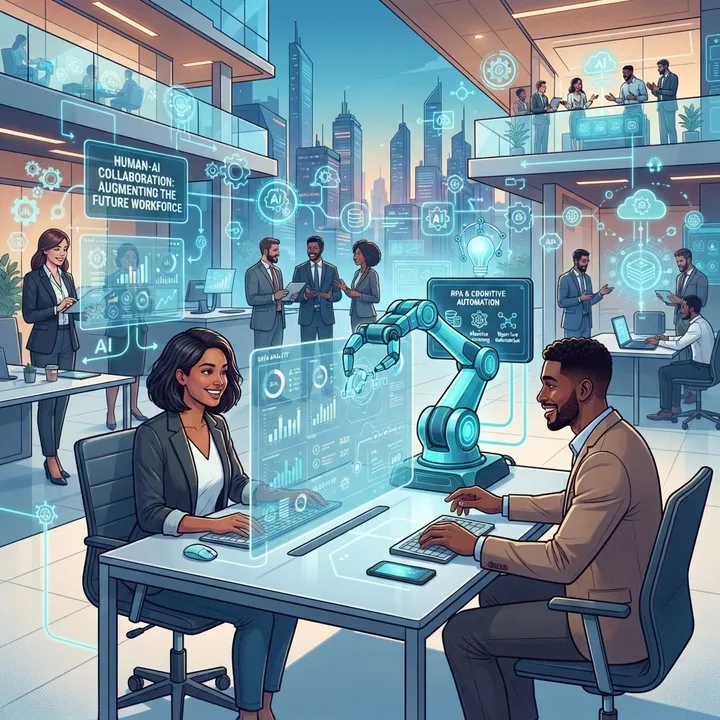
The MIS graduates most at risk are those who refuse to adopt AI. The ones who thrive treat AI as a productivity multiplier, delegating repetitive work to machines while focusing their energy on judgment, strategy, and stakeholder communication. In practice, this augmentation model makes skilled MIS professionals more valuable, not less. Specialized firms like WebPeak's AI services build this augmentation mindset directly into how modern teams operate.
A Practical AI Roadmap for MIS Students
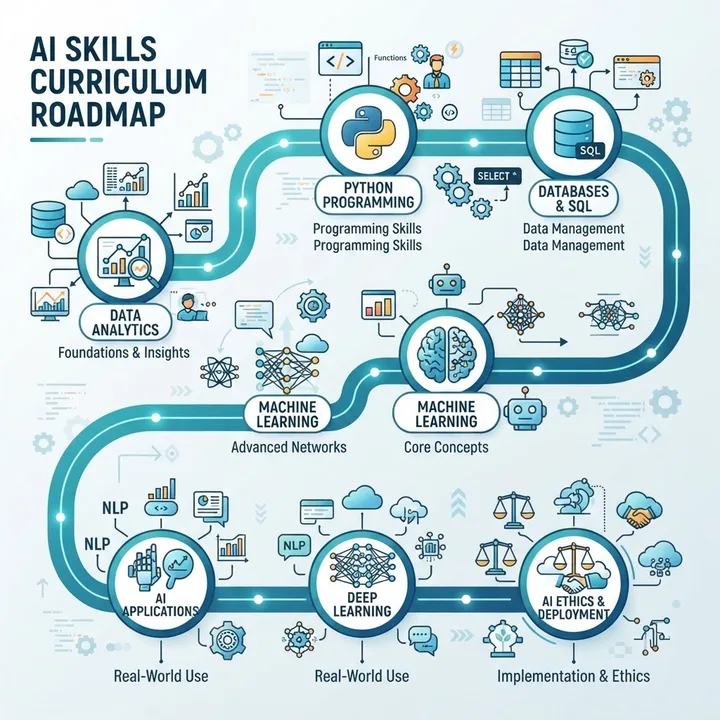
Here is a step-by-step plan to build AI readiness before graduation:
- Build a data foundation first. Master Excel, SQL, and basic statistics before touching advanced AI.
- Learn one programming language. Python is the standard for data and AI work.
- Take an applied machine learning course. Focus on business applications, not just theory.
- Complete real projects. Analyze a public dataset, build a dashboard, or automate a workflow, then document it.
- Earn a recognized certification. Cloud or analytics certifications signal credibility to employers.
- Practice AI ethics and communication. Learn to explain results clearly and responsibly.
- Stay current. Follow reputable AI sources and experiment with new tools monthly.
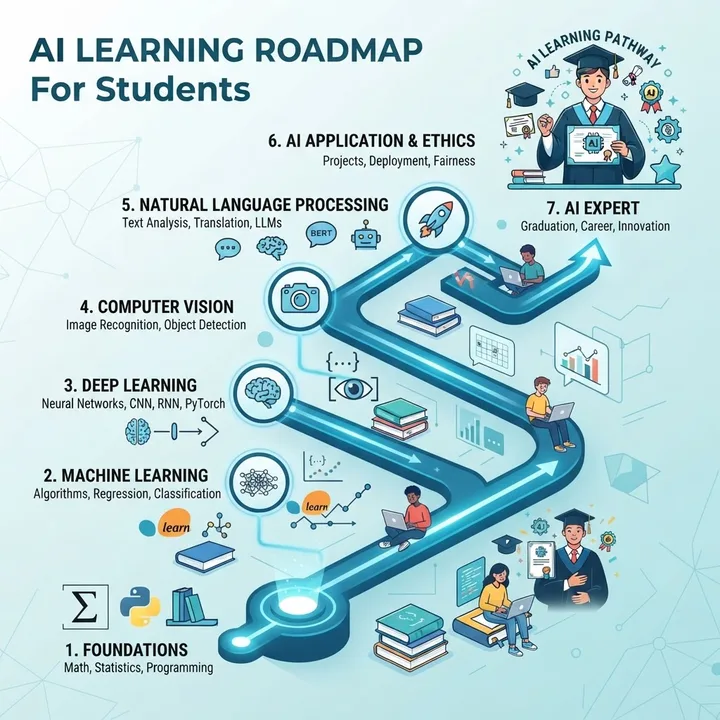
Following this roadmap consistently, even at a modest pace, will place students well ahead of peers who wait until after graduation to engage with AI.
Key Takeaways
- AI is transforming, not eliminating, MIS careers by automating routine tasks and elevating strategic, insight-driven roles.
- The World Economic Forum reports 75% of companies plan to adopt AI by 2027, driving demand for AI-literate business professionals.
- The most valuable MIS graduates combine technical skills (SQL, Python, analytics) with business judgment and communication.
- Predictive and prescriptive analytics are the fastest-growing areas where MIS graduates add value.
- A deliberate roadmap of data skills, projects, certifications, and continuous learning future-proofs any MIS student.
Frequently Asked Questions (FAQ)
Will AI replace MIS jobs in the future?
No, AI is unlikely to replace MIS jobs entirely. It automates repetitive tasks like reporting and data cleaning while creating new roles in analytics, AI product management, and data engineering. MIS graduates who learn to work alongside AI tools will become more valuable and more employable, not less.
What AI skills should MIS students learn first?
Start with data fundamentals: Excel, SQL, and basic statistics. Then learn Python and data visualization tools like Power BI or Tableau. Add a beginner machine learning course focused on business use cases. These skills give MIS students the strongest and most immediately marketable foundation for AI-driven roles.
Is MIS a good major in the age of AI?
Yes, MIS is an excellent major in the AI era. It uniquely blends business understanding with technology skills, producing professionals who can translate AI insights into strategic decisions. As companies rush to adopt AI, they need exactly these bridge-builders, making MIS graduates highly relevant and competitively positioned.
How can MIS students use AI tools right now?
MIS students can use generative AI assistants like ChatGPT for research and drafting, Power BI for AI-assisted analytics, and Python libraries for data analysis. Practicing on real datasets and automating small workflows builds practical experience that employers value far more than theoretical knowledge alone.
What careers can MIS students pursue with AI knowledge?
With AI knowledge, MIS graduates can pursue roles like AI business analyst, data engineer, machine learning analyst, AI product manager, and digital transformation consultant. These positions reward the MIS combination of business fluency and technical comfort, and they typically offer strong salary growth and long-term career stability.
The future of MIS belongs to students who treat AI as a core competency rather than an optional add-on. By building data skills, mastering key tools, and adopting a mindset of continuous learning, today's MIS students can position themselves as the strategic intelligence leaders every organization will need.