A practical 2026 comparison of enterprise agentic AI platforms, covering orchestration, governance, cost, and integration depth. Learn which platform fits your stack and how to run a 30-day evaluation before signing a contract.
Agentic AI Enterprise Platforms Comparison 2026 — Which One to Pick
Enterprise buyers are no longer asking whether agentic AI works. They are asking which platform will not trap them in a dead-end architecture two budget cycles from now. That is a harder question, because every vendor in 2026 uses the same vocabulary — agents, orchestration, guardrails, observability — while delivering wildly different engineering realities underneath.
This comparison is written from the perspective of teams who have actually deployed agents into production environments where a wrong action costs money. It focuses on the five decision factors that reliably predict success, then walks through the platform categories, a side-by-side table, and a 30-day evaluation you can run before committing spend.
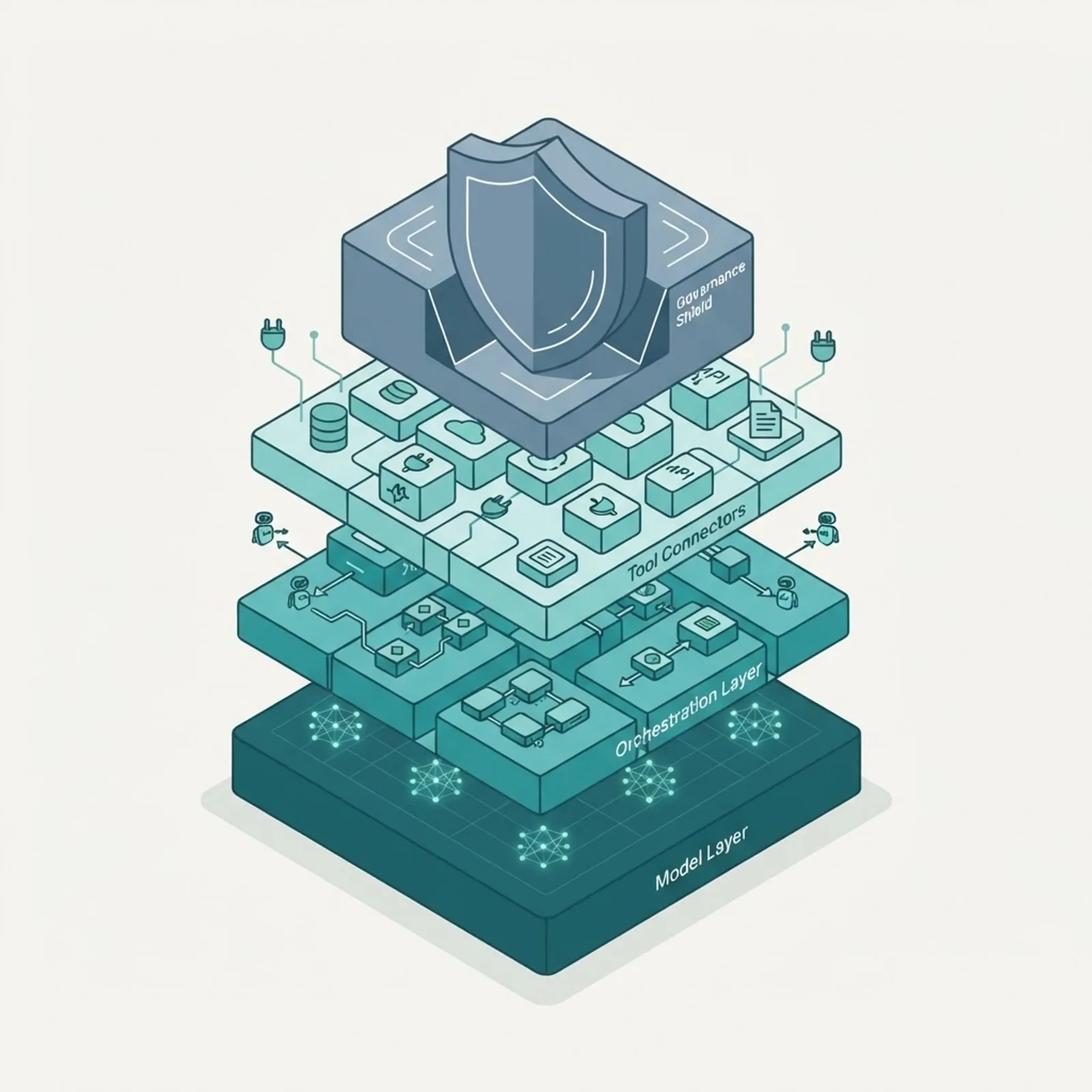
Quick Answer: Pick your agentic AI platform by integration depth, not model quality. Choose Microsoft Copilot Studio if you run Microsoft 365, Salesforce Agentforce for CRM-led revenue work, Google Vertex AI Agent Builder for data-heavy analytics, AWS Bedrock AgentCore for regulated AWS workloads, and LangGraph or CrewAI when you need full engineering control.
What Makes a Platform Genuinely Agentic in 2026
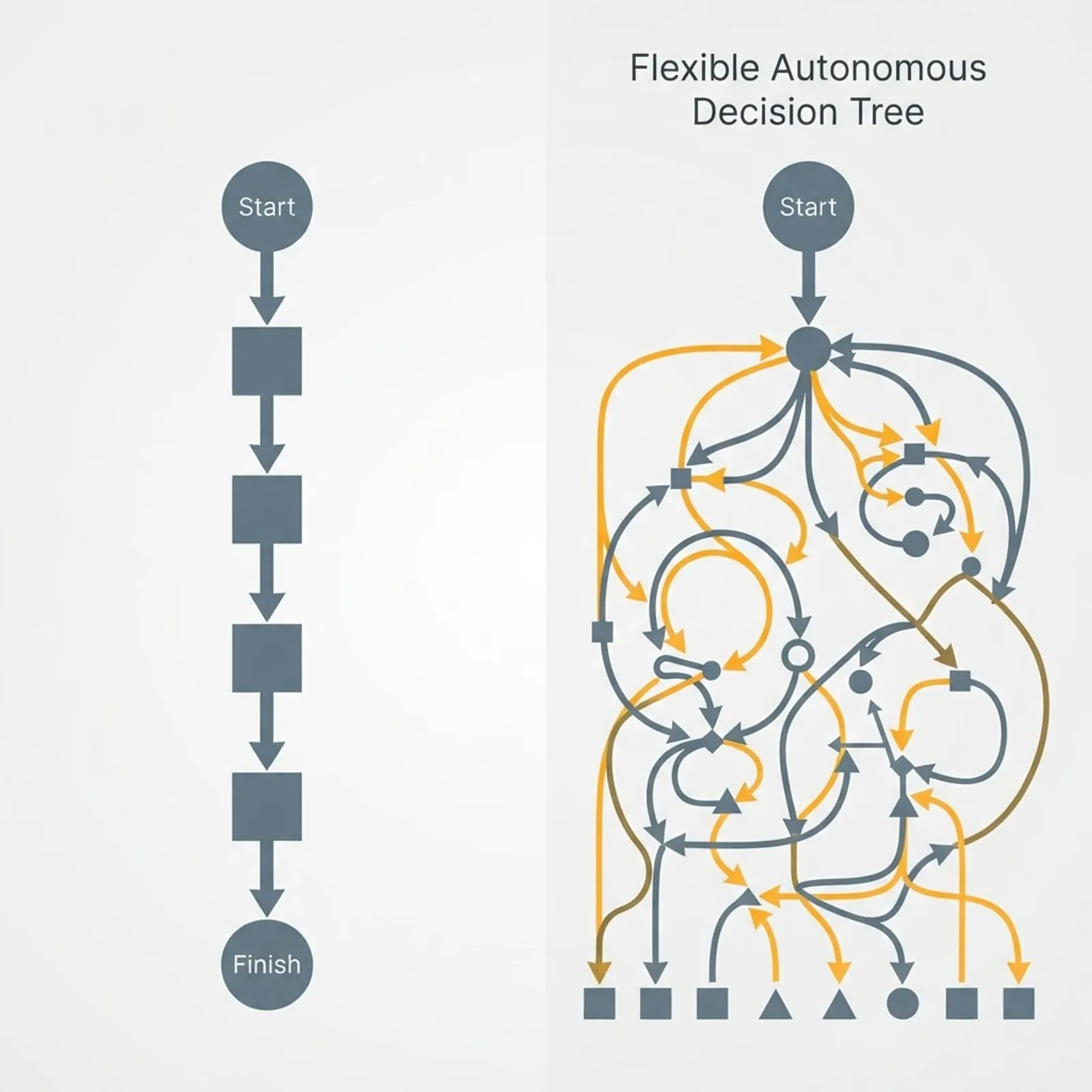
Definition: An agentic AI platform is software that lets a language model plan multi-step work, call external tools and systems, evaluate the results of its own actions, and retry or escalate — all under explicit permission and audit controls set by the organization.
That definition matters commercially. A chatbot that answers questions from a knowledge base is retrieval, not agency. A workflow builder that runs a fixed if-then chain is automation, not agency. The dividing line is whether the system chooses its own sequence of steps at runtime.
Three capabilities separate real platforms from repackaged chatbots:
- Stateful execution. The agent can pause mid-task, wait for an approval or an external event, then resume with full context intact. Without durability, any long-running process breaks on the first restart.
- Tool permissioning per identity. The agent inherits the acting user's permissions rather than a single omnipotent service account.
- Step-level observability. You can replay the exact reasoning, tool inputs, and tool outputs of any past run for audit or debugging.
If a vendor cannot demonstrate all three in a live technical session, treat the product as a pilot toy rather than a production platform.
The Market Reality: Adoption Is High, Value Capture Is Not
According to McKinsey's State of AI research, 78 percent of organizations report using AI in at least one business function, yet only a small minority report enterprise-level EBIT impact from it. Gartner's widely cited 2025 forecast added a sharper warning: over 40 percent of agentic AI projects are expected to be cancelled before the end of 2027, largely due to unclear business value and escalating costs.
The honest reading of those two data points is that platform choice is a risk-management decision more than a capability decision. Most failures we have reviewed were not caused by weak models. They were caused by agents that could not reach the systems where the work actually lives, or by governance gaps that forced security teams to revoke access after launch.
That is why the comparison below weights integration depth and governance far more heavily than benchmark scores.
The Five Factors That Actually Predict Success
1. Integration Depth With Your System of Record
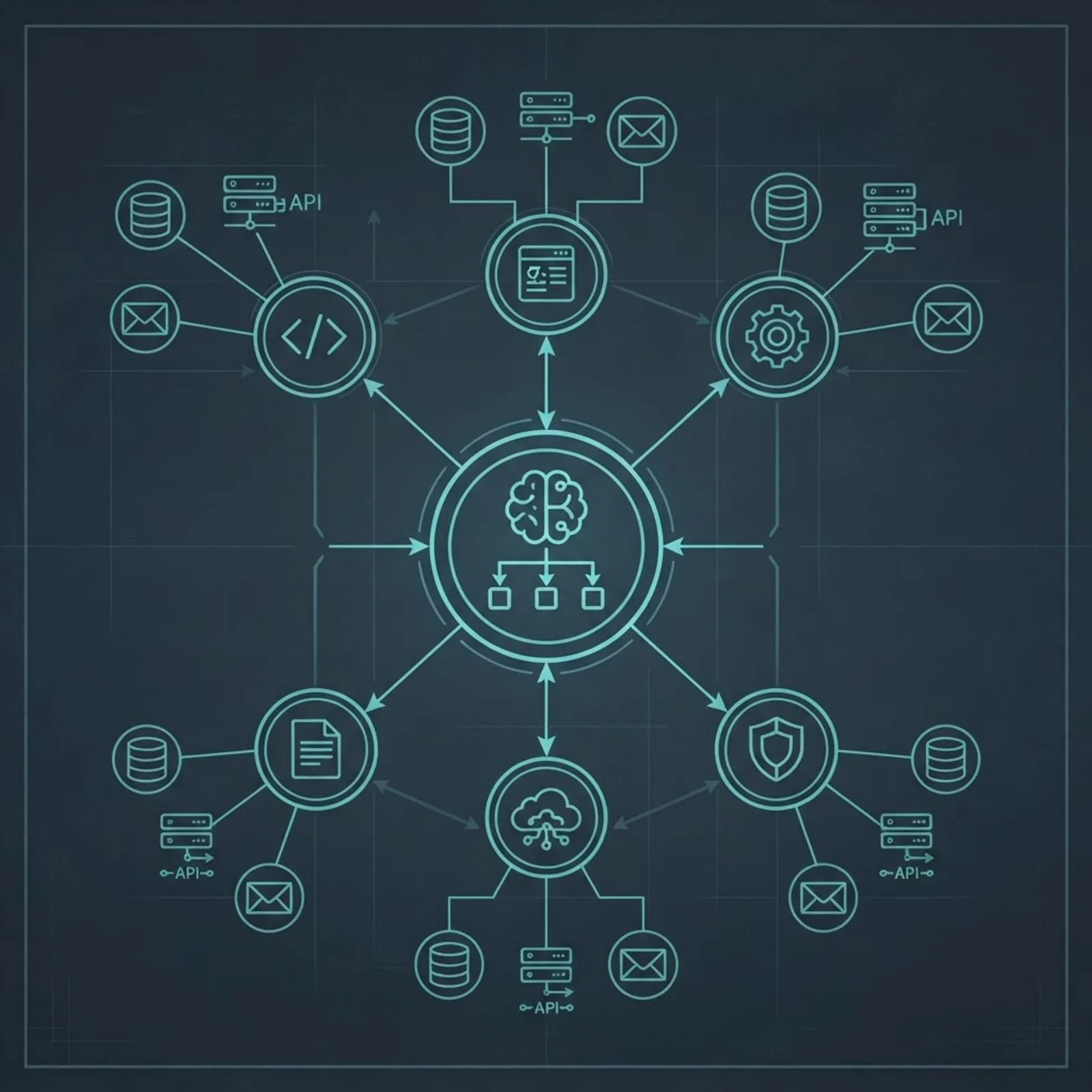
An agent is only as useful as the systems it can act inside. If 80 percent of your customer context sits in Salesforce, a platform with native CRM object awareness will outperform a technically superior framework that needs six months of custom connector work.
Practical test: ask the vendor to update a record in your CRM, attach the evidence, and log the action — live, during the demo, in a sandbox tenant.
2. Orchestration Model
Single-agent systems are easier to reason about and cheaper to run. Multi-agent systems handle broader work but multiply failure modes. In our experience, teams should start with one supervised agent per business process and only add specialist sub-agents when a single agent's tool list exceeds roughly a dozen functions and accuracy starts degrading.
3. Governance and Human-in-the-Loop Controls
The most common post-launch blocker is not hallucination. It is the absence of a documented approval gate for irreversible actions such as issuing refunds, sending external email, or modifying production data. Require native support for action-level approval thresholds, not a custom-coded workaround.
4. Cost Predictability
Agentic workloads consume dramatically more tokens than chat, because every planning step, tool result, and self-check re-enters the context window. A task that costs a fraction of a cent as a single completion can cost 30 to 60 times more as a ten-step agent run. Insist on per-task cost telemetry, not monthly aggregate billing.
5. Exit Cost
Ask one question: if we leave, what do we keep? Prompt logic, tool definitions, and evaluation datasets should be exportable. Platforms that encode business logic in proprietary visual canvases carry the highest switching cost.
Platform Comparison Table
| Platform | Best Fit | Orchestration | Governance Maturity | Engineering Effort | Lock-In Risk |
|---|---|---|---|---|---|
| Microsoft Copilot Studio | Microsoft 365 and Teams-centric enterprises | Single and multi-agent | High (Entra ID, Purview) | Low | Medium |
| Salesforce Agentforce | Sales, service, and revenue operations | Topic-based multi-agent | High (native audit trail) | Low | High |
| Google Vertex AI Agent Builder | Data, analytics, and BigQuery-heavy teams | Multi-agent with ADK | High (IAM, VPC-SC) | Medium | Medium |
| AWS Bedrock AgentCore | Regulated workloads already on AWS | Supervisor and collaborator | High (IAM, private networking) | Medium | Medium |
| LangGraph | Custom logic and complex state machines | Graph-based, fully explicit | Build it yourself | High | Low |
| CrewAI | Fast role-based agent prototypes | Role and crew based | Build it yourself | Medium | Low |
| ServiceNow AI Agents | IT service management and internal ops | Workflow-anchored | High | Low | High |
Platform-by-Platform Guidance
Microsoft Copilot Studio
Pick it when your identity layer is Entra ID and your work happens in Teams, Outlook, and SharePoint. The decisive advantage is that permissioning and data loss prevention are inherited from tooling your security team already trusts, which shortens approval cycles dramatically. The trade-off is that complex conditional logic becomes awkward inside the visual designer.
Salesforce Agentforce
Pick it for customer-facing revenue and service processes where CRM data is the source of truth. Native grounding against Salesforce objects removes the single largest cause of agent inaccuracy: stale or partial context. The caution is commercial — consumption-based pricing on high-volume service queues needs modeling before rollout, and business logic written here rarely travels elsewhere.
Google Vertex AI Agent Builder
Pick it when the hard part of your problem is data rather than conversation. Agents that query warehouses, reconcile datasets, and produce analytical output benefit from proximity to BigQuery and strong evaluation tooling. Expect to write real code.
AWS Bedrock AgentCore
Pick it for regulated environments where network isolation, private model access, and fine-grained IAM are non-negotiable. It is the strongest choice for financial services and healthcare teams already standardized on AWS. Developer ergonomics lag the leaders, so budget engineering time accordingly.
LangGraph and CrewAI
Pick an open framework when your differentiator is the agent logic itself, or when you must remain portable across model providers. LangGraph gives explicit control over state and branching, which makes it the most debuggable option for genuinely complex processes. CrewAI is faster to a working prototype. Both require you to build observability, evaluation, and access control yourself — realistically a dedicated platform team.
Teams without that capacity in-house often pair a framework with an implementation partner. Specialist groups such as ZoneTechify and WebPeak typically handle the integration and governance scaffolding that vendors leave as an exercise for the buyer; if you need that build-out, their artificial intelligence services cover agent architecture, tool integration, and evaluation setup.

The 30-Day Evaluation That Prevents Expensive Mistakes
Run this before signing anything. It is deliberately narrow, because broad pilots produce ambiguous results.
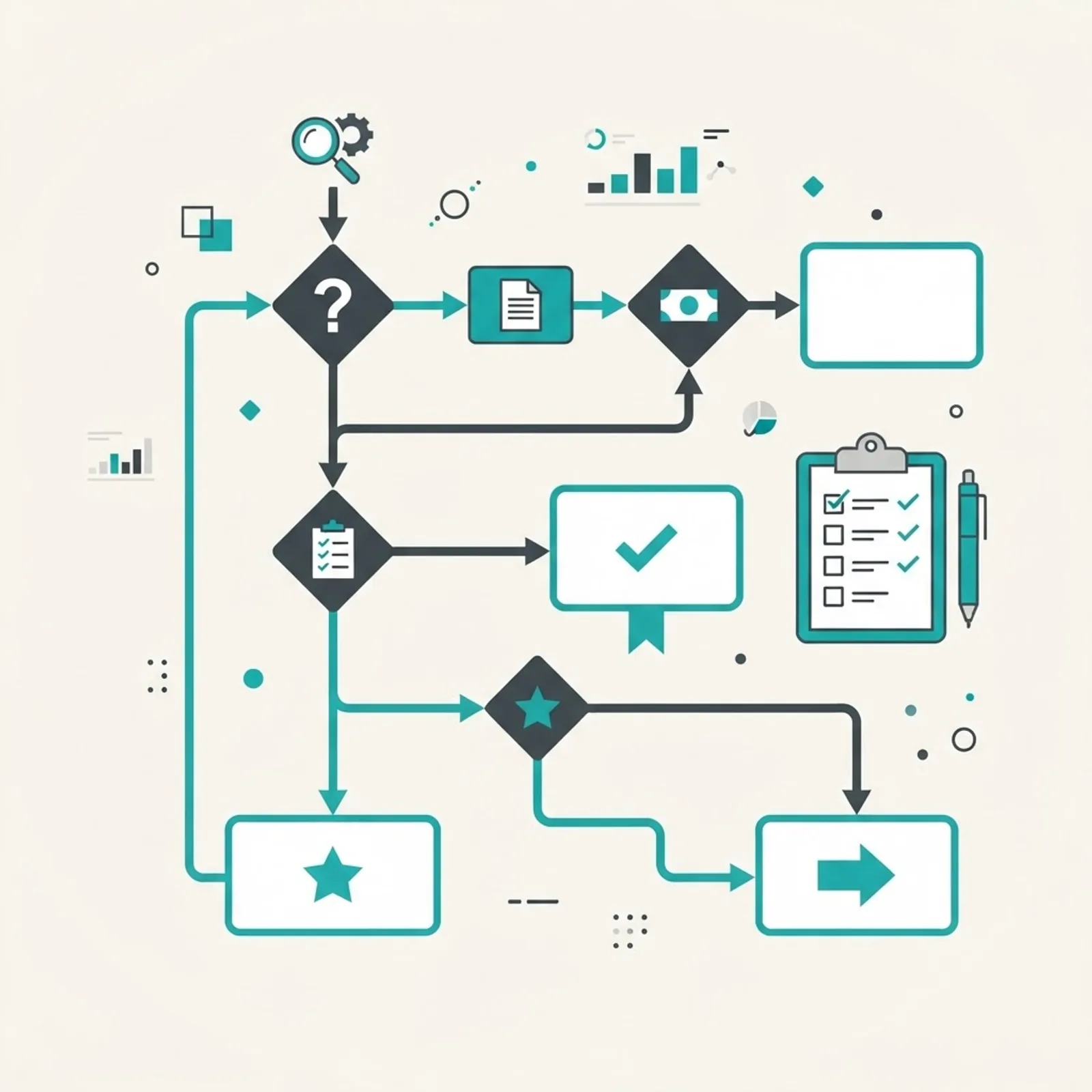
- Days 1 to 3 — Pick one measurable process. Choose something with a known baseline: average handling time, cost per ticket, or hours per report. Ambiguous scope is the top predictor of a cancelled project.
- Days 4 to 10 — Build the same agent on two shortlisted platforms. Identical scope, identical tools, identical success criteria.
- Days 11 to 20 — Run 100 real historical cases through both. Score task completion, correctness, escalation rate, and cost per completed task.
- Days 21 to 25 — Break them deliberately. Feed malformed inputs, revoke a tool mid-run, and attempt a prompt injection. Note which platform fails safely.
- Days 26 to 30 — Review the audit trail with security and compliance. If they cannot reconstruct what happened from native logs, the platform is not ready for your environment.
A platform that completes 70 percent of tasks correctly with clean escalation is more valuable than one that claims 90 percent but fails silently.
Measuring Return Honestly
Track four numbers from day one: cost per completed task, task completion rate without human intervention, time to resolution, and escalation quality. Vendor dashboards emphasize usage volume, which measures activity rather than value.
The pattern we see repeatedly is that value concentrates in narrow, high-frequency processes — invoice matching, tier-one support triage, lead enrichment, contract data extraction. Broad assistant deployments generate enthusiasm and very little measurable margin.
Key Takeaways
- Integration depth with your system of record predicts agent success more reliably than model benchmark performance.
- Gartner forecasts that more than 40 percent of agentic AI projects will be cancelled before the end of 2027, mainly due to unclear value and cost escalation.
- McKinsey reports 78 percent of organizations use AI in at least one function, while enterprise-level financial impact remains rare.
- Agentic workloads can cost 30 to 60 times a single completion, so per-task cost telemetry is mandatory.
- Start with one supervised agent per process; add sub-agents only when the tool list exceeds roughly twelve functions.
- Require stateful execution, identity-scoped tool permissions, and step-level replay before calling a platform production-ready.
- Evaluate exit cost by asking what prompt logic, tool definitions, and evaluation data you can export.
Frequently Asked Questions (FAQ)
What is the best agentic AI platform for enterprises in 2026?
There is no single best platform. The strongest choice is the one closest to your system of record: Copilot Studio for Microsoft 365 environments, Agentforce for CRM-driven revenue work, Vertex AI for analytics-heavy problems, Bedrock AgentCore for regulated AWS estates, and LangGraph when you need full engineering control.
How much does an agentic AI platform actually cost?
Pricing usually combines a platform subscription with consumption-based charges for agent actions and tokens. Because agents re-enter context on every reasoning step, a single task can cost dozens of times a basic completion. Model cost per completed task on real historical volume, never on demo traffic.
Is agentic AI safe enough for regulated industries?
Yes, when scoped carefully. Regulated deployments succeed by combining read-only tools for research, mandatory human approval for irreversible actions, private network access to models, and complete step-level audit logs. Start with recommendation-only agents, then expand write permissions once accuracy and logging are proven.
Should we build with an open framework or buy a vendor platform?
Buy when your processes live inside a major suite and speed matters most. Build with LangGraph or CrewAI when agent logic is your differentiator or portability is strategic. Building realistically requires a dedicated team to supply observability, evaluation, and access control the vendor would otherwise provide.
How long does it take to get an agent into production?
A narrow, well-scoped agent on a suite platform typically reaches production in six to twelve weeks, most of which is spent on integration testing and security review rather than prompt work. Custom framework builds with multiple tool integrations commonly take three to six months.
What is the difference between an AI agent and workflow automation?
Workflow automation executes a predefined sequence you designed in advance. An AI agent decides its own sequence at runtime, chooses which tools to call, checks its own output, and retries or escalates. Agents handle variability; automation handles repetition more cheaply and predictably.