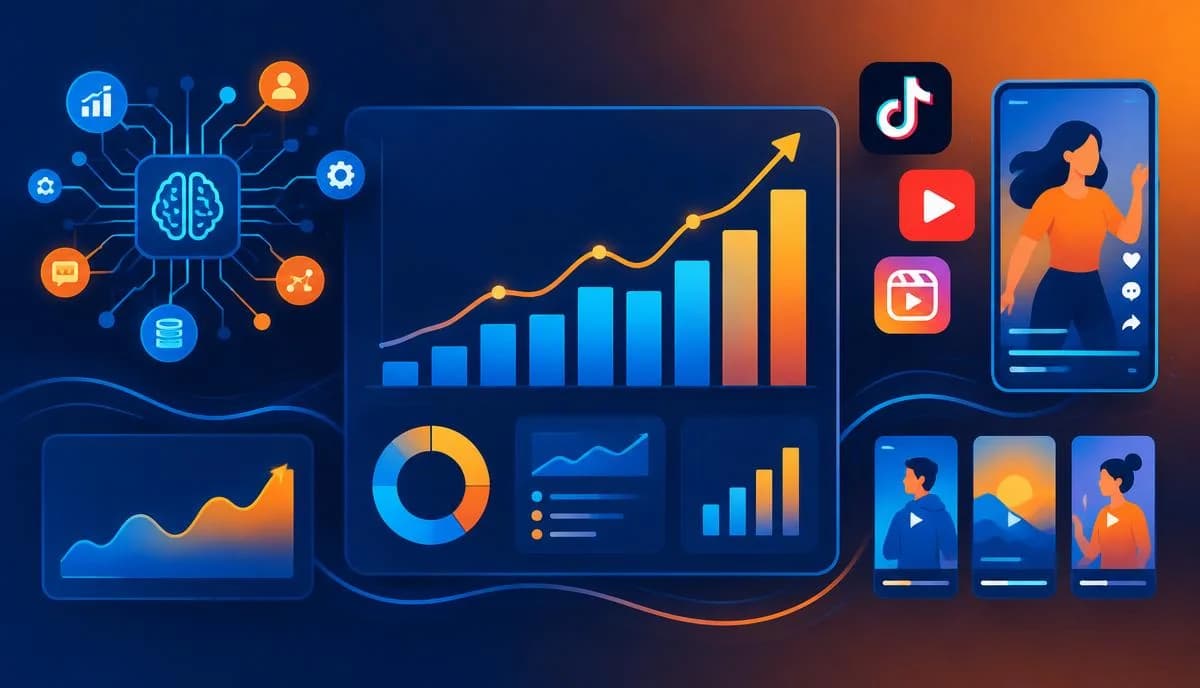
An overview of the top digital marketing trends in 2024, including AI, first-party data, short-form video, and evolving search behavior.
Digital Marketing Trends 2024
Digital marketing continues to evolve faster than most businesses can comfortably keep up with, and 2024 has proven to be a year of real, structural shifts rather than minor tweaks. Artificial intelligence moved from novelty to daily workflow tool, privacy regulations reshaped how marketers collect and use data, and consumer attention fragmented further across short-form video, private communities, and search alternatives. Understanding which of these shifts matter for your business, and which are just noise, is the difference between staying competitive and falling behind.
This roundup focuses on the trends that practitioners are actually seeing move the needle in campaigns this year, not speculative predictions. From AI-assisted content production to the decline of third-party cookies, each shift discussed here has practical implications for how marketing teams should allocate budget and attention for the rest of the year and into 2025.
Quick Answer: The biggest digital marketing trends of 2024 are AI-assisted content and personalization, the shift to first-party data due to cookie deprecation, short-form video dominance, zero-click search optimization, and a renewed focus on smart digital experiences that build trust rather than just capture clicks.
1. AI Moves From Experiment to Everyday Tool
Generative AI tools have become standard equipment in most marketing departments rather than an experimental side project. Teams are using AI for first-draft content, ad copy variations, image generation, and increasingly for analyzing customer data to spot patterns humans might miss.
Practitioners generally agree the winners in this space are not the businesses using AI the most, but those using it most strategically, pairing AI-generated drafts with human editing, brand voice checks, and fact verification. Search engines have also signaled repeatedly that content quality and usefulness matter more than how it was produced, which means low-effort AI content farms are increasingly being filtered out of search results.
Practical AI Applications Marketers Are Using Now
- Drafting first versions of blog posts and email campaigns for human refinement
- Generating multiple ad copy variants for rapid A/B testing
- Summarizing customer feedback and support tickets to find messaging gaps
- Personalizing on-site content and product recommendations at scale
2. First-Party Data and the End of Easy Tracking
The industry-wide move away from third-party cookies has forced marketers to rebuild how they collect and use customer data. Major browsers have continued restricting cross-site tracking, and privacy regulations across multiple regions have added further constraints on how data can be collected and used.
This has pushed a clear trend toward first-party data strategies: building owned email and SMS lists, using zero-party data collected directly through quizzes and preference centers, and investing in customer relationship management systems that keep data in-house. Businesses that built these owned channels early are now seeing a measurable advantage over those still relying heavily on third-party audience targeting.
3. Short-Form Video Still Dominates Attention
Short-form video remains one of the most reliable ways to reach new audiences in 2024. Platforms continue to prioritize this format in their algorithms, and consumer behavior data consistently shows short video content receiving disproportionately high engagement compared to static posts across nearly every major social platform.
Brands succeeding with short-form video in 2024 share a few common traits: they publish consistently rather than sporadically, they prioritize authenticity over high production value, and they repurpose long-form content into multiple short clips rather than creating everything from scratch.
4. Search Behavior Is Changing Significantly
Search engines have increasingly incorporated AI-generated summaries directly into results pages, meaning fewer users click through to websites for simple informational queries. This "zero-click search" trend means marketers need to rethink how they measure SEO success, focusing less purely on click volume and more on brand visibility, structured data optimization, and answering questions thoroughly enough to be cited as a trusted source.
Businesses adapting well to this shift are optimizing content specifically to be clear, well-structured, and easy for both humans and AI systems to parse, often through the same clean writing practices that have always supported good SEO.
5. Smart Digital Experiences Replace One-Off Campaigns
Consumers increasingly expect connected, personalized experiences rather than disjointed campaigns across separate channels. This has driven demand for what many in the industry now describe as smart digital experiences, tools and platforms discussed at length in resources like this overview from zonetechify.com, where personalization, automation, and consistent messaging work together across a customer's entire journey rather than in isolated touchpoints.
This trend reflects a broader maturity in digital marketing: businesses are being judged less on individual ad clicks and more on the overall coherence and quality of the experience a customer has, from first search to post-purchase follow-up.
Comparing Key Trends by Business Impact
| Trend | Primary Benefit | Implementation Difficulty | Best Fit For |
|---|---|---|---|
| AI-assisted content | Speed and scale | Low to moderate | Most businesses |
| First-party data strategy | Long-term audience ownership | Moderate to high | E-commerce and service businesses |
| Short-form video | Reach and brand awareness | Low | Consumer brands |
| Zero-click search optimization | Brand authority and visibility | Moderate | Content-heavy businesses |
| Connected digital experiences | Customer retention and loyalty | High | Growing and established brands |
What This Means for Marketing Budgets
Marketing teams following these trends closely, including specialists at agencies like WebPeak, generally recommend shifting a meaningful share of budget away from purely acquisition-focused spend and toward owned channels and experience quality. This does not mean abandoning paid advertising, but rather balancing it more deliberately with retention and first-party data infrastructure that will matter even more as third-party tracking continues to erode.
Smaller businesses without large budgets should prioritize the lowest-cost, highest-leverage moves first: setting up an email list with a genuine value exchange, publishing consistent short-form video, and ensuring website content is genuinely useful rather than optimized purely for keywords.
Common Mistakes to Avoid in 2024
- Over-relying on AI without human review, which risks generic or inaccurate content reaching customers
- Ignoring first-party data collection until third-party tracking fully breaks, leaving no fallback
- Treating short-form video as a one-off experiment rather than a consistent publishing habit
- Chasing every new platform or trend instead of mastering two or three channels deeply
- Measuring SEO success by clicks alone, missing the growing value of brand visibility in AI-generated answers
Key Takeaways
- AI is now a standard marketing tool, but strategic human oversight still separates strong campaigns from weak ones
- First-party data collection has become essential as third-party cookies and cross-site tracking continue to decline
- Short-form video remains one of the highest-return content formats across nearly every platform in 2024
- Zero-click search results mean SEO success must be measured beyond simple click-through volume
- Connected, personalized customer experiences are replacing isolated marketing campaigns as the industry standard
Frequently Asked Questions (FAQ)
What is the biggest digital marketing trend right now?
The most significant shift in 2024 is the widespread integration of AI into everyday marketing workflows, from content drafting to personalization. Combined with the decline of third-party tracking, businesses are being forced to rethink both how they create content and how they collect customer data responsibly.
Do I still need SEO if AI search summaries are taking over?
Yes, SEO remains essential, but its goals are shifting. Instead of optimizing purely for clicks, businesses should focus on being cited as a trustworthy source within AI-generated summaries, which still requires strong, well-structured, genuinely useful content that search engines can easily understand.
Is short-form video worth it for a B2B business?
Yes, though the approach differs from consumer brands. B2B short-form video works best when it demystifies complex products, shares quick customer insights, or offers behind-the-scenes looks at company culture, rather than trying to mimic viral consumer trends directly.
How worried should small businesses be about losing third-party cookies?
Small businesses relying heavily on third-party ad targeting should be concerned enough to act now. Building an email list, collecting first-party data through your own website, and diversifying traffic sources will protect you from the ongoing decline in cross-site tracking capabilities.
How can a small business start using AI in marketing without messing it up?
Start small: use AI for first drafts, brainstorming, or repetitive tasks like summarizing feedback, then always have a human review and adjust the output for accuracy and brand voice. Avoid publishing AI content directly without edits, since unedited output often reads generic.
What should marketing teams prioritize for the rest of 2024?
Teams should prioritize first-party data infrastructure, consistent short-form video publishing, and content built to satisfy both human readers and AI search systems. These three areas currently offer the strongest return relative to effort compared to chasing every emerging platform or tool.
The Growing Role of Privacy-First Marketing
Beyond the well-known cookie deprecation story, 2024 has also seen consumers become noticeably more selective about which brands they trust with personal data. Surveys from consumer research organizations have repeatedly found that a majority of people say they would stop doing business with a company after a data privacy violation, and that trust in how a brand handles personal information now factors directly into purchase decisions.
This has pushed privacy-first marketing from a compliance checkbox into an actual selling point. Brands that clearly explain what data they collect, why, and how customers benefit from sharing it are seeing stronger opt-in rates for email and SMS programs compared to those relying on vague or hidden data practices.
Building Trust Through Transparency
- Clearly state what data is collected at the point of signup rather than burying it in lengthy privacy policies
- Offer a genuine value exchange, such as useful content or discounts, for data shared voluntarily
- Give customers an easy way to view and manage their own data preferences
- Avoid dark patterns like pre-checked opt-ins or confusing unsubscribe flows
Emerging Channels Worth Watching
While AI, video, and first-party data dominate the conversation, a few smaller trends are worth monitoring heading into 2025. Voice search continues to grow steadily, particularly for local and conversational queries, which reinforces the value of clear, natural-language content. Retail media networks, where brands advertise directly within large retailers' own platforms, have expanded rapidly as e-commerce companies look for new first-party-data-friendly ad inventory. Community-driven marketing, including private groups and niche online forums, is also regaining relevance as consumers seek more authentic spaces away from heavily algorithm-driven feeds.
None of these channels require abandoning the core priorities discussed above, but businesses with room in their budget should treat 2024 as a good year to test small, controlled experiments in these areas before committing significant resources.