A practical guide to custom .NET development services, covering architecture choices, real costs, integration patterns, security requirements, and how to hire the right team.
Custom .NET Development Services
Custom .NET development services exist for one reason: off-the-shelf software eventually stops matching how a business actually operates. When a distributor needs pricing logic no ERP module supports, or a clinic needs scheduling that respects regulatory workflows, packaged software forces the business to bend. Custom .NET flips that. You get an application built around your process, running on a runtime Microsoft ships with long-term support and a security patch cadence measured in weeks, not years.
This guide is written from the perspective of teams who ship and maintain .NET systems in production. It covers what these services include, how architecture decisions affect your cost three years out, what integration actually looks like, and the questions that separate a competent vendor from an expensive one.
Quick Answer: Custom .NET development services are engineering engagements that design, build, and maintain bespoke applications on Microsoft's .NET platform using C# and ASP.NET Core. They cover architecture, APIs, databases, cloud deployment, security, and support, delivering software tailored to workflows that off-the-shelf products cannot handle.
What Custom .NET Development Services Actually Include
A credible .NET engagement is broader than writing C#. It typically spans six deliverables: discovery and domain modeling, solution architecture, application development, data layer design, deployment automation, and ongoing maintenance. Vendors who quote only the third item are the ones whose projects overrun.
Definition worth being precise about: .NET is the cross-platform runtime and framework family (currently .NET 8 and .NET 9, with .NET 8 as the long-term support release supported through November 2026). ASP.NET Core is the web framework inside it. .NET Framework 4.8 is the older Windows-only lineage that still runs a large share of enterprise software and receives security fixes but no new features. Knowing which one a proposal targets matters more than any other line in the document, because it determines your hosting options, your hiring pool, and your migration bill later.
Signals That You Genuinely Need Custom Work
- You maintain three or more spreadsheets that reconcile data between systems.
- A SaaS subscription is being paid for one feature while five are unused.
- Your competitive advantage lives in a process no vendor sells.
- Compliance requires data residency or audit trails your current tool cannot produce.
- Per-seat licensing now costs more annually than a build would amortize over three years.
If none of these apply, configuring an existing platform is the honest answer, and a good partner will tell you so.
Why Teams Still Choose .NET in 2026
.NET remains one of the most used developer platforms worldwide. In the Stack Overflow Developer Survey, .NET has consistently ranked as the most used "other framework and library" category, used by roughly a third of professional developers, and TechEmpower benchmark rounds have placed ASP.NET Core among the highest-throughput mainstream web frameworks for years. Those two facts together explain the platform's staying power: you get performance close to specialised runtimes without shrinking your hiring pool.
The practical advantages that show up in delivery:
- One language across layers. C# covers the API, background workers, desktop, and mobile through .NET MAUI, so a single team can own the whole surface.
- Strong typing that scales. On codebases beyond roughly 50,000 lines, compile-time guarantees measurably reduce regression volume during refactors.
- First-class async. The async and await model in .NET handles high-concurrency I/O without callback complexity, which matters for anything hitting external APIs.
- Predictable upgrades. LTS releases arrive every two years with three years of support, so budget planning is not guesswork.
Architecture Decisions That Determine Your Total Cost
The single largest cost driver in a custom project is not hourly rate. It is architecture chosen for the wrong stage of company maturity. Distributed microservices for a 40-user internal tool multiply operational overhead without delivering any of the scaling benefit the pattern exists for.
A sequence that holds up in practice:
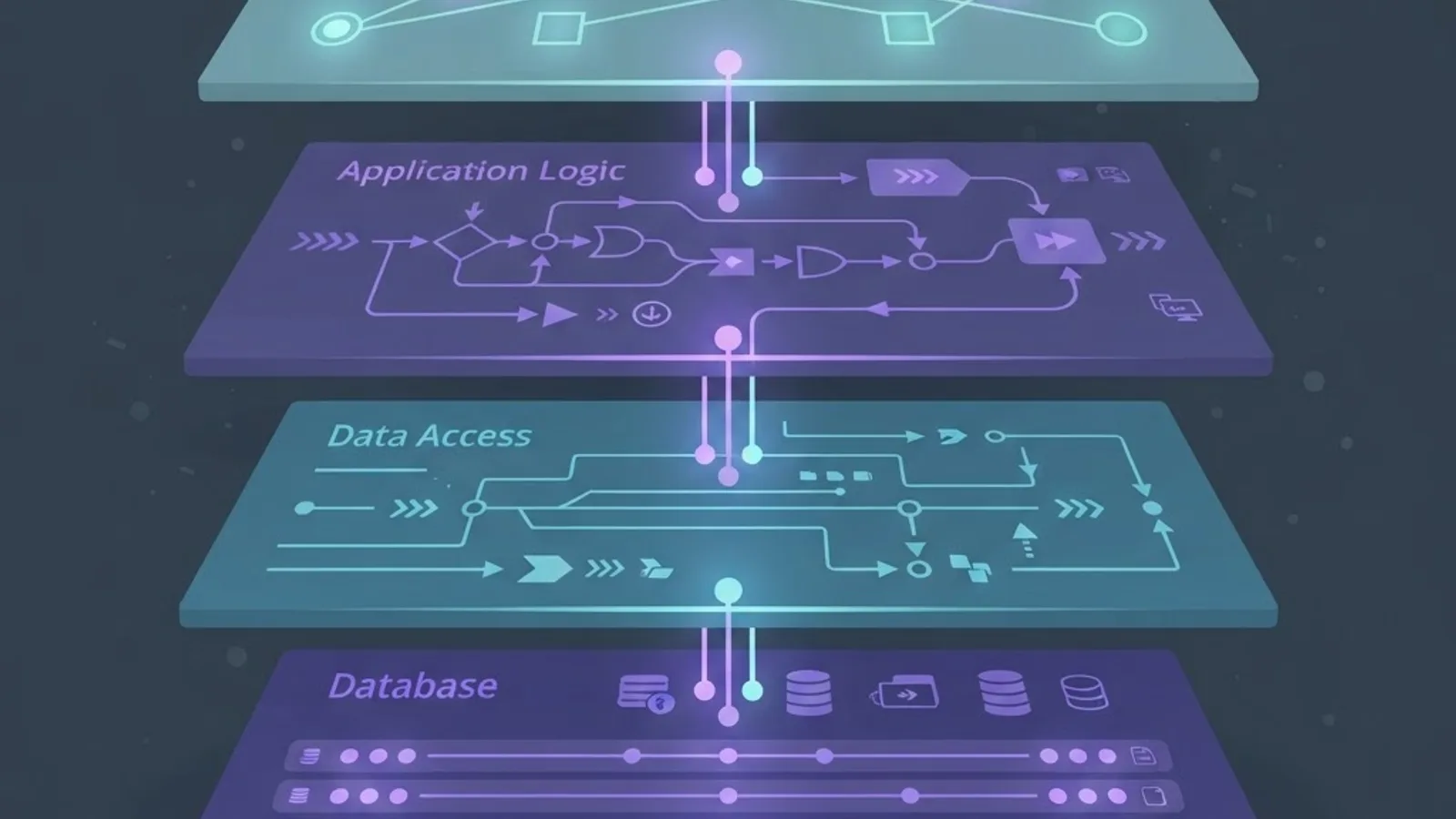
- Start with a modular monolith. One deployable unit, strict internal module boundaries, separate schemas per module. Deployment stays trivial, and the seams for later extraction are already drawn.
- Extract only under measured pressure. Split a module into a service when it has a genuinely different scaling profile or release cadence, not because a diagram looks better.
- Keep the data layer explicit. Entity Framework Core for standard CRUD, hand-written SQL or Dapper for reporting queries and hot paths. Mixing both deliberately beats forcing one everywhere.
- Make background work durable. Anything that can fail and must retry belongs in a queue-backed worker, not in a request thread.
Teams that specialise in this kind of staged architecture, such as the engineers at ZoneTechify, tend to open engagements with a boundary map rather than a technology list, which is the correct order.
Cost and Complexity by Application Type
| Application Type | Typical Timeline | Architecture Fit | Main Cost Driver |
|---|---|---|---|
| Internal admin or operations tool | 6 to 12 weeks | Modular monolith, single database | Business rule complexity |
| Customer portal with auth and billing | 3 to 5 months | Monolith plus background workers | Third-party integrations |
| Legacy .NET Framework modernisation | 4 to 9 months | Incremental strangler pattern | Undocumented existing logic |
| Multi-tenant SaaS product | 6 to 12 months | Modular monolith to selective services | Tenant isolation and billing |
| High-throughput data platform | 8 to 18 months | Services plus event streaming | Infrastructure and observability |
These ranges assume a senior team of three to five people working in short iterations with a decision-maker available weekly. Slow stakeholder feedback is the most common cause of timeline slip, and it is a client-side variable, not a vendor one.
How .NET Handles Integration and Legacy Systems
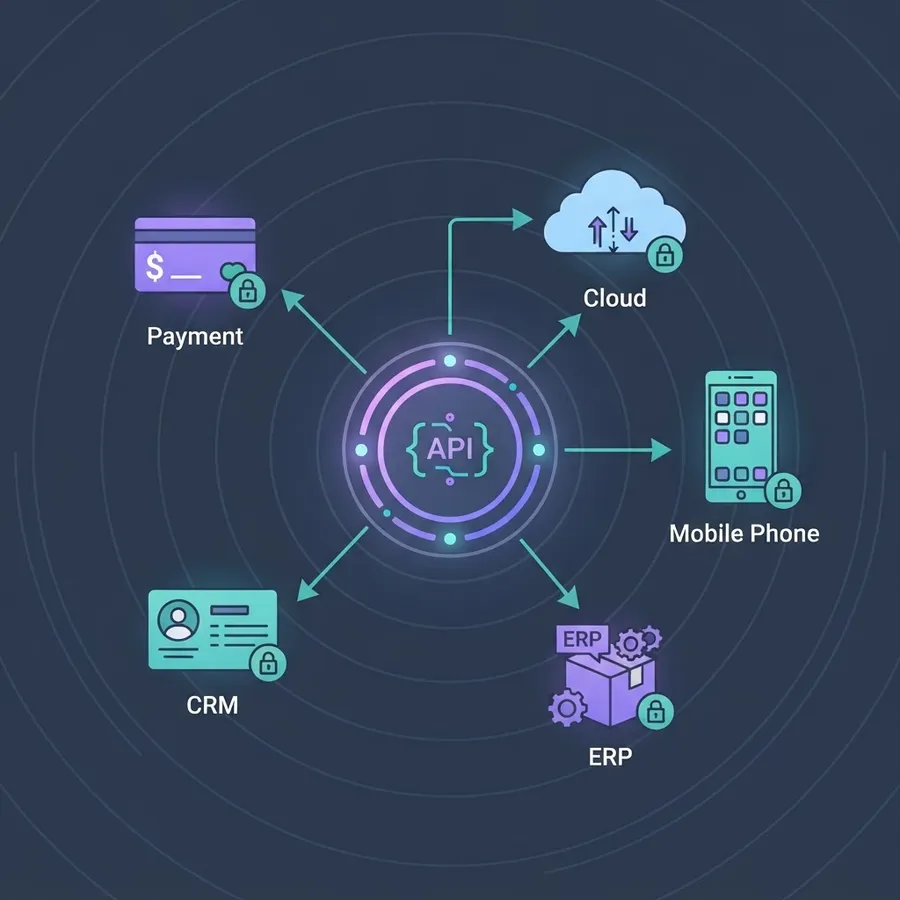
Most custom .NET projects are integration projects wearing a different name. The new application rarely owns all the data. It reads from an ERP, writes to an accounting system, syncs with a CRM, and talks to a payment provider, often while an older application still runs against the same database.
The pattern that works is the anti-corruption layer. Wrap every external system behind an interface your domain defines, translate their data shapes into yours at that boundary, and never let a vendor's schema quirks leak into your business logic. When that vendor changes an endpoint, you edit one adapter instead of forty call sites.
For modernising .NET Framework applications, incremental migration beats rewriting. Route traffic through a reverse proxy, move one feature at a time to ASP.NET Core behind it, and keep both running until the old application has nothing left to serve. Microsoft's own upgrade guidance follows this strangler approach for exactly one reason: a big-bang rewrite has no safe rollback.
Integration Checklist Before Development Starts
- Confirm API access, rate limits, and sandbox credentials for every external system in writing.
- Document which system is the source of truth for each shared entity.
- Decide sync direction and frequency per integration, then write it down.
- Plan for partial failure. Ask what the user sees when the CRM is down for two hours.
- Log every outbound call with a correlation ID so support can trace a single transaction end to end.
Security, Compliance, and What Non-Negotiable Means
Security in a custom .NET build is architectural, not a phase near launch. The 2021 OWASP Top 10 placed broken access control at number one, appearing in a large majority of applications tested, which tells you where review effort belongs.
Baseline expectations for any production .NET application:
- Authentication via a proven provider. ASP.NET Core Identity, Microsoft Entra ID, or a standards-compliant OIDC provider. Hand-rolled auth is a liability.
- Authorization enforced server-side, per resource. Every query that touches user-owned data filters by the authenticated identity. Hiding a button is not access control.
- Parameterized queries everywhere. Entity Framework Core does this by default; raw SQL must do it explicitly.
- Secrets outside source control. Environment configuration, Azure Key Vault, or an equivalent manager.
- Response headers and TLS. HSTS, nosniff, a referrer policy, and a content security policy you actually enforce rather than only report.
- Dependency scanning in CI. Known-vulnerable NuGet packages are the cheapest breach to prevent.

Choosing a Custom .NET Development Partner
Evaluate vendors on evidence, not stack familiarity. Every agency claims .NET expertise; far fewer can show a maintained system they built four years ago.
Ask these six questions and weigh how specifically they are answered:
- Which .NET version will this target, and why? A vendor who cannot justify LTS versus current has not thought about your maintenance window.
- Who exactly writes the code? Named senior engineers, or an unnamed pool. This distinction predicts quality more than price does.
- What does your test strategy cover? Look for integration tests around business rules, not a coverage percentage.
- How do you handle handover? Repository ownership, deployment runbooks, and architecture documentation should be contractual deliverables.
- What happens after launch? Warranty period, response times, and the hourly rate for changes should be defined before you sign.
- Can we speak to a client whose system you still maintain? Long-term references reveal what launch-day case studies hide.
Agencies that publish their engineering standards and team composition openly, including full stack development specialists who work across .NET and modern front-end stacks, are easier to assess than those who lead with logos.

Key Takeaways
- Custom .NET development services span discovery, architecture, build, integration, deployment, and maintenance. Quotes covering only the build phase are incomplete.
- .NET 8 is the current long-term support release, supported through November 2026, making it the default target for new production systems.
- ASP.NET Core ranks among the highest-throughput mainstream web frameworks in independent TechEmpower benchmarks, and .NET is used by roughly a third of professional developers surveyed by Stack Overflow.
- Start with a modular monolith and extract services only under measured scaling or release-cadence pressure.
- Broken access control is the most prevalent web application vulnerability per the OWASP Top 10, so server-side per-resource authorization deserves dedicated review.
- Modernise legacy .NET Framework applications incrementally with a strangler pattern rather than a single rewrite.
Frequently Asked Questions (FAQ)
How much do custom .NET development services cost?
Most custom .NET projects fall between 25,000 and 250,000 US dollars depending on scope. An internal operations tool sits at the low end; a multi-tenant SaaS product with billing and tenant isolation sits at the high end. Integration count and business rule complexity drive cost more than user numbers do.
How long does a custom .NET application take to build?
A focused internal tool ships in six to twelve weeks. A customer-facing portal with authentication, payments, and integrations takes three to five months. Legacy modernisation runs four to nine months because undocumented existing logic must be rediscovered before it can be safely replaced.
Should I use .NET 8 or .NET Framework for a new project?
Use .NET 8 or newer for anything new. It is cross-platform, faster, and actively developed with long-term support. Choose .NET Framework only when a hard dependency such as an old WCF service or a Windows-only COM component makes migration genuinely impossible right now.
Can custom .NET applications integrate with our existing ERP or CRM?
Yes. .NET has mature client libraries for SAP, Dynamics, Salesforce, and most major platforms, plus solid HTTP and message-queue support for everything else. Wrap each external system behind an adapter interface so vendor API changes affect one file instead of your whole codebase.
Is .NET a good choice for a startup or only for enterprises?
.NET works well for startups. Strong typing catches errors early, one language covers API and background jobs, and free hosting tiers exist on multiple clouds. The main trade-off is a smaller startup-ecosystem template library compared with Node.js, which matters less than long-term maintainability.
Who owns the source code after the project ends?
You should, and it must be written into the contract. Insist on repository ownership, deployment documentation, and architecture notes as named deliverables. If a vendor hesitates on code ownership or hosts your repository in an account you cannot access, treat that as a decisive warning.