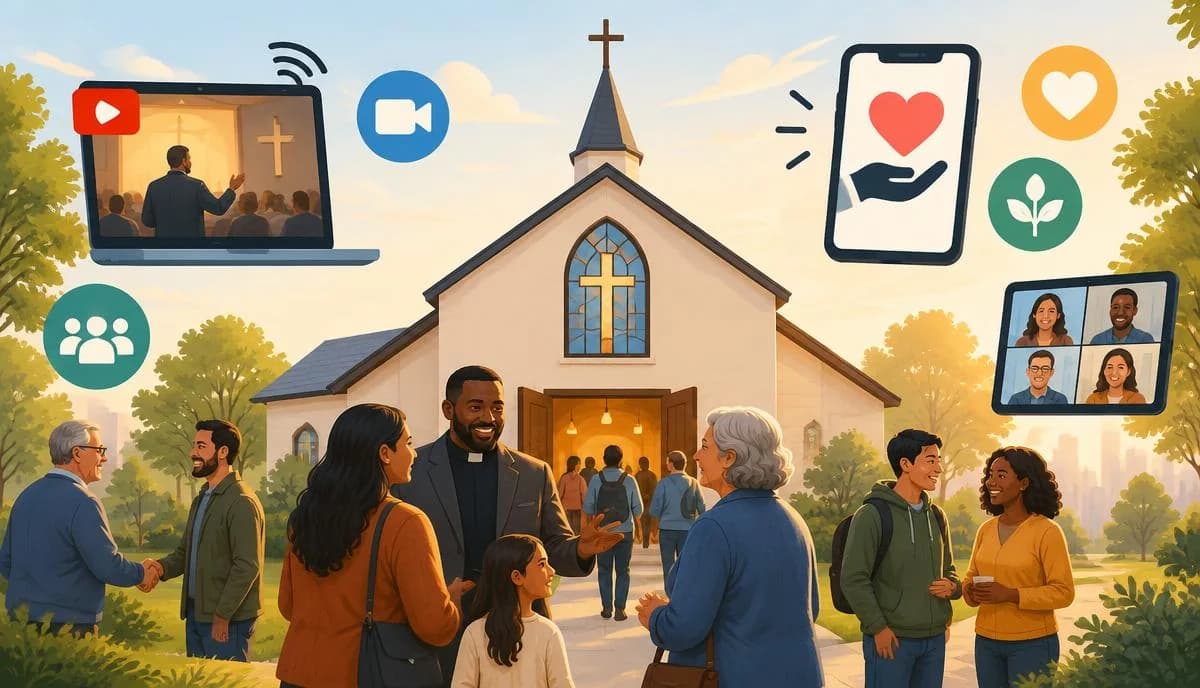
A practical guide to Christian digital marketing for churches, ministries, nonprofits, and faith-based businesses, covering SEO, content, social media, and ethical outreach strategy.
Christian Digital Marketing
Churches, ministries, Christian nonprofits, and faith-based businesses face a unique challenge online: they need to reach people effectively without compromising their mission, tone, or trust with their community. Christian digital marketing is not about copying secular tactics wholesale. It is about applying proven marketing principles through a lens of authenticity, service, and genuine connection.
Many faith-based organizations still rely on word of mouth, bulletins, and Sunday announcements as their primary outreach. That worked for decades, but attendance patterns have shifted, younger generations discover churches and ministries through search and social platforms first, and donors research nonprofits online before giving. A thoughtful digital strategy helps organizations meet people where they already are, without losing their voice or values.
Quick Answer: Christian digital marketing combines SEO, social media, email, and content strategy with a faith-centered voice to help churches, ministries, and Christian businesses build trust, grow attendance or membership, and increase giving, all while staying authentic to their mission and audience.
Why Digital Marketing Matters for Faith-Based Organizations
Search behavior has changed how people find a church home or a Christian-owned business. Someone new to a city searches "church near me" or "Christian counselor near me" before ever walking through a door. If an organization has no clear online presence, it effectively does not exist to that searcher.
Practitioner observation from nonprofit marketing consultants consistently shows that organizations posting weekly, value-driven content (not just event flyers) see meaningfully higher engagement and return visits to their websites than those posting sporadically. Consistency builds familiarity, and familiarity builds trust, which is the real currency in faith-based outreach.
Similarly, Pew Research has documented for years that religious affiliation and attendance patterns are shifting generationally, with younger adults engaging with faith communities differently than previous generations, often researching and connecting online before attending in person. This makes a credible, welcoming digital front door more important than ever.
Core Elements of a Christian Digital Marketing Strategy
1. A Clear, Fast, Mobile-Friendly Website
Your website is often the first impression. It should load quickly, work well on phones, and answer the top three questions any visitor has: What do you believe, what happens if I show up, and how do I get involved. Slow or outdated websites quietly push visitors away before they ever read your message. Many churches and ministries partner with a fast website delivery agency to get a modern, mobile-ready site live quickly without months of delay, which matters when a congregation is trying to launch a new sermon series page or event landing page on a tight timeline.
2. Search Engine Optimization (SEO)
Local SEO is critical for churches and Christian service providers. This includes:
- Claiming and optimizing a Google Business Profile with accurate service times and location
- Using location-based keywords like "Christian daycare in [city]" or "[city] church youth group"
- Building a service directory of pages for counseling, weddings, funerals, or community outreach programs
- Earning backlinks from local news outlets, denominational directories, and community partners
3. Content Marketing and Storytelling
Testimonies, sermon recaps, devotionals, and behind-the-scenes ministry stories perform well because they are authentic and shareable. Content marketing works best when it is consistent rather than sporadic, and many ministries find it efficient to work with blog writing services to maintain a steady publishing schedule without burning out staff or volunteers, since most churches do not have a dedicated marketing department.
4. Social Media With Purpose
Social platforms are where most faith-based organizations meet new people passively before any direct outreach. Facebook remains strong for churches with older congregations, while Instagram and short-form video reach younger families and students. The key is not posting everywhere, but choosing two or three platforms and showing up consistently with content that reflects real community life, not just polished production.
5. Email and SMS for Community, Not Just Announcements
Email newsletters work best for faith organizations when they combine encouragement with practical information: upcoming events, prayer requests, and ways to serve. SMS reminders for events and giving campaigns tend to have very high open rates compared to email, making them useful for time-sensitive outreach like VBS registration deadlines or holiday service times.
Digital Marketing Channels Compared
| Channel | Best For | Typical Effort Level | Notes |
|---|---|---|---|
| SEO/Website | Long-term discoverability | Medium to high upfront | Compounds over time, essential foundation |
| Social Media | Community engagement, awareness | Ongoing, daily/weekly | Best for storytelling and event promotion |
| Email/SMS | Retention, event reminders | Low to medium | High ROI for existing members and donors |
| Content/Blog | Search visibility, teaching, trust | Medium, consistent | Supports SEO and establishes authority |
| Paid Ads | Fast visibility for launches or campaigns | Medium, requires budget | Useful for new church plants or big events |
Ethical Considerations Unique to Faith-Based Marketing
Christian organizations should avoid manipulative urgency tactics common in retail marketing, such as fake countdown timers or exaggerated claims. Transparency about how donations are used, honest event descriptions, and respectful messaging build long-term trust far better than aggressive sales language. Faith communities are relationship-driven, and marketing that feels transactional tends to backfire.
Nonprofits also need to be mindful of compliance: clear disclosure of tax-deductible status, accurate use-of-funds statements, and accessible giving pages that work smoothly on mobile devices. A broken or confusing donation page is one of the most common reasons well-intentioned giving campaigns underperform.
Measuring What Matters: Ministry Analytics Without Losing Focus
Numbers should never replace prayer and pastoral discernment in ministry decision-making, but basic analytics help leaders understand whether their outreach is actually reaching new people. Tracking website visits, new visitor cards filled out after a campaign, and email open rates gives a concrete picture of whether a sermon series promotion or a community event announcement is working. Many ministries find it helpful to review a simple monthly dashboard with just four or five numbers rather than getting overwhelmed by every available metric.
Comparing year-over-year attendance trends alongside website traffic often reveals patterns leadership would otherwise miss, such as a spike in "visiting hours" searches around major holidays or a steady increase in mobile giving after a sermon on generosity. These insights help staff and volunteer teams decide where to invest limited time and budget rather than guessing.
Building Trust Through Transparency and Consistency
Faith-based audiences are often more skeptical of polished marketing than typical consumers, since many have encountered organizations that overpromise. The organizations that grow sustainably tend to be the ones that under-promise and consistently deliver, whether that means accurately describing what a Sunday service looks like for newcomers or being upfront about how a mission trip's fundraising goal will be used.
Consistency in visual branding, tone of voice, and posting schedule also builds subconscious trust over time. A church whose social media, website, and printed materials all look and sound like they come from the same community feels more credible than one with mismatched branding across channels. This does not require an expensive rebrand; it simply requires agreeing on a consistent color palette, font, and voice, then applying it everywhere.
Common Mistakes Faith-Based Organizations Make Online
- Treating the website as a static brochure that is never updated after the initial launch.
- Posting only event flyers on social media instead of stories, testimonies, or teaching content that provides value between events.
- Ignoring mobile giving friction, such as a donation form that requires too many fields or does not work well on a phone screen.
- Failing to follow up with first-time visitors who fill out a connection card, losing the momentum of their first visit.
- Assuming younger audiences will find the church through traditional channels alone rather than search and social discovery.
Avoiding these pitfalls does not require a large marketing budget. It requires intentionality, a realistic publishing rhythm, and a willingness to treat digital presence as an extension of ministry rather than an afterthought bolted on at the end of the year.
Practical Steps to Get Started
- Audit your current website speed, mobile experience, and clarity of your "next steps" for visitors.
- Set up or claim your Google Business Profile and keep service times current.
- Choose two social platforms and commit to a realistic weekly posting cadence.
- Build an email list from event sign-ups, connection cards, and website visitors.
- Create one piece of long-form content per month (a devotional series, ministry story, or FAQ page) to support SEO.
- Review your giving and event registration pages quarterly to remove friction.
Key Takeaways
- Christian digital marketing applies proven strategy through a lens of authenticity and trust rather than aggressive sales tactics.
- A fast, clear, mobile-friendly website is the foundation; slow sites lose visitors before they read your message.
- Local SEO helps churches and Christian businesses appear when people search for services in their area.
- Consistent content and storytelling outperform sporadic, purely promotional posting.
- Email and SMS remain highly effective for event reminders and community retention.
- Transparency and ethical messaging matter more in faith-based marketing than in most other industries.
Frequently Asked Questions (FAQ)
Is digital marketing appropriate for a church to use?
Yes. Digital marketing is simply a set of tools for communication and outreach. Using a website, social media, or email to share your church's message, events, and community life is no different from using a bulletin or a sign, just reaching more people more efficiently and meeting them where they already spend time.
How much should a small church budget for digital marketing?
Many small churches start with just staff or volunteer time and free tools like Google Business Profile and social media. As needs grow, a modest monthly budget for website hosting, email software, and occasional paid ads (often a few hundred dollars a month) is a reasonable starting point.
What is the difference between marketing a church and marketing a Christian business?
Churches typically focus on attendance, engagement, and giving, while Christian businesses also need to communicate their values while competing commercially. Both benefit from authentic storytelling and local SEO, but businesses often need more conversion-focused pages like service listings and pricing.
How often should a church post on social media?
Consistency matters more than frequency. Three to five quality posts per week that mix event announcements, encouragement, and behind-the-scenes moments generally outperform daily posts that feel repetitive or purely promotional.
Can digital marketing actually increase church attendance?
It can support attendance growth by making it easier for newcomers to find service times, understand what to expect, and feel welcomed before they arrive. It works best alongside, not instead of, genuine in-person hospitality and community follow-up.
Do we need a professional to write our website content?
Not always, but many ministries benefit from outside help to maintain consistency and clarity, especially for SEO-focused pages, since staff and volunteers often lack the time to write regularly while managing everything else the church needs.